

The ketogenic diet has transformed from a medical intervention into one of the most popular nutritional approaches for weight loss, improved mental clarity, and metabolic health. At its core, the keto diet is a low-carbohydrate, high-fat eating plan designed to shift your body’s primary fuel source from glucose to ketones. This comprehensive guide explores everything you need to know about keto diet foods—what to eat, what to avoid, and how to optimize your food choices for successful ketosis and long-term health benefits.
Understanding the Ketogenic Diet
The ketogenic diet is a nutritional approach that dramatically reduces carbohydrate intake while increasing fat consumption. When you restrict carbs to typically 20-50 grams per day, your body enters a metabolic state called ketosis. Without sufficient carbohydrates for energy, your liver converts fat into ketone bodies, which serve as an alternative fuel source for your brain, muscles, and other tissues.
This metabolic shift offers numerous potential benefits, including accelerated fat loss, reduced inflammation, improved insulin sensitivity, enhanced mental clarity, and increased energy levels. Some research also suggests keto may help manage conditions like epilepsy, type 2 diabetes, and certain neurological disorders.
Success on keto depends largely on selecting the right foods to maintain the proper macronutrient balance while ensuring adequate nutrition. Let’s explore exactly what you should eat to achieve optimal results.
Understanding Macronutrients on Keto
The foundation of the ketogenic diet lies in its unique macronutrient distribution. Unlike standard dietary recommendations, keto emphasizes fat as the primary macronutrient:
- Fat: 70-75% of total calories
- Protein: 20-25% of total calories
- Carbohydrates: 5-10% of total calories (typically 20-50g net carbs daily)
To determine your personal macronutrient targets, consider factors like your age, gender, weight, activity level, and goals. Various keto calculators available online can help provide a starting point for your specific needs.
Tracking your intake, especially in the beginning, helps ensure you’re genuinely following ketogenic principles. Many people use apps like Cronometer, MyFitnessPal, or Carb Manager to monitor their daily consumption.
Understanding net carbs is crucial for keto success. Net carbs are calculated by subtracting fiber and certain sugar alcohols from the total carbohydrate count: Net Carbs = Total Carbs – Fiber – (Some) Sugar Alcohols. This calculation matters because fiber and certain sugar alcohols don’t significantly impact blood sugar or ketosis.
Essential Keto-Friendly Fats
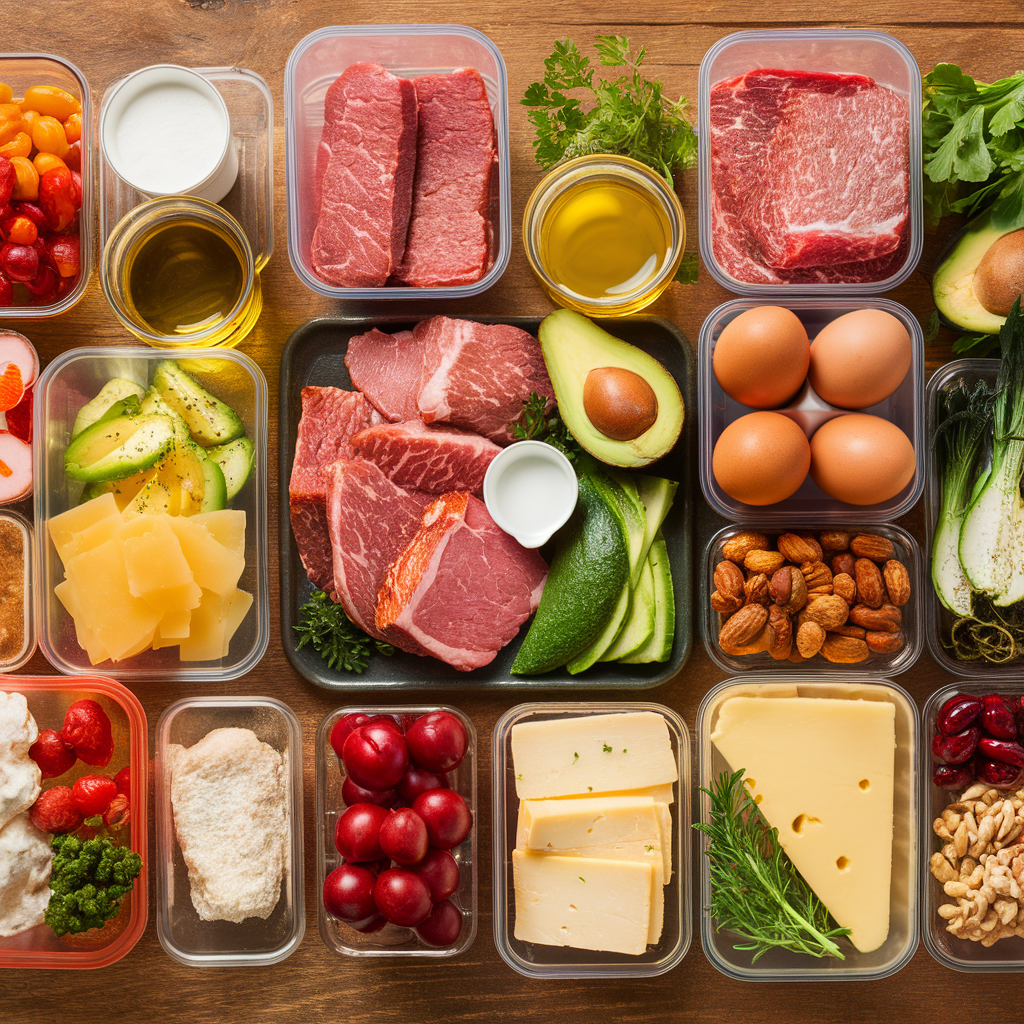
Since fats comprise the majority of your calories on keto, choosing high-quality sources is paramount for both health and satisfaction.
Healthy Oils
- Extra virgin olive oil: Rich in oleic acid and antioxidants, ideal for dressings and low-heat cooking
- Avocado oil: High in monounsaturated fats with a high smoke point, perfect for cooking
- Coconut oil: Contains medium-chain triglycerides (MCTs) that promote ketone production
- MCT oil: Rapidly converted to ketones, providing quick energy
Fatty Animal Products
- Butter: Preferably grass-fed for optimal nutritional profile
- Ghee: Clarified butter that removes milk solids, suitable for those sensitive to dairy
- Lard: Rendered pork fat, excellent for cooking
- Tallow: Rendered beef fat, high in saturated fats and heat-stable
High-Fat Dairy Options
- Heavy cream: Contains minimal lactose and adds richness to dishes
- Full-fat cheese: Provides protein and fat with minimal carbs
- Cream cheese: Versatile for cooking and making keto desserts
- Mascarpone: Higher fat content than cream cheese with a milder flavor
Nuts and Seeds
- Macadamia nuts: Highest fat content with lowest carbs among nuts
- Pecans: Rich in monounsaturated fats and low in carbs
- Brazil nuts: Excellent source of selenium
- Chia seeds: High in omega-3 fatty acids and fiber
- Flaxseeds: Rich in alpha-linolenic acid (ALA), an omega-3 fatty acid
Fatty Fruits
- Avocados: Nutrient-dense with fiber, potassium, and healthy fats
- Olives: Rich in monounsaturated fats and antioxidants
Protein Sources on Keto
While fat is the cornerstone of keto, protein remains essential for maintaining muscle mass, supporting metabolic function, and providing satiety. However, excessive protein can potentially convert to glucose through gluconeogenesis, potentially affecting ketosis for some individuals.
Best Meat Options
- Beef: Preferably grass-fed for better omega-3 to omega-6 ratio and nutrient profile
- Pork: Bacon, pork chops, and shoulder are excellent choices
- Lamb: Naturally grass-fed in many regions with an excellent nutrient profile
- Organ meats: Liver, heart, and kidney are exceptionally nutrient-dense
Poultry Choices
- Chicken thighs and legs: Higher in fat than breast meat
- Turkey: Preferably dark meat for higher fat content
- Duck: Naturally higher in fat with crispy skin
- Goose: Rich, dark meat with high fat content
Seafood Selections
- Fatty fish: Salmon, mackerel, sardines, herring (high in omega-3s)
- Other fish: Halibut, trout, tuna, cod
- Shellfish: Shrimp, crab, lobster, scallops (watch carb content in some shellfish)
Plant-Based Protein Options
- Tofu: Low in carbs and versatile for cooking
- Tempeh: Higher in carbs than tofu but provides probiotics
- Seitan: Made from wheat gluten, very low in carbs (not suitable for gluten sensitivities)
- Lupini beans: Lower in carbs than most legumes
Eggs
The perfect keto food with an ideal fat-to-protein ratio, complete amino acid profile, and versatility in cooking. Eggs contain essential nutrients like choline, which supports brain health and metabolism.
Low-Carb Vegetables
Vegetables provide essential micronutrients, antioxidants, and fiber while keeping carb counts low. Focus primarily on non-starchy, above-ground vegetables:
Best Green Leafy Vegetables
- Spinach: 0.4g net carbs per cup, raw
- Kale: 0.3g net carbs per cup, raw
- Arugula: 0.4g net carbs per cup
- Lettuce varieties: 0.5g net carbs per cup
- Swiss chard: 0.7g net carbs per cup, raw
Other Low-Carb Vegetables
- Cruciferous vegetables: Broccoli (3.6g net carbs per cup), cauliflower (3g net carbs per cup), Brussels sprouts (4.7g net carbs per cup), cabbage (3g net carbs per cup)
- Zucchini: 3g net carbs per cup
- Asparagus: 2.4g net carbs per cup
- Bell peppers: 4-7g net carbs per cup (green are lowest)
- Celery: 1.4g net carbs per cup
- Cucumber: 1.9g net carbs per cup
- Mushrooms: 1.6g net carbs per cup
Limit higher-carb root vegetables like potatoes, carrots, parsnips, and beets, which can quickly exhaust your daily carb allowance.
Fruits on Keto
Most fruits are high in carbohydrates due to their natural sugar content, but certain lower-carb options can fit into a ketogenic lifestyle in moderation:
Keto-Friendly Fruits
- Berries: Blackberries (5g net carbs per 100g), raspberries (5g net carbs per 100g), strawberries (6g net carbs per 100g)
- Avocados: 1.8g net carbs per 100g – technically a fruit and a keto staple
- Olives: 3g net carbs per 100g – another fruit that works well on keto
- Star fruit: 4g net carbs per 100g
- Tomatoes: 3g net carbs per 100g (botanically a fruit)
Fruits to Avoid
- Tropical fruits (bananas, mangoes, pineapples)
- Apples, pears, oranges, grapes
- Dried fruits (dates, raisins, apricots)
- Fruit juices (extremely concentrated sugar)
When incorporating fruit, measure portions carefully and count them toward your daily carb limit. Consider using berries as occasional treats rather than dietary staples.

Dairy Products on Keto
Dairy can be a valuable part of a ketogenic diet but requires careful selection to avoid hidden carbs and ensure fat content is adequate:
Keto-Friendly Dairy Options
- Cheese: Brie, blue, cheddar, gouda, feta, cream cheese (0-1g carbs per ounce)
- Heavy cream: 0.4g carbs per tablespoon
- Butter and ghee: Virtually zero carbs
- Greek yogurt (full-fat, plain): ~5g carbs per 100g (consume in moderation)
- Cottage cheese (full-fat): ~3g carbs per 100g (moderate consumption)
- Mascarpone and ricotta: Lower carb options for creamy textures
Dairy to Avoid
- Milk (contains lactose, a natural sugar)
- Flavored yogurts (added sugars)
- Low-fat or fat-free dairy products (higher in carbs and additives)
- Ice cream (unless keto-specific versions)
Dairy Alternatives
For those who are lactose intolerant or avoiding dairy:
- Unsweetened almond milk: ~0.5g net carbs per cup
- Coconut milk: 1g net carbs per cup
- Coconut cream: Alternative to heavy cream
- Dairy-free cheeses: Check labels for carb content
Nuts, Seeds, and Legumes
Best Nuts for Keto
Nuts vary significantly in their carb content. Listed from lowest to highest carbs per 1-ounce serving:
- Pecans: 1.2g net carbs
- Brazil nuts: 1.3g net carbs
- Macadamia nuts: 1.5g net carbs
- Walnuts: 1.9g net carbs
- Hazelnuts: 2g net carbs
- Almonds: 2.9g net carbs
- Peanuts: 3.8g net carbs (technically a legume)
Seeds to Incorporate
- Flaxseeds: 0.1g net carbs per tablespoon
- Chia seeds: 1g net carbs per tablespoon
- Hemp seeds: 1g net carbs per tablespoon
- Pumpkin seeds: 1.3g net carbs per tablespoon
- Sesame seeds: 1.1g net carbs per tablespoon
- Sunflower seeds: 1.4g net carbs per tablespoon
Nut Flours for Baking
- Almond flour: 3g net carbs per 1/4 cup
- Coconut flour: 6g net carbs per 1/4 cup (absorbs more liquid)
- Hazelnut flour: 2g net carbs per 1/4 cup
- Sunflower seed flour: Alternative for nut allergies
Legumes to Avoid
Most legumes are too high in carbohydrates for a ketogenic diet:
- Beans (black, kidney, pinto)
- Lentils
- Chickpeas
- Peas
Beverages on Keto
Water and Hydration
Proper hydration is especially important on keto as the diet has a natural diuretic effect. Aim for at least 2-3 liters daily, adding electrolytes as needed.
Coffee and Tea
- Black coffee: Zero carbs
- Bulletproof coffee: Coffee blended with MCT oil and/or butter
- Tea (black, green, herbal): Zero carbs
- Additions: Heavy cream, unsweetened almond milk, approved sweeteners
Alcohol Considerations
In moderation, these lower-carb options are possible:
- Hard liquor: Vodka, whiskey, rum, gin, tequila (zero carbs)
- Dry wines: 3-4g carbs per 5 oz glass
- Light beers: 2-3g carbs per 12 oz (in moderation)
Remember that alcohol may temporarily halt fat burning and reduce tolerance.
Beverages to Avoid
- Regular soda and fruit juices
- Sweetened coffee drinks
- Most smoothies and shakes
- Sports drinks
- Beer (most varieties)
- Sweet wines and cocktails
Electrolyte Drinks
Maintaining electrolyte balance is crucial on keto:
- Bone broth
- Sugar-free electrolyte waters
- Homemade “ketoade” (water with salt, potassium, and magnesium)
Condiments, Herbs, and Spices
Keto-Friendly Condiments and Sauces
- Mayonnaise: Zero carbs (check for added sugars)
- Mustard: 0-1g carbs per tablespoon
- Pesto: 1-2g carbs per tablespoon
- Hot sauce: 0-1g carbs per teaspoon (check labels)
- Soy sauce/tamari: 1g carbs per tablespoon
- Apple cider vinegar: 0g carbs
Herbs and Spices
Most herbs and spices are low in carbs and add tremendous flavor:
- Basil, oregano, thyme, rosemary: Fresh or dried
- Cumin, paprika, chili powder, cayenne: Adds complexity
- Turmeric, ginger, cinnamon: Adds flavor and health benefits
- Salt, pepper, garlic powder: Basics for any kitchen
Keto Sweeteners
- Natural options: Stevia, monk fruit, erythritol, allulose
- Sugar alcohols: Xylitol, sorbitol (may cause digestive issues for some)
- Artificial sweeteners: Sucralose, aspartame (personal preference)
- Sweeteners to avoid: Sugar, honey, maple syrup, agave nectar, coconut sugar
Homemade Keto Dressings
Base your dressings on:
- Olive oil, avocado oil, or MCT oil
- Vinegars (apple cider, red wine, white)
- Lemon or lime juice (sparingly)
- Herbs, spices, and salt
- Dijon mustard
- Mayonnaise for creamy variations
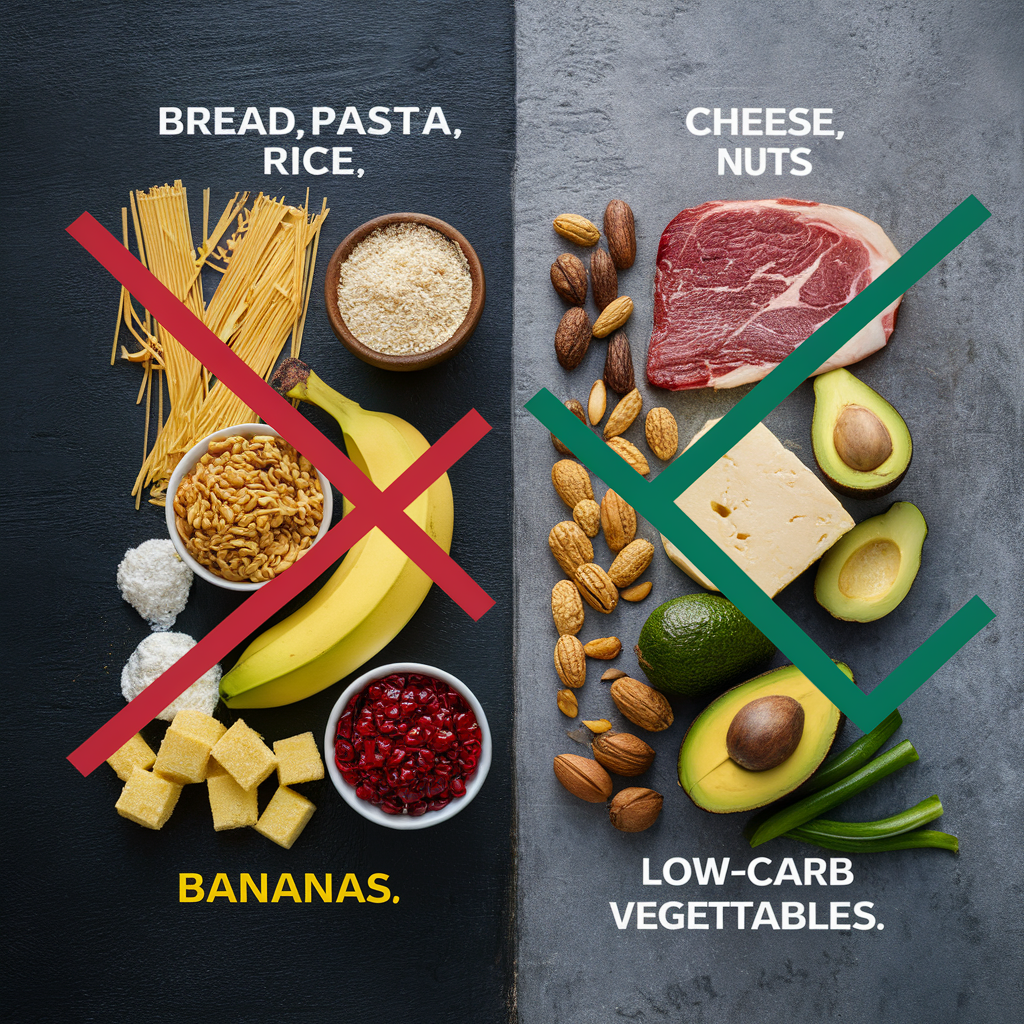
Foods to Completely Avoid
High-Carb Foods
- Grains: Wheat, rice, oats, corn, quinoa, barley
- Starches: Potatoes, sweet potatoes, yams
- Sugars: Table sugar, honey, maple syrup, agave
- High-carb fruits: Bananas, apples, oranges, grapes
- Legumes: Beans, lentils, chickpeas
- Processed foods: Chips, crackers, cookies, candy
Hidden Carbs to Watch For
- Sauces and marinades (often contain sugar or cornstarch)
- “Low-fat” products (usually higher in sugar)
- Processed meat products (may contain fillers)
- Some medications and supplements (check for added sugars)
- Chewing gum and mints
- Cough syrups and liquid medicines
“Healthy” Foods Not Keto-Friendly
- Whole wheat bread and pasta
- Brown rice
- Quinoa
- Oatmeal
- Most fruits
- Starchy vegetables
- Sweetened yogurt
Meal Planning and Shopping
Creating a Weekly Keto Meal Plan
Successful keto living starts with planning:
- Determine your daily macros
- Plan meals around fat sources first
- Add protein in appropriate portions
- Fill in with low-carb vegetables
- Use a tracking app to verify macros
- Plan for leftovers and quick meals
Essential Keto Grocery List
Proteins:
- Eggs
- Beef, pork, lamb
- Chicken and turkey (fattier cuts)
- Fatty fish (salmon, sardines, mackerel)
- Bacon and sausage (check for added sugars)
Fats:
- Olive oil, avocado oil, coconut oil
- Butter and ghee
- Heavy cream
- Avocados
- Nuts and seeds
Low-Carb Vegetables:
- Leafy greens (spinach, kale, lettuce)
- Broccoli, cauliflower, cabbage
- Zucchini, asparagus, bell peppers
- Mushrooms, cucumber, celery
Dairy:
- Cheese varieties
- Greek yogurt (full-fat, plain)
- Cream cheese
Pantry Items:
- Almond flour, coconut flour
- Approved sweeteners
- Spices and herbs
- Bone broth
- Canned fish (tuna, sardines)
Budget-Friendly Keto Shopping Tips
- Buy meat in bulk and freeze
- Use cheaper cuts of meat (often higher in fat)
- Consider frozen vegetables
- Shop sales and use coupons
- Purchase whole blocks of cheese rather than pre-sliced
- Utilize eggs as an inexpensive protein source
- Buy nuts and seeds from bulk bins
Batch Cooking and Meal Prep Strategies
- Prepare proteins in large batches
- Pre-chop vegetables for quick access
- Make egg muffins for quick breakfasts
- Prepare fat bombs for snacks
- Cook large batches of keto-friendly soups and stews
- Store portions in individual containers
Special Considerations
Clean vs. Dirty Keto
“Clean keto” focuses on whole, nutrient-dense foods while “dirty keto” prioritizes macronutrient ratios regardless of food quality. While both approaches can achieve ketosis, clean keto typically offers better long-term health outcomes and nutrient density.
Cyclical and Targeted Keto Variations
- Cyclical Ketogenic Diet (CKD): Incorporates periodic higher-carb days, often used by athletes
- Targeted Ketogenic Diet (TKD): Allows additional carbs around workout times
- High-Protein Ketogenic Diet: Slightly higher protein allocation (25-30%)
Adapting Keto for Different Health Conditions
- Diabetes: May require medical supervision and medication adjustments
- Hypertension: May need to monitor sodium intake
- Gallbladder issues: May require gradual fat increase and digestive support
- Kidney conditions: May need modified protein intake
- Thyroid concerns: May benefit from moderate rather than very low carb approach
Supplements to Support a Keto Lifestyle
- Electrolytes: Sodium, potassium, magnesium
- MCT oil: For energy and ketone production
- Omega-3s: For inflammation management
- Vitamin D: For immune support
- Digestive enzymes: To help with fat digestion
Troubleshooting Common Issues
Overcoming Keto Plateau
- Re-evaluate and adjust macros
- Track food intake more closely
- Consider intermittent fasting
- Increase physical activity
- Check for hidden carbs
- Ensure adequate sleep
- Manage stress levels
Managing Cravings
- Increase healthy fat consumption
- Stay well-hydrated
- Use approved sweeteners in moderation
- Create keto versions of favorite foods
- Address emotional triggers for eating
- Ensure adequate protein intake
Addressing Nutrient Deficiencies
- Focus on nutrient-dense foods (organ meats, fatty fish, leafy greens)
- Consider targeted supplementation
- Rotate foods for variety
- Include sea vegetables for minerals
- Regular bloodwork to monitor levels
Optimizing Food Choices for Specific Goals
- Weight loss: Moderate calorie deficit, intermittent fasting
- Muscle gain: Adequate protein, slight calorie surplus
- Athletic performance: Strategic carb timing, increased protein
- Cognitive benefits: MCTs, omega-3s, antioxidant-rich foods
- Blood sugar control: Consistent meal timing, fiber-rich foods
Conclusion
The ketogenic diet offers a powerful approach to nutrition that can transform health when implemented correctly. The foundation of successful keto living lies in selecting appropriate foods that maintain the proper macronutrient balance while providing essential nutrients.
Key takeaways include prioritizing healthy fats, consuming moderate protein, severely limiting carbohydrates, and choosing nutrient-dense whole foods whenever possible. The specific foods you select should align with your personal health goals, preferences, and any underlying health conditions.
For long-term success, consider sustainability factors like food enjoyment, social situations, and lifestyle practicality. Many people find greater success by gradually transitioning to keto rather than making drastic overnight changes.
Remember that individual responses to keto vary—what works perfectly for one person may need adjustment for another. Listen to your body, track your results, and be willing to modify your approach as needed. With the right food choices and consistent implementation, the ketogenic diet can be a sustainable and beneficial way of eating for many people.