

Regular health screenings are essential components of preventive healthcare that can detect potential health issues before they become serious problems. Understanding the right frequency for different screenings based on your age, gender, and risk factors is crucial for maintaining optimal health and preventing disease. Let’s explore the recommended timelines for various health screenings to help you create an effective preventive healthcare plan.

Why Regular Health Screenings Are Important
Health screenings serve as your body’s early warning system. These preventive measures can detect diseases or conditions in their earliest, most treatable stages—often before symptoms appear. Regular screenings have been proven to significantly reduce mortality rates for numerous conditions, including certain cancers, heart disease, and diabetes.
According to the Centers for Disease Control and Prevention (CDC), preventive screenings can:
- Identify health issues before symptoms develop
- Reduce healthcare costs in the long term
- Provide peace of mind about your health status
- Establish baseline measurements for future comparisons
- Help healthcare providers develop personalized prevention strategies
The frequency and types of screenings you need vary based on your age, sex, family history, and individual risk factors. Creating a screening schedule with your healthcare provider ensures you’re getting the right tests at the right time.
Essential Health Screenings by Age Group
Screenings for Adults in Their 20s and 30s
Even young adults should establish baseline health measurements and begin certain routine screenings:
Blood Pressure Screening
- Frequency: At least every 2 years if readings are normal (below 120/80 mm Hg)
- More frequently if readings are elevated
Cholesterol Check
- Frequency: Every 4-6 years for those with normal risk
- Starting at age 20 for most adults
- More frequently for those with risk factors like family history, obesity, or smoking
Blood Glucose Test
- Frequency: Every 3 years starting at age 35
- Earlier and more frequent for those with risk factors for diabetes
Skin Examination
- Frequency: Annual self-examinations
- Professional skin checks every 1-3 years
- More frequently for those with a personal or family history of skin cancer
Eye Exam
- Frequency: Every 5-10 years for those without vision problems
- More frequently if you wear corrective lenses or have eye conditions
Dental Exam
- Frequency: Every 6 months for cleaning and check-ups
STI Testing
- Frequency: Annually for sexually active individuals with new or multiple partners
- HIV testing at least once between ages 13-64
Screenings for Adults in Their 40s and 50s
As you age, additional screenings become necessary, and some tests should be performed more frequently:
Colorectal Cancer Screening
- Frequency: Starting at age 45 for average-risk individuals
- Options include:
- Colonoscopy every 10 years
- Stool-based tests annually or every 3 years (depending on test type)
- Flexible sigmoidoscopy every 5 years
Mammogram (Women)
- Frequency: Every 1-2 years starting at age 40 or 45 (recommendations vary by organization)
- Earlier for women with family history or genetic risk factors
Prostate Cancer Screening (Men)
- Frequency: Discuss with your doctor starting at age 45
- Earlier for African American men or those with family history
- Usually includes PSA blood test and possibly digital rectal exam
Lung Cancer Screening
- Frequency: Annually for high-risk individuals (heavy smokers aged 50-80)
- Requires low-dose CT scan
Bone Density Scan
- Frequency: Consider baseline testing for women approaching menopause
- Earlier for those with risk factors for osteoporosis
Thyroid Function Test
- Frequency: Every 5 years starting at age 35
- More frequently for those with symptoms or family history
Screenings for Adults 60 and Older
Older adults should continue previously recommended screenings while adding several age-specific tests:
Bone Density Scan (DEXA)
- Frequency: Starting at age 65 for women
- Starting at age 70 for men (or earlier with risk factors)
- Follow-up frequency determined by baseline results
Hearing Test
- Frequency: Every 3 years
Abdominal Aortic Aneurysm Screening
- Frequency: One-time screening for men aged 65-75 who have ever smoked
Cognitive Assessments
- Frequency: Discuss with your doctor about regular cognitive evaluations
Balance and Fall Risk Assessment
- Frequency: Annually
Gender-Specific Health Screenings
Women’s Health Screenings
Pap Smear and HPV Test
- Frequency:
- Ages 21-29: Pap test every 3 years
- Ages 30-65: Pap and HPV co-testing every 5 years, or HPV testing alone every 5 years
- After 65: Can discontinue if previous tests were normal
Pelvic Exam
- Frequency: Annually or as recommended by your gynecologist
Breast Exam
- Frequency: Clinical breast exams every 1-3 years in your 20s and 30s, annually after 40
- Monthly self-exams are also recommended
Men’s Health Screenings
Testicular Exam
- Frequency: Monthly self-exams recommended
- Professional exam during routine physical
Prostate Exam
- Frequency: As mentioned earlier, discuss with your doctor starting at age 45

Screenings Based on Risk Factors
Certain risk factors may necessitate earlier or more frequent screenings:
Family History
- If close relatives had cancer, heart disease, diabetes, or other conditions, you may need earlier or more frequent screenings
Lifestyle Factors
- Smoking, heavy alcohol use, sedentary lifestyle, or poor diet may increase screening frequency
Pre-existing Conditions
- Conditions like hypertension, high cholesterol, or prediabetes require more vigilant monitoring
Ethnic Background
- Certain ethnic groups have higher risks for specific conditions:
- African Americans: Higher risk for high blood pressure, diabetes, and certain cancers
- Hispanic Americans: Higher risk for diabetes
- Ashkenazi Jewish descent: Higher risk for certain genetic disorders and some cancers
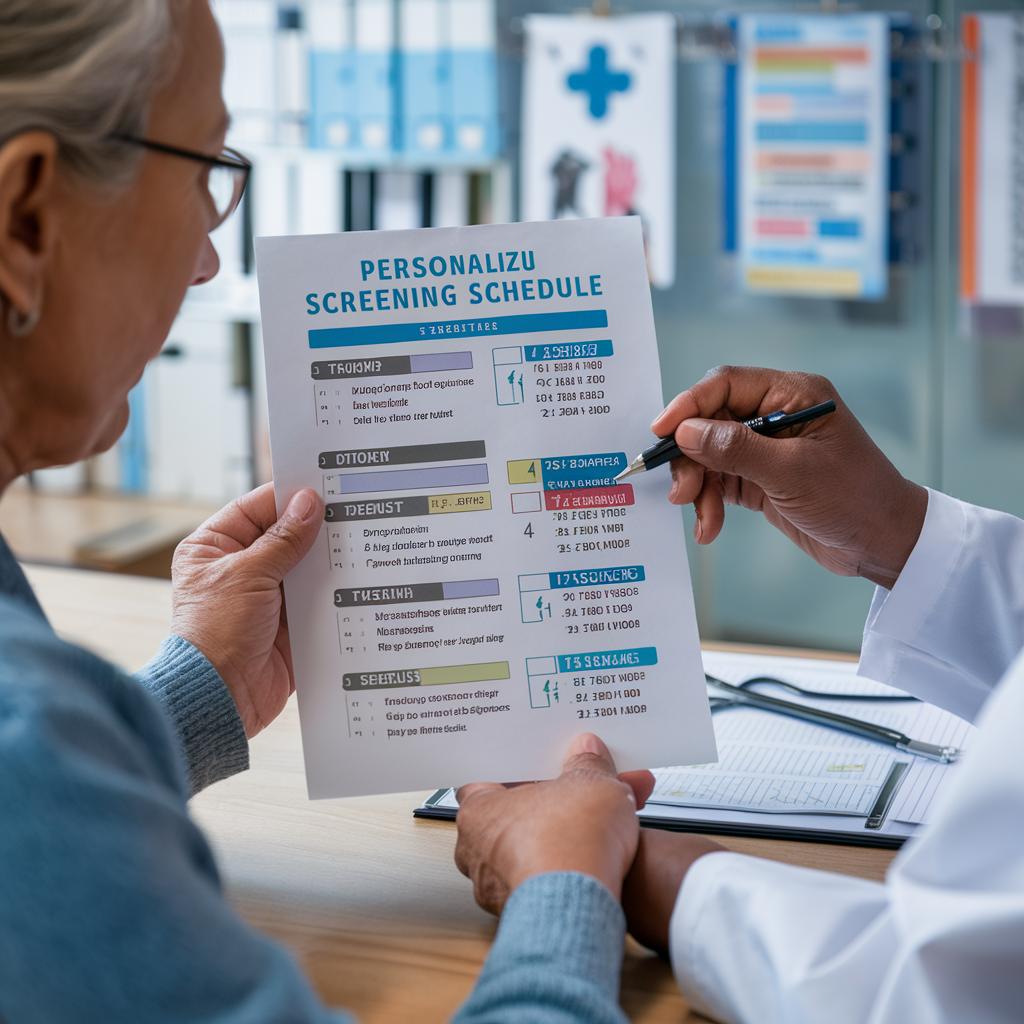
Creating Your Personal Screening Schedule
The most effective approach to health screenings is creating a personalized plan with your healthcare provider. During your annual physical, discuss:
- Your complete family health history
- Your personal health history and current conditions
- Lifestyle factors that may increase health risks
- Any symptoms or changes you’ve noticed since your last visit
- Questions about screening schedules and procedures
Your healthcare provider can then recommend a tailored screening schedule based on your individual risk profile.
The Cost of Health Screenings
Many preventive screenings are covered by health insurance with no out-of-pocket costs, thanks to the Affordable Care Act. Medicare also covers various preventive screenings for eligible beneficiaries.
If cost concerns are preventing you from getting recommended screenings, explore these options:
- Community health centers that offer sliding-scale fees
- Hospital charity care programs
- Screening events sponsored by health organizations
- Patient assistance programs through pharmaceutical companies
- Clinical trials that may provide free screenings
Beyond Screenings: Comprehensive Preventive Care
While screenings are vital, they’re just one aspect of preventive healthcare. Complement your screening schedule with:
- Regular physical activity (150+ minutes of moderate exercise weekly)
- Balanced nutrition focused on whole foods
- Adequate sleep (7-9 hours for most adults)
- Stress management techniques
- Limited alcohol consumption
- Tobacco avoidance
- Sun protection
- Regular dental care
- Up-to-date vaccinations
Common Questions About Health Screenings
Are health screenings really necessary if I feel fine?
Yes. Many serious conditions like high blood pressure, high cholesterol, and early-stage cancers have no noticeable symptoms until they’re advanced.
Can I skip certain screenings if I maintain a healthy lifestyle?
While a healthy lifestyle reduces many risks, it doesn’t eliminate them. Genetic factors, environmental exposures, and age-related changes still warrant appropriate screenings.
What’s the difference between diagnostic tests and screening tests?
Screening tests are performed on seemingly healthy people to detect potential problems before symptoms appear. Diagnostic tests are used to investigate specific symptoms or confirm a suspected condition.
How accurate are screening tests?
No screening test is perfect. They can produce false positives (indicating a problem that isn’t present) or false negatives (missing an existing problem). This is why follow-up testing is often needed to confirm results.
Conclusion
Regular health screenings are investments in your long-term wellbeing. By detecting potential health issues early, you can take proactive steps to prevent or manage conditions before they become serious. Work with your healthcare provider to develop a personalized screening schedule based on your age, sex, and risk factors. Remember that preventive care is always more effective—and often less expensive—than treating advanced conditions.
Make health screenings a priority in your wellness routine, just like exercise and nutrition. Your future self will thank you for the ounce of prevention that could save you from pounds of cure down the road.