

Living in a cluttered environment is more than just an aesthetic issue – it can significantly impact your mental health and overall wellbeing. From increased stress levels to reduced productivity, the psychological effects of clutter are both real and profound. In this comprehensive guide, we’ll explore the surprising ways disorder in your physical environment can influence your mental state, and provide actionable strategies to create a more organized space that supports your psychological health.
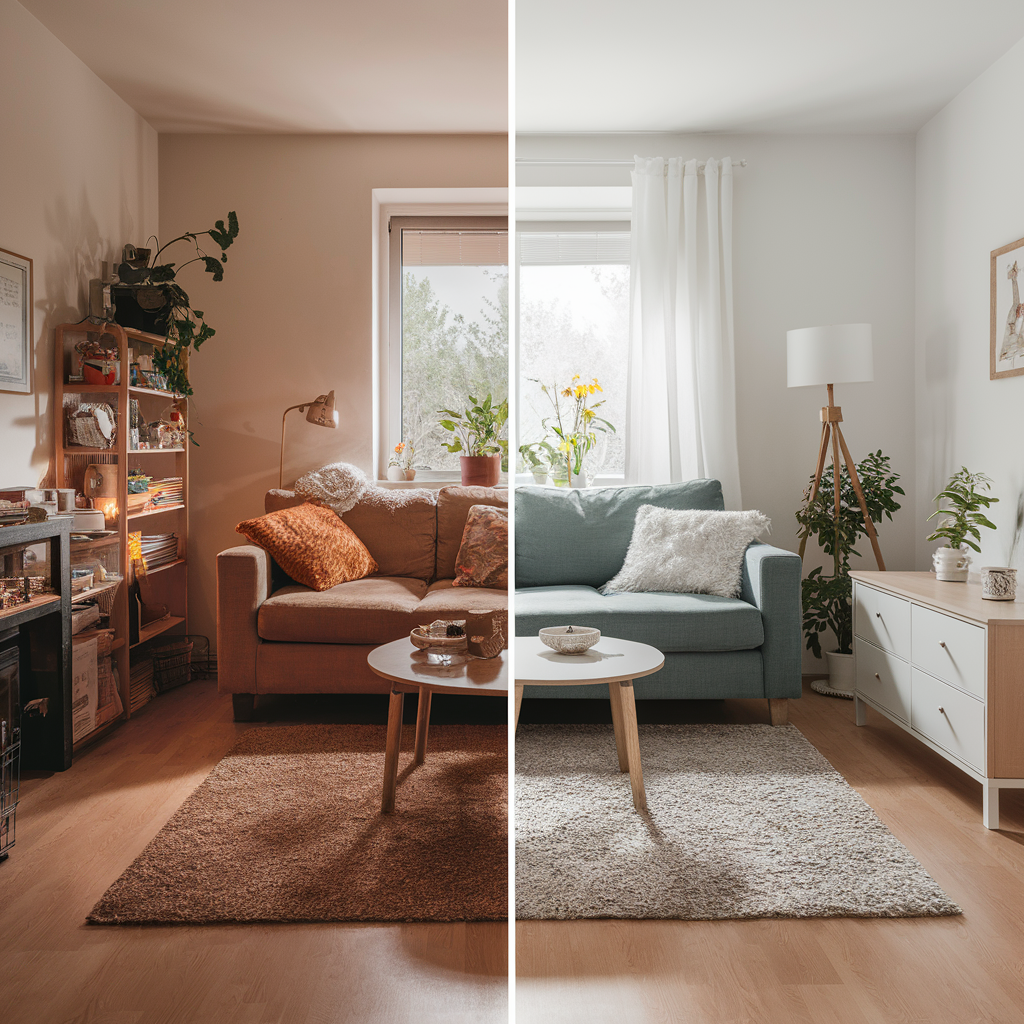
The Science Behind Clutter and Mental Health
Research has consistently shown a strong connection between our physical environments and our psychological state. A study published in the Journal of Environmental Psychology found that individuals living in cluttered homes experienced higher levels of cortisol (the stress hormone) throughout the day. Unlike participants with more organized living spaces, those surrounded by clutter reported persistent feelings of tension and fatigue.
What Happens to Your Brain in a Cluttered Environment
When your surroundings are disorganized, your brain processes multiple visual stimuli simultaneously. This sensory overload forces your cognitive resources to work overtime, leading to:
- Mental fatigue: Your brain must continuously decide what deserves attention and what should be ignored
- Reduced working memory: Processing excessive visual information depletes cognitive resources needed for other tasks
- Difficulty focusing: The constant visual competition makes sustaining attention more challenging
- Impaired decision-making: When overwhelmed by choices and stimuli, decision fatigue sets in faster
Neuroscientists at Princeton University found that physical clutter competes for your attention, resulting in decreased performance and increased stress. Their research demonstrated that a visually cluttered environment limits your brain’s ability to process information and focus effectively.
The Psychological Impact of Living With Clutter
Increased Stress and Anxiety
One of the most immediate effects of clutter is elevated stress levels. When you’re surrounded by disorganization, your brain interprets it as unfinished business. This triggers a low-grade fight-or-flight response, causing:
- Persistent feelings of tension
- Difficulty relaxing in your own space
- Heightened anxiety, especially when thinking about tackling the mess
- Elevated cortisol levels throughout the day
A study from UCLA’s Center on Everyday Lives of Families documented a direct link between clutter density in homes and occupants’ stress hormone levels, particularly affecting women. Participants with cluttered homes displayed flatter diurnal cortisol slopes—a pattern associated with chronic stress.
Diminished Focus and Productivity
Clutter doesn’t just make you feel stressed—it actively sabotages your ability to work efficiently:
- Visual distractions constantly pull your attention away from important tasks
- Mental energy gets diverted to ignoring irrelevant objects
- Task completion takes longer due to divided attention
- Creative thinking becomes more difficult when surrounded by disorder
This productivity drain isn’t just perception—it’s been quantified. A survey by the National Association of Professional Organizers found that the average person wastes nearly an hour daily looking for misplaced items in cluttered environments.
Impact on Mood and Emotional Wellbeing
Beyond stress and productivity issues, clutter can significantly affect your emotional state:
- Feelings of shame: Many people report embarrassment about their cluttered spaces, leading to social isolation
- Decreased satisfaction: Disorganized environments correlate with lower life satisfaction scores
- Sense of being overwhelmed: The visual reminder of incomplete tasks can create a persistent feeling that life is out of control
- Relationship strain: Disagreements about clutter and cleanliness rank among the top sources of conflict between cohabitants

Why We Accumulate Clutter: Understanding the Psychology
Understanding why we collect and keep excess possessions is essential for addressing the root causes of clutter:
Emotional Attachment to Objects
Many items become extensions of our identities, memories, or relationships:
- Memory triggers: Objects that evoke specific memories become difficult to discard
- Identity preservation: Possessions representing past identities (e.g., college textbooks, career mementos)
- Connection to loved ones: Items given by or inherited from important people carry emotional significance
- Future self projection: Keeping things for an imagined future scenario (“I might need this someday”)
Decision Fatigue and Procrastination
The mental energy required to make decisions about each item often leads to:
- Deferred choices: Putting off decisions about what to keep or discard
- Path of least resistance: Temporarily placing items in visible areas “just for now”
- Decision avoidance: The paradox of choice makes sorting through accumulated possessions increasingly overwhelming
Scarcity Mindset and Consumption Cycles
Economic factors and societal pressures also contribute to clutter:
- Fear of not having enough: Past experiences of scarcity can drive excessive acquisition
- Sale psychology: Purchasing items not because they’re needed but because they’re discounted
- Consumption as coping: Shopping as a stress relief mechanism creates cycles of accumulation
The Remarkable Benefits of Decluttering for Mental Health
The positive psychological effects of creating an organized environment are substantial and well-documented:
Reduced Stress and Anxiety
Creating order in your physical space has immediate effects on stress levels:
- Lower cortisol production throughout the day
- Decreased visual stimulation allows the nervous system to regulate more effectively
- Removal of environmental stressors that trigger anxiety responses
- Creation of a true “sanctuary” where relaxation becomes easier
Enhanced Focus and Cognitive Function
With fewer visual distractions, your brain can allocate resources more efficiently:
- Improved ability to concentrate on demanding tasks
- Enhanced working memory function
- Better information processing capabilities
- Reduced mental fatigue during complex projects
Improved Mood and Emotional Wellbeing
Many people report significant mood improvements after decluttering:
- Increased sense of accomplishment and self-efficacy
- Greater environmental control correlates with reduced depression symptoms
- Pride and satisfaction in your living or working space
- Improved sleep quality in uncluttered bedrooms
A study in the Personality and Social Psychology Bulletin found that people who described their homes as “cluttered” or full of “unfinished projects” were more likely to be depressed and fatigued than those who described their homes as “restful” and “restorative.”

Practical Strategies for Decluttering to Improve Mental Wellbeing
Transforming your space doesn’t require an extreme makeover. Here are evidence-based approaches to reducing clutter and supporting your mental health:
Start Small: The 15-Minute Method
Overwhelming projects often lead to abandonment. Instead:
- Set a timer for just 15 minutes of focused decluttering
- Work on a single, well-defined area (one drawer, one countertop)
- Stop when the timer rings, regardless of completion
- Celebrate the progress made, however small
This approach prevents burnout while creating momentum through visible improvements.
The Four-Box Method: Simplifying Decisions
Decision fatigue can be mitigated with a clear system:
- Keep: Items you use regularly or that bring genuine joy
- Donate/Sell: Useful items that no longer serve you
- Storage: Seasonal or occasional items worth keeping but not displaying
- Trash: Damaged, expired, or valueless items
Having predetermined categories reduces the mental load of constant decision-making.
Mindful Acquisition: Breaking the Accumulation Cycle
Preventing future clutter is as important as addressing what you already have:
- Implement a “one in, one out” rule for categories like clothing
- Before purchasing, wait 24-48 hours to ensure the item is truly needed
- Consider the “true cost” of ownership (space, maintenance, eventual disposal)
- Practice asking: “Does this align with who I am now and who I want to be?”
Digital Decluttering: Addressing Virtual Chaos
Digital clutter affects mental wellbeing similarly to physical disorder:
- Schedule regular email cleanups and unsubscribe from newsletters you don’t read
- Organize digital photos into simple, searchable folders
- Remove unused apps from your devices
- Create a filing system for digital documents with consistent naming conventions
Special Considerations for Different Living Situations
Small Spaces and Apartments
Limited square footage requires strategic approaches:
- Focus on dual-purpose furniture with built-in storage
- Utilize vertical space with wall shelving and door organizers
- Practice the “one in, one out” rule more strictly
- Consider digital alternatives for physical media (books, music, documents)
Families with Children
Managing clutter with kids requires sustainable systems:
- Create simple organizational systems children can maintain
- Implement regular toy rotations rather than having all toys available simultaneously
- Teach decluttering as a family value through modeling and age-appropriate participation
- Use visual cues and labeled containers for younger children
Shared Living Spaces
When decluttering affects others:
- Focus first on your personal spaces and possessions
- Establish shared agreements about common areas
- Respect others’ attachment to their possessions
- Consider compromise solutions like designated “clutter zones”
When Clutter Reflects Deeper Issues
Recognizing When Professional Help Might Be Needed
In some cases, extreme clutter may indicate underlying conditions:
- Hoarding disorder: Characterized by persistent difficulty discarding possessions regardless of value
- Depression: Can manifest as diminished ability to maintain one’s environment
- ADHD: May contribute to disorganization and difficulty with sorting and maintenance
- Anxiety disorders: Fear of discarding items that might be needed
If clutter significantly impairs your functioning or causes extreme distress, consider consulting:
- Mental health professionals who specialize in related conditions
- Professional organizers with expertise in chronic disorganization
- Support groups for those struggling with similar challenges
Maintaining Mental Wellbeing Through Ongoing Organization
Creating lasting change involves establishing sustainable habits:
Daily Maintenance Rituals
Small, consistent actions prevent accumulation:
- Allocate 5-10 minutes each evening for a quick reset of main living areas
- Process mail immediately rather than creating piles
- Return items to designated locations after use
- Make beds and clear surfaces as part of morning routines
Seasonal Reassessment
Periodic reviews maintain organizational systems:
- Schedule quarterly decluttering sessions for problem areas
- Reassess storage solutions as your needs change
- Rotate seasonal items in and out of primary living spaces
- Evaluate whether organizational systems are working or need adjustment
Conclusion: Creating Space for Mental Clarity
The relationship between your physical environment and mental wellbeing is powerful and reciprocal. By understanding how clutter affects your psychological state and taking steps to create more ordered surroundings, you’re not just cleaning your space—you’re actively supporting your cognitive function, emotional health, and overall quality of life.
Remember that the goal isn’t perfection or minimalism (unless that’s your preference), but rather creating an environment that supports rather than hinders your mental health. Even small changes in how you organize your physical surroundings can lead to significant improvements in how you feel and function.
By making decluttering a consistent practice rather than a one-time event, you create the conditions for sustained mental wellbeing—proving that sometimes, the path to a clearer mind starts with a clearer space.