

Strong, powerful legs are the foundation of overall physical fitness and athletic performance. Beyond aesthetics, well-developed leg muscles support everyday movements, enhance sports performance, and contribute significantly to your metabolic health. Whether you’re looking to boost your squat numbers, build impressive quad definition, or simply improve functional strength, investing in proper leg training is non-negotiable. This comprehensive guide breaks down the 15 most effective leg exercises for building strength and muscle, complete with proper technique, variations, and programming recommendations suitable for everyone from beginners to advanced lifters. Get ready to transform your leg day routine and unlock your lower body potential.
Understanding Leg Anatomy and Muscle Groups
Before diving into specific exercises, it’s essential to understand the major muscle groups in your legs and how they function together:
- Quadriceps (Quads): Located on the front of your thigh, this four-muscle group (vastus lateralis, vastus medialis, vastus intermedius, and rectus femoris) is primarily responsible for knee extension.
- Hamstrings: These three muscles (biceps femoris, semitendinosus, and semimembranosus) run along the back of your thigh and function to bend the knee and extend the hip.
- Gluteals (Glutes): Your buttocks muscles, consisting of the gluteus maximus, medius, and minimus, are crucial for hip extension, rotation, and stabilization.
- Calves: The gastrocnemius (upper calf) and soleus (lower calf) work together to plantar flex the foot (pointing your toes).
- Adductors: Located on your inner thigh, these muscles help bring your legs toward your body’s midline.
Balanced development across all these muscle groups is crucial not only for aesthetic symmetry but also for functional strength, injury prevention, and optimal athletic performance.

Key Principles for Effective Leg Training
To maximize your leg development, follow these fundamental principles:
Progressive Overload
The most crucial principle for continued growth is progressively challenging your muscles by gradually increasing:
- Weight lifted
- Repetitions performed
- Sets completed
- Training frequency
- Exercise difficulty
Training Frequency
For optimal results, train legs 1-2 times per week, allowing 48-72 hours between sessions for recovery. Advanced lifters may benefit from higher frequency training with careful volume management.
Volume Considerations
Most lifters respond well to 12-20 total sets for legs per week, distributed across training sessions. Beginners should start at the lower end of this range and gradually increase volume as their recovery capacity improves.
Rest and Recovery
Leg training is particularly demanding on the central nervous system and requires adequate recovery. Ensure sufficient sleep (7-9 hours), proper nutrition, and consider active recovery methods like stretching, foam rolling, or light cardio between intense leg sessions.
Proper Warm-Up
Due to the size and power of leg muscles, thorough warm-up is essential:
- 5-10 minutes of light cardio to increase core temperature
- Dynamic stretching to activate key muscle groups
- Gradually increasing weight through warm-up sets before reaching working weights
Compound Leg Exercises (The Foundation)
1. Barbell Back Squat
The back squat is rightfully considered the king of leg exercises, engaging nearly every muscle in your lower body while building tremendous strength and size.
Technique:
- Position the barbell on a rack at upper chest height
- Step under the bar, placing it across your upper back/traps (not on your neck)
- Grip the bar slightly wider than shoulder-width
- Unrack the weight, taking 2-3 steps back
- Set your feet shoulder-width or slightly wider apart
- Brace your core and maintain a neutral spine
- Begin the descent by hinging at the hips and bending the knees
- Lower until thighs are parallel to the ground (or lower based on mobility)
- Drive through your heels and midfoot to return to the starting position
Common Mistakes:
- Allowing knees to cave inward
- Rising onto toes/heels lifting
- Excessive forward lean
- Looking down instead of straight ahead
- Failure to reach appropriate depth
Variations: Low-bar squat, box squat, pause squat, tempo squat
2. Front Squat
Front squats shift the load to the front of your body, placing greater emphasis on the quadriceps while demanding more core strength and upper back stability.
Technique:
- Position the barbell at chest height on a rack
- Step under the bar and place it across the front of your shoulders
- Create a “shelf” with your deltoids for the bar to rest on
- Cross your arms in front of you to secure the bar (cross-arm grip) or use a clean grip with elbows high
- Unrack the weight and step back
- Position feet shoulder-width apart
- Keep chest up, elbows high throughout the movement
- Descend by breaking at the knees and hips simultaneously
- Lower until thighs are at least parallel to the floor
- Drive through your heels and midfoot to stand
Benefits vs. Back Squat:
- Greater quadriceps activation
- Reduced spinal compression
- Enforces more upright torso position
- Better carryover to athletic movements
- Improved core engagement
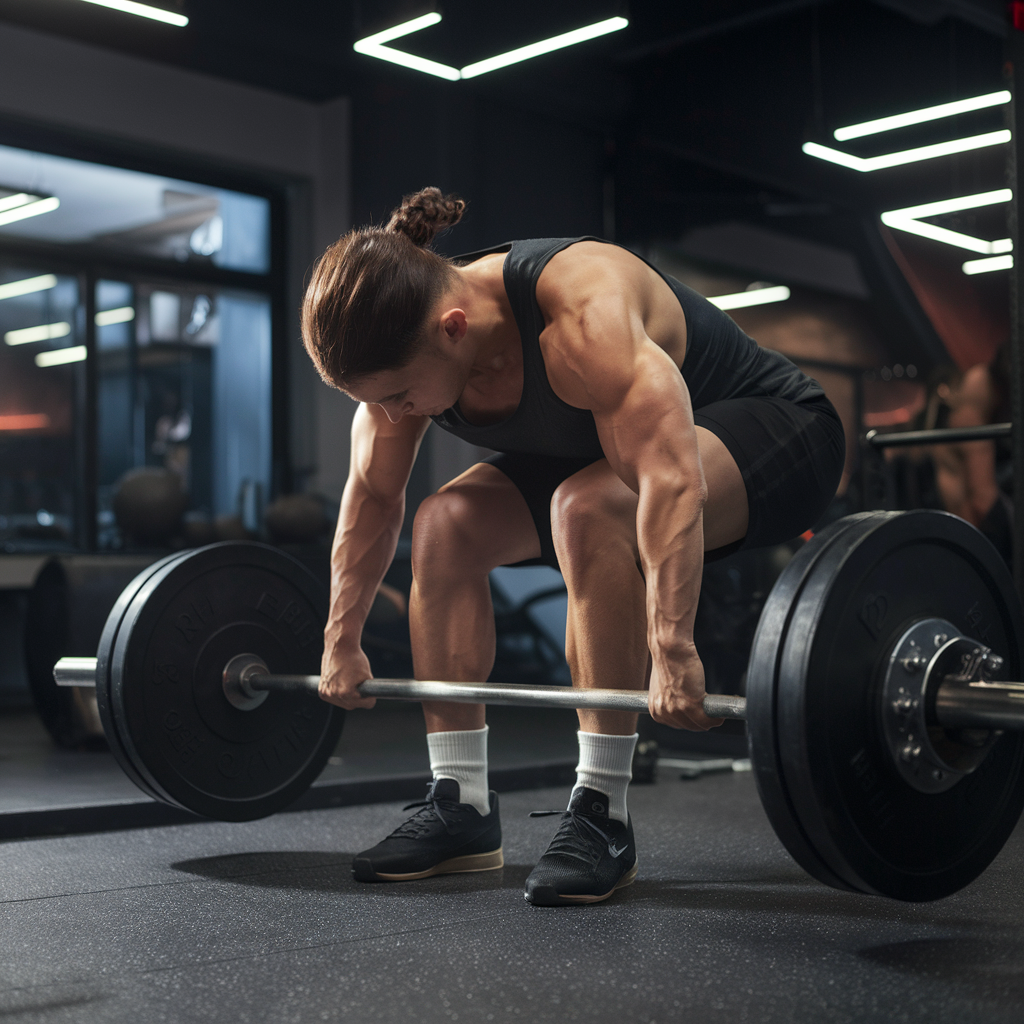
3. Conventional Deadlift
The deadlift is unmatched for developing total posterior chain strength, engaging everything from your hamstrings and glutes to your lower back.
Technique:
- Stand with feet hip-width apart, toes pointing slightly outward
- Position the barbell over the middle of your feet
- Bend at the hips and knees to grip the bar just outside your legs
- Lower hips until shins touch the bar, keeping back flat
- Chest up, shoulders back and down
- Take a deep breath, brace your core
- Drive through the floor with your legs while keeping the bar close to your body
- Once the bar passes your knees, drive hips forward to standing position
- Lower the weight by hinging at the hips first, then bending knees
Safety Considerations:
- Maintain a neutral spine throughout the entire movement
- Never round your lower back
- Keep the bar close to your body throughout the lift
- Control the descent rather than dropping the weight
- Use appropriate weight that allows proper form
4. Romanian Deadlift (RDL)
The Romanian deadlift is a hip-hinge movement that specifically targets the hamstrings and glutes while minimizing knee involvement.
Technique:
- Start holding a barbell at hip level with a shoulder-width grip
- Set feet hip-width apart
- Initiate the movement by pushing your hips back
- Keep a slight bend in your knees throughout (not a squatting motion)
- Lower the bar by hinging at the hips, maintaining a flat back
- Allow the bar to travel close to your legs
- Lower until you feel a stretch in your hamstrings (typically mid-shin level)
- Drive hips forward to return to the starting position
- Squeeze glutes at the top of the movement
Form Cues:
- “Push your hips back like you’re closing a door with your butt”
- “Keep the bar in contact with your legs throughout”
- “Maintain a proud chest”
- “Feel the stretch in your hamstrings, not your lower back”
5. Leg Press
The leg press allows you to load the legs heavily with reduced technical demands and lower back stress compared to free-weight squat variations.
Machine Setup:
- Adjust the seat position so your knees form a 90-degree angle when in the starting position
- Place your feet on the platform at shoulder-width apart
- Ensure your lower back is pressed firmly against the pad
- Grasp the handles at the sides for stability
Foot Placement Variations:
- Standard (mid-platform): Balanced quadriceps and glute development
- High foot placement: Greater glute and hamstring emphasis
- Low foot placement: Increased quadriceps focus
- Wide stance: More adductor and inner quad engagement
- Narrow stance: Greater outer quad development
Safety Tips:
- Never lock out your knees completely at the top
- Maintain lower back contact with the seat throughout
- Control the weight through the entire range of motion
- Use safety stops appropriate for your range of motion
Quadriceps-Focused Exercises
6. Barbell Lunges
Lunges are excellent unilateral exercises that develop quadriceps strength, balance, and functional movement patterns.
Forward Lunge Technique:
- Start with a barbell across your upper back as in a back squat
- Take a controlled step forward with one leg
- Lower your body until both knees form approximately 90-degree angles
- Front knee should be aligned with your ankle, not extending past your toes
- Back knee should hover just above the ground
- Push through the front heel to return to starting position
- Complete all reps on one leg before switching, or alternate legs
Reverse Lunge Technique:
- Same starting position as forward lunge
- Step backward with one leg
- Lower your body until both knees reach 90-degree angles
- Push through the front foot to return to starting position
Benefits of Reverse vs. Forward Lunges:
- Reduced knee stress
- Greater balance and stability
- More glute activation
- Often easier for beginners to master
Walking Lunge Variation:
Continue moving forward with each rep, alternating legs for a more dynamic and challenging exercise that also tests cardiovascular endurance.
7. Bulgarian Split Squats
This challenging unilateral exercise builds exceptional quadriceps strength while addressing muscular imbalances and improving stability.
Setup and Execution:
- Stand about 2-3 feet in front of a bench or platform
- Place the top of one foot on the bench behind you
- Keep your front foot firmly planted on the ground
- Maintain an upright torso and brace your core
- Lower your body by bending your front knee
- Descend until your front thigh is parallel to the ground
- Drive through the heel of your front foot to return to starting position
- Complete all reps on one leg before switching sides
Benefits of Single-Leg Training:
- Identifies and corrects strength imbalances between legs
- Improves balance and proprioception
- Increases core activation
- Reduces the load needed for effective training
- Better mimics athletic movements and everyday activities
8. Hack Squats
Hack squats use a specialized machine to target the quadriceps while providing back support and a fixed movement path.
Machine Hack Squat Technique:
- Position your back against the pad with shoulders under the shoulder pads
- Place feet shoulder-width apart on the platform
- Release the safety handles
- Lower your body by bending at the knees and hips
- Descend until thighs are parallel to the platform (or slightly lower)
- Push through your feet to return to the starting position
- Avoid locking out knees at the top
Foot Placement Options:
- Standard (mid-platform): Balanced quadriceps development
- Lower foot placement: Greater emphasis on vastus medialis (teardrop muscle)
- Wider stance: More adductor engagement
- Toes pointed slightly outward: Better alignment with knee tracking
Hamstring-Focused Exercises
9. Lying Leg Curls
This isolation exercise directly targets the hamstrings through knee flexion movement.
Technique:
- Lie face down on the machine with the pad just above your heels
- Grip the handles for stability
- Curl your legs upward by bending at the knees
- Bring your heels as close to your buttocks as possible
- Hold the contracted position briefly
- Lower the weight in a controlled manner
- Avoid lifting your hips off the pad during the movement
Mind-Muscle Connection Tips:
- Visualize your hamstrings shortening during the contraction
- Focus on initiating the movement from the hamstrings, not the calves
- Consider pointing your toes to minimize calf involvement
- Try different foot positions (neutral, turned in, turned out) to target different aspects of the hamstrings
10. Seated Leg Curls
Seated leg curls provide an alternative hamstring training option that some find more comfortable for their lower backs.
Differences from Lying Leg Curls:
- Hip position is flexed rather than extended
- Often provides better isolation of the hamstrings
- Can be more comfortable for those with lower back issues
- May allow better focus on the upper portion of the hamstrings
Technique:
- Adjust the machine so your knees align with the pivot point
- Position the resistance pad against your lower calves
- Secure yourself with any available restraints
- Flex your knees to pull the pad downward and back
- Contract your hamstrings fully at the bottom position
- Return to the starting position with control
11. Good Mornings
Good mornings are an excellent compound exercise for the posterior chain, emphasizing the hamstrings, glutes, and lower back.
Technique:
- Place a barbell across your upper back as in a back squat
- Stand with feet hip to shoulder-width apart
- Maintain a slight bend in your knees throughout
- Brace your core and keep your back flat
- Hinge forward at the hips, pushing your buttocks backward
- Lower your torso until it’s nearly parallel to the floor (or as far as flexibility allows)
- Maintain a neutral spine position throughout
- Drive your hips forward to return to the starting position
Safety Considerations:
- Start with light weight to master proper form
- Never round your lower back
- Keep the movement controlled throughout
- Maintain core tension to protect your spine
- Consider using a safety squat bar for better comfort
Glute-Focused Exercises
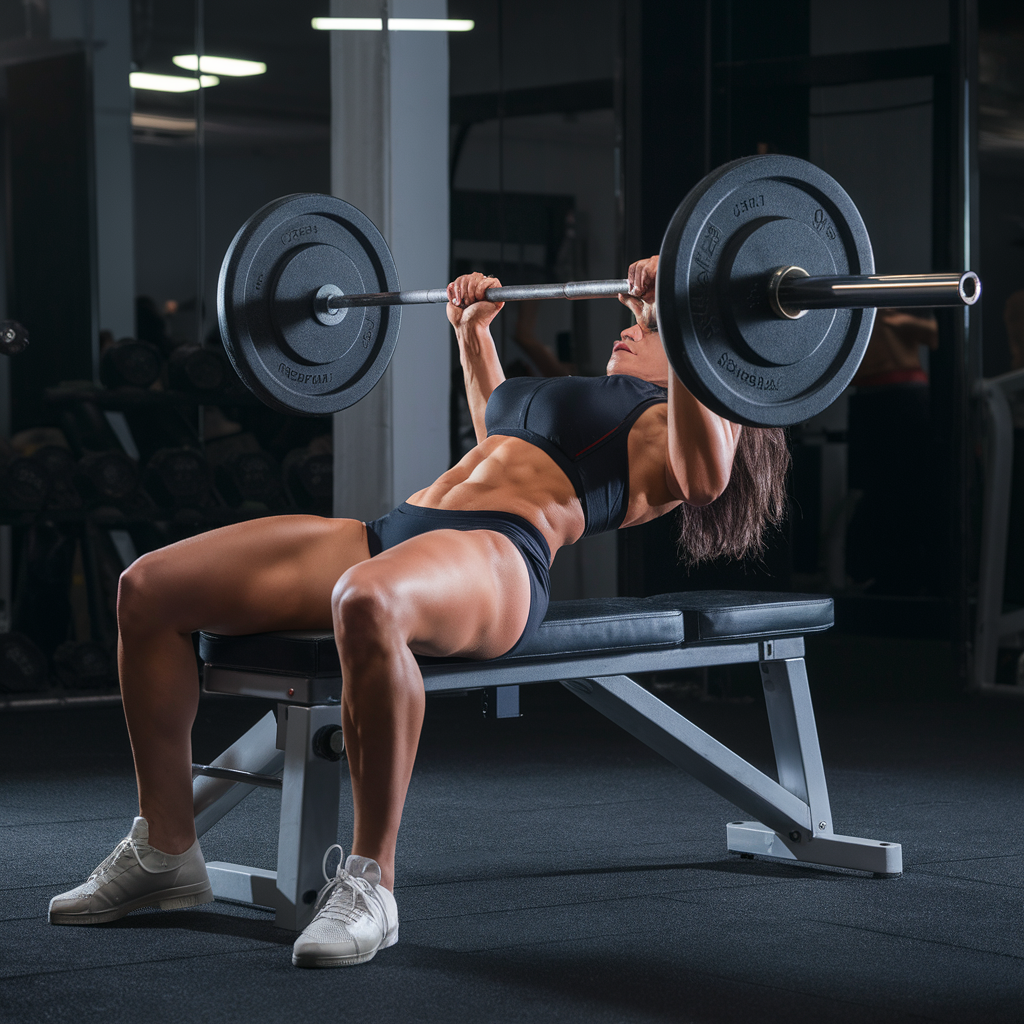
12. Hip Thrusts
Hip thrusts have become a staple exercise for glute development, allowing for heavy loading with minimal stress on the spine.
Setup and Execution:
- Sit on the ground with your upper back against a bench
- Roll a barbell over your legs and position it in the crease of your hips
- Use a pad or specialized hip thrust pad for comfort
- Place feet flat on the floor, about shoulder-width apart
- Bend knees to approximately 90 degrees
- Drive through your heels to lift your hips until your body forms a straight line from shoulders to knees
- Squeeze your glutes at the top position
- Lower your hips with control and repeat
Maximizing Glute Activation:
- Focus on posterior pelvic tilt at the top (tucking your tailbone)
- Ensure knees track in line with toes
- Drive through heels rather than toes
- Keep ribs down to avoid excessive lower back arch
- Consider bands around knees for additional glute medius activation
13. Cable Pull-Throughs
This exercise teaches proper hip hinge mechanics while targeting the glutes and hamstrings with constant tension throughout the movement.
Technique:
- Set a cable pulley to the lowest position with a rope attachment
- Stand facing away from the machine, straddling the cable
- Reach between your legs to grasp the rope with both hands
- Step forward to create tension in the cable
- Stand with feet shoulder-width apart
- Maintaining a slight bend in your knees, hinge at the hips
- Allow the weight to pull your hands between your legs
- Lower until you feel a stretch in your hamstrings
- Drive your hips forward to return to standing position
- Squeeze glutes at the top of the movement
Programming Suggestions:
- Excellent as a glute/hamstring activation exercise before heavier lifts
- Works well in higher rep ranges (12-20) for muscle endurance
- Can be used as a finisher after main lifts
- Pairs well with Romanian deadlifts or good mornings
Calf Exercises
14. Standing Calf Raises
Standing calf raises primarily target the gastrocnemius, the larger, more visible calf muscle.
Machine Technique:
- Position shoulders under the pads of a standing calf raise machine
- Place the balls of your feet on the platform with heels hanging off
- Stand up straight with knees slightly bent or fully extended
- Lower your heels as far as possible, feeling a stretch in your calves
- Rise onto your toes as high as possible
- Hold the contracted position briefly
- Lower with control and repeat
Free Weight Alternative:
- Hold dumbbells or a barbell while standing on a platform or step
- Balance yourself against a wall or rack if needed
- Perform the same raising and lowering movement
Tempo Considerations:
- Slow eccentric (lowering) phase: 3-4 seconds
- Brief pause at the bottom: 1-2 seconds
- Explosive concentric (rising) phase: 1 second
- Squeeze at the top: 1-2 seconds
15. Seated Calf Raises
Seated calf raises isolate the soleus, a deep calf muscle that’s crucial for endurance activities and overall lower leg development.
Technique:
- Sit on a seated calf raise machine with knees bent at 90 degrees
- Place the balls of your feet on the platform with heels hanging off
- Position knees under the pad
- Release the safety mechanism
- Lower your heels as far as possible
- Rise onto your toes as high as possible
- Lower with control and repeat
Complete Calf Development:
- Combine seated and standing variations for full calf development
- Vary foot positions (straight, toes in, toes out) to target different areas
- Use higher rep ranges (15-25) for best results
- Consider training calves 2-3 times per week due to their recovery capacity
- Focus on complete range of motion rather than heavy weight
Building Your Leg Workout Routine
Sample Beginner Leg Workout:
- Barbell Back Squat: 3 sets of 8-10 reps
- Romanian Deadlift: 3 sets of 10-12 reps
- Leg Press: 3 sets of 12-15 reps
- Lying Leg Curl: 2 sets of 12-15 reps
- Standing Calf Raises: 3 sets of 15-20 reps
Intermediate Program Structure:
- Barbell Back Squat: 4 sets of 6-8 reps
- Romanian Deadlift: 3 sets of 8-10 reps
- Bulgarian Split Squat: 3 sets of 10-12 reps per leg
- Leg Extensions (superset with next exercise): 3 sets of 12-15 reps
- Seated Leg Curls: 3 sets of 12-15 reps
- Standing Calf Raises: 4 sets of 15-20 reps
- Seated Calf Raises: 3 sets of 15-20 reps
Advanced Leg Training Split:
Day 1: Quad Focus
- Back Squat: 5 sets of 5 reps
- Hack Squat: 4 sets of 8-10 reps
- Leg Press (narrow stance): 3 sets of 10-12 reps
- Bulgarian Split Squat: 3 sets of 12 reps each leg
- Leg Extension: 3 sets of 15-20 reps (with drop set on final set)
- Standing Calf Raises: 4 sets of 15-20 reps
Day 2: Hamstring/Glute Focus
- Conventional Deadlift: 5 sets of 5 reps
- Romanian Deadlift: 4 sets of 8-10 reps
- Hip Thrust: 4 sets of 10-12 reps
- Lying Leg Curl: 3 sets of 12-15 reps
- Cable Pull-Through: 3 sets of 15-20 reps
- Seated Calf Raises: 4 sets of 15-20 reps
Rep Ranges for Different Goals:
- Strength focus: 1-6 reps with heavier weights (85-95% of 1RM)
- Hypertrophy focus: 8-12 reps with moderate weights (70-85% of 1RM)
- Endurance focus: 15-20+ reps with lighter weights (below 70% of 1RM)
Progressive Overload Strategies for Legs
Consistent progress requires systematic implementation of progressive overload principles:
Weight Progression Methods:
- Linear progression: Add 5-10 pounds to major lifts each week
- Double progression: Increase reps at current weight until reaching the top of your range, then add weight and start at the bottom of your rep range
- Percentage-based programs: Work with specific percentages of your one-rep maximum
Volume Manipulation Techniques:
- Add sets: Increase from 3 to 4 or 4 to 5 sets before adding weight
- Add reps: Perform additional reps across all sets before increasing weight
- Increase frequency: Add an additional leg training day when progress slows
Intensity Techniques:
- Drop sets: Immediately reduce weight and continue when reaching failure
- Supersets: Pair complementary exercises without rest (e.g., leg extension + leg curl)
- Rest-pause sets: Take mini-rests (10-15 seconds) and continue with same weight
- Tempo training: Manipulate lifting speeds to increase time under tension
Nutrition for Leg Development
Proper nutrition is essential for supporting leg growth and recovery:
Protein Requirements:
- Consume 1.6-2.2g of protein per kg of bodyweight daily
- Distribute protein intake across 4-6 meals
- Include a protein-rich meal within 2 hours post-workout
- Quality sources: lean meats, eggs, dairy, legumes, and protein supplements
Carbohydrate Timing:
- Consume carbohydrates 1-2 hours pre-workout for energy
- Include fast-digesting carbs immediately post-workout to replenish glycogen
- Adjust total carbohydrate intake based on training volume and goals
- Quality sources: oats, rice, potatoes, fruits, and whole grains
Recovery Nutrition:
- Post-workout meal with 3:1 or 4:1 carb-to-protein ratio
- Adequate hydration before, during, and after training
- Consider tart cherry juice or other anti-inflammatory foods to reduce soreness
- Sufficient dietary fat (0.5-1g per kg of bodyweight) for hormonal health
Common Leg Training Mistakes and Solutions
Avoid these common pitfalls to maximize your leg development:
Poor Form Issues:
- Problem: Partial range of motion
- Solution: Temporarily reduce weight and focus on full ROM; consider box squats to establish proper depth
- Problem: Knee caving during squats
- Solution: Strengthen glute medius with band work; focus on “spreading the floor” with feet
- Problem: Rising onto toes during squats
- Solution: Improve ankle mobility; consider squat shoes or temporary heel elevation
Recovery Issues:
- Problem: Excessive soreness lasting days
- Solution: Gradually increase volume; implement active recovery; ensure adequate protein intake
- Problem: Joint pain during training
- Solution: Examine technique; consider joint supplements; implement deload weeks
Plateau Breaking Strategies:
- Implement a deload week to refresh the nervous system
- Rotate exercises while maintaining movement patterns
- Change rep ranges for 4-6 weeks
- Introduce new intensity techniques
- Assess and address weaknesses in specific muscles or movement patterns
Conclusion
Building strong, well-developed legs requires a strategic approach combining effective exercises, proper programming, adequate nutrition, and consistent progressive overload. The 15 exercises outlined in this guide provide a comprehensive toolbox for targeting all aspects of leg development—from the powerful quadriceps and hamstrings to the often-neglected calves and adductors.
Remember that leg development is a marathon, not a sprint. The largest muscle groups in your body require significant time, effort, and recovery to grow. Be patient with your progress, listen to your body, and adjust your approach as needed. Consistency in both training and recovery will ultimately yield the results you seek.
Whether your goal is athletic performance, aesthetic development, or functional strength for everyday life, investing in your leg training will pay dividends across all aspects of your physical fitness. Embrace the challenge of leg day, implement the principles outlined in this guide, and watch your lower body strength and development reach new heights.
FAQs About Leg Training
How often should I train legs for optimal growth?
Most people respond best to training legs 1-2 times per week, allowing 48-72 hours between sessions for recovery. Advanced lifters may benefit from higher frequency training (e.g., quad focus one day, hamstring focus another) if volume per session is appropriately managed.
Why am I not seeing growth despite training legs consistently?
Common reasons include insufficient progressive overload, inadequate training volume, poor exercise selection for your individual structure, insufficient nutrition (especially protein), or inadequate recovery. Track your workouts, ensure you’re progressively increasing demands, and assess your nutrition and recovery practices.
Is it normal to feel leg training in my lower back?
While some exercises like deadlifts involve the lower back as a stabilizer, feeling primary stress in your lower back during leg exercises usually indicates form issues. Common problems include excessive forward lean during squats, rounded back during deadlifts, or core instability. Focus on maintaining a neutral spine and proper bracing techniques.
How do I know if I’m squatting deep enough?
For most training purposes, descending until your thighs are at least parallel to the floor (hip crease at or below knee level) is considered sufficient depth. Individual factors like anatomy and mobility may affect optimal squat depth. Focus on reaching a depth that allows full muscle activation while maintaining proper form.
What should I do if I have significant strength imbalances between legs?
Incorporate unilateral (single-leg) exercises like Bulgarian split squats, lunges, and single-leg RDLs into your routine. Consider starting your workouts with the weaker leg and matching the volume with your stronger leg. Over time, this approach will help correct imbalances while still developing both legs.