

Heavy cream is a staple ingredient in many kitchens, prized for its rich texture and ability to enhance both sweet and savory dishes. However, whether you’re dealing with dietary restrictions, health concerns, or simply ran out of heavy cream mid-recipe, finding the right substitute can make or break your culinary creation. This comprehensive guide explores the best heavy cream substitutes available, from dairy-based alternatives to vegan options, helping you choose the perfect replacement for any cooking or baking need.
Understanding Heavy Cream in Cooking
Heavy cream, also known as heavy whipping cream, contains approximately 36% milk fat, making it the richest dairy cream available. This high fat content gives heavy cream its distinctive properties that make it so valuable in cooking and baking.
In recipes, heavy cream serves multiple crucial functions. It provides luxurious texture and richness to soups, sauces, and desserts. The fat content allows it to whip into stable peaks for toppings and mousses. Heavy cream also acts as an emulsifier, helping to bind ingredients together smoothly, and its heat stability prevents curdling in hot preparations.
When selecting a substitute, consider which function is most important in your specific recipe. Some alternatives excel at providing richness, while others are better for whipping or heat stability.
Dairy-Based Heavy Cream Substitutes
Milk and Butter Combination
One of the most effective dairy-based substitutes combines whole milk with butter to mimic heavy cream’s fat content. To make this substitute, melt 1/4 cup of unsalted butter and slowly whisk it into 3/4 cup of whole milk. This creates approximately one cup of heavy cream substitute with a similar fat content.
This combination works exceptionally well in soups, sauces, and baked goods where the slightly different texture won’t be noticeable. However, it won’t whip like true heavy cream, so avoid this substitute for desserts requiring whipped cream.
Half-and-Half Plus Butter
For a slightly lighter option, combine 7/8 cup of half-and-half with 1/8 cup of melted butter. This creates a substitute that’s closer to heavy cream’s consistency than the milk and butter combination, making it ideal for coffee drinks and lighter sauces.
Evaporated Milk
Evaporated milk can substitute for heavy cream in a 1:1 ratio in most cooked applications. Its concentrated nature provides richness, though it has a slightly different flavor profile. This substitute works particularly well in soups, casseroles, and coffee drinks, but shouldn’t be used where whipping is required.
Dairy-Free and Vegan Alternatives
Coconut-Based Substitutes
Canned full-fat coconut milk stands as the most popular dairy-free heavy cream substitute. The thick cream that separates at the top of the can provides excellent richness and can even be whipped when chilled. Use the thick portion for whipping or the entire can contents for cooking applications.
For recipes requiring a neutral flavor, look for refined coconut milk options that minimize the coconut taste. This substitute works beautifully in curries, soups, and dairy-free desserts.
Cashew-Based Alternatives
Cashew cream offers incredible versatility and a neutral flavor profile. To make cashew cream, soak 1 cup of raw cashews in water for 4-8 hours, then blend with 1/2 to 3/4 cup of fresh water until completely smooth. The consistency can be adjusted by varying the water amount.
This substitute excels in both sweet and savory applications, providing richness without competing flavors. It works particularly well in pasta sauces, soups, and dairy-free ice creams.
Other Nut and Seed Options
Silken tofu blended with a small amount of plant milk creates a protein-rich heavy cream substitute. Blend 1/2 cup of silken tofu with 1/4 cup of unsweetened plant milk for a neutral-tasting alternative perfect for savory dishes.
Oat cream and commercial soy cooking creams also provide excellent alternatives, with oat cream offering natural sweetness ideal for coffee drinks and desserts.

Low-Fat and Healthier Alternatives
Greek Yogurt Combinations
Plain Greek yogurt mixed with milk creates a protein-rich, lower-fat substitute. Combine 3/4 cup of plain Greek yogurt with 1/4 cup of milk for each cup of heavy cream needed. This substitute works best in cold applications or when added to warm dishes at the end of cooking to prevent curdling.
Cottage Cheese Blends
Blend cottage cheese with a small amount of milk until smooth for another protein-rich alternative. This substitute works well in savory applications and provides a tangy flavor that complements many dishes. Strain the mixture for an even smoother consistency.
Ricotta-Based Substitutes
Fresh ricotta cheese whisked with milk creates a creamy substitute perfect for pasta sauces and desserts. Use equal parts ricotta and milk, then whisk until smooth. This alternative provides good texture while reducing calories compared to heavy cream.
Application-Specific Substitutions
For Baking
When baking, the milk and butter combination or coconut cream work best as they provide the necessary fat content for proper texture. Expect slightly different results in delicate pastries, but most cakes, muffins, and cookies will turn out excellently with these substitutes.
For Cooking and Sauces
Heat-stable alternatives like coconut milk, cashew cream, and the milk-butter combination excel in cooked applications. These substitutes won’t curdle when heated and provide the richness needed for creamy sauces and soups.
For Coffee and Beverages
Oat cream, coconut cream, and half-and-half with butter create excellent coffee creamers. Many of these alternatives can be frothed for specialty coffee drinks, though the texture may differ slightly from dairy cream.
For Whipping
Only a few substitutes can be successfully whipped. Chilled coconut cream from full-fat canned coconut milk whips well, as does aquafaba (chickpea liquid) when combined with cream of tartar. For best results, chill all equipment and ingredients before whipping.
Substitution Ratios and Conversion Chart
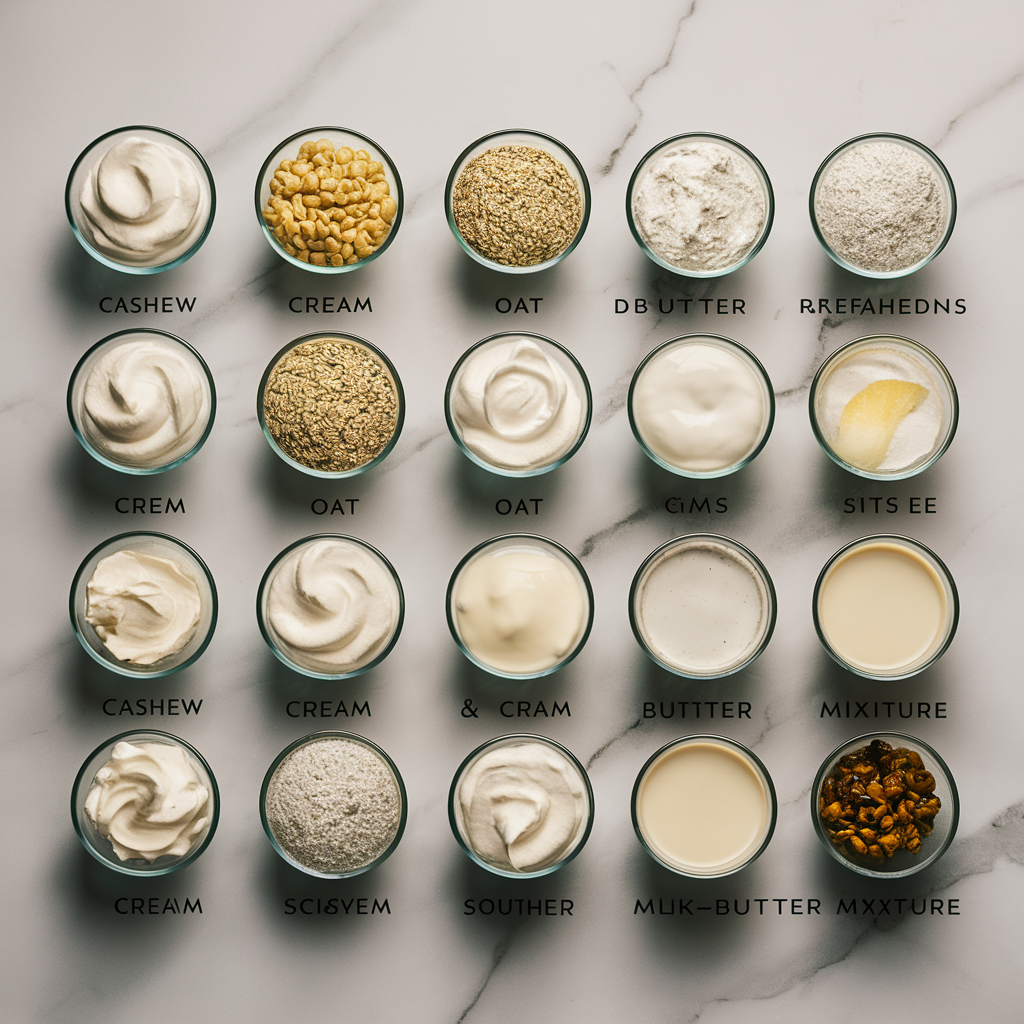
Most heavy cream substitutes can be used in a 1:1 ratio, but some require slight adjustments:
- Milk + Butter: 1:1 ratio (3/4 cup milk + 1/4 cup melted butter = 1 cup heavy cream)
- Coconut Milk: 1:1 ratio (use full-fat canned variety)
- Cashew Cream: 1:1 ratio (adjust thickness with water)
- Greek Yogurt + Milk: 1:1 ratio (3/4 cup yogurt + 1/4 cup milk)
- Evaporated Milk: 1:1 ratio (best for cooked applications)
Tips for Success
Store homemade substitutes in the refrigerator for up to one week. When using dairy-free alternatives in hot dishes, add them at the end of cooking to prevent separation. For whipping applications, ensure all ingredients and equipment are well-chilled.
Taste-test your chosen substitute in small amounts first, as some alternatives may slightly alter the flavor profile of your dish. Coconut-based substitutes work best in dishes where a slight coconut flavor is welcome or won’t be detected.
Nutritional Comparisons
Heavy cream contains approximately 400 calories and 43 grams of fat per cup. In comparison, coconut cream provides similar richness with about 560 calories but offers beneficial medium-chain triglycerides. Cashew cream delivers protein and healthy fats with roughly 200-300 calories per cup, depending on preparation.
Greek yogurt combinations significantly reduce calories while adding protein, making them excellent choices for health-conscious cooks. These alternatives also provide probiotics and other beneficial nutrients not found in traditional heavy cream.
Frequently Asked Questions
Can I freeze cream substitutes? Most substitutes can be frozen, though texture may change upon thawing. Coconut and cashew-based alternatives freeze best, while yogurt-based substitutes may separate.
Which substitute tastes most like heavy cream? The milk and butter combination provides the closest flavor match to traditional heavy cream, while cashew cream offers the most neutral taste among dairy-free options.
What’s the best substitute for keto diets? Full-fat coconut cream and the milk-butter combination provide the high fat content required for ketogenic diets while keeping carbohydrates minimal.
How do substitutes affect baking results? Most substitutes work well in baking, though you may notice slight differences in texture and rise. Dairy-free alternatives may produce slightly denser results in some baked goods.
Conclusion
Finding the perfect heavy cream substitute depends on your specific dietary needs, the application, and flavor preferences. For dairy-based alternatives, the milk and butter combination provides the closest match to traditional heavy cream. Dairy-free cooks will find coconut cream and cashew cream offer excellent versatility and richness.
Health-conscious individuals can enjoy Greek yogurt combinations for protein-rich alternatives, while those following specific diets like keto or vegan can find suitable options among coconut and nut-based substitutes. Remember that successful substitution often requires slight recipe adjustments and an understanding of how each alternative behaves in different cooking applications.
With these comprehensive options and tips, you’ll never have to abandon a recipe due to lack of heavy cream. Experiment with different substitutes to discover your favorites for various applications, and enjoy the creative possibilities that these alternatives bring to your cooking.