

Protein is the cornerstone of any effective nutrition plan, whether you’re looking to shed pounds or build muscle. High-protein snacks have gained popularity for good reason – they keep hunger at bay, support muscle recovery, and help maintain a healthy metabolism. The strategic addition of protein-rich snacks between meals can be the difference-maker in achieving your fitness goals, providing sustained energy and preventing the overconsumption that often comes with hunger pangs. In this comprehensive guide, we’ll explore the 15 best high-protein snacks that deliver convenience, nutrition, and satisfaction while supporting both weight loss and muscle-building objectives.
The Science Behind Protein for Weight Loss and Muscle Gain
Protein plays a critical role in both weight management and muscle development. When it comes to weight loss, protein creates a powerful satiety effect, triggering hormones that signal fullness while reducing ghrelin, your body’s primary hunger hormone. This natural appetite suppression helps prevent overeating and unnecessary snacking on less nutritious options.
For muscle gain, protein provides the essential amino acids required for muscle protein synthesis – the process of repairing and building new muscle tissue. Without adequate protein, your body lacks the building blocks necessary for recovery and growth, potentially leading to muscle loss even when exercising regularly.
Additionally, protein has a higher thermic effect of food (TEF) compared to carbohydrates and fats. This means your body burns more calories digesting protein – about 20-30% of the protein calories consumed – compared to just 5-10% for carbs and 0-3% for fats. This metabolic advantage contributes to an overall higher calorie burn throughout the day.
Most active adults should aim for 1.6-2.2g of protein per kilogram of body weight daily, with the higher end of the range beneficial for those focused on muscle building. Strategic snacking can help meet these targets while providing timely nutrition when your body needs it most.
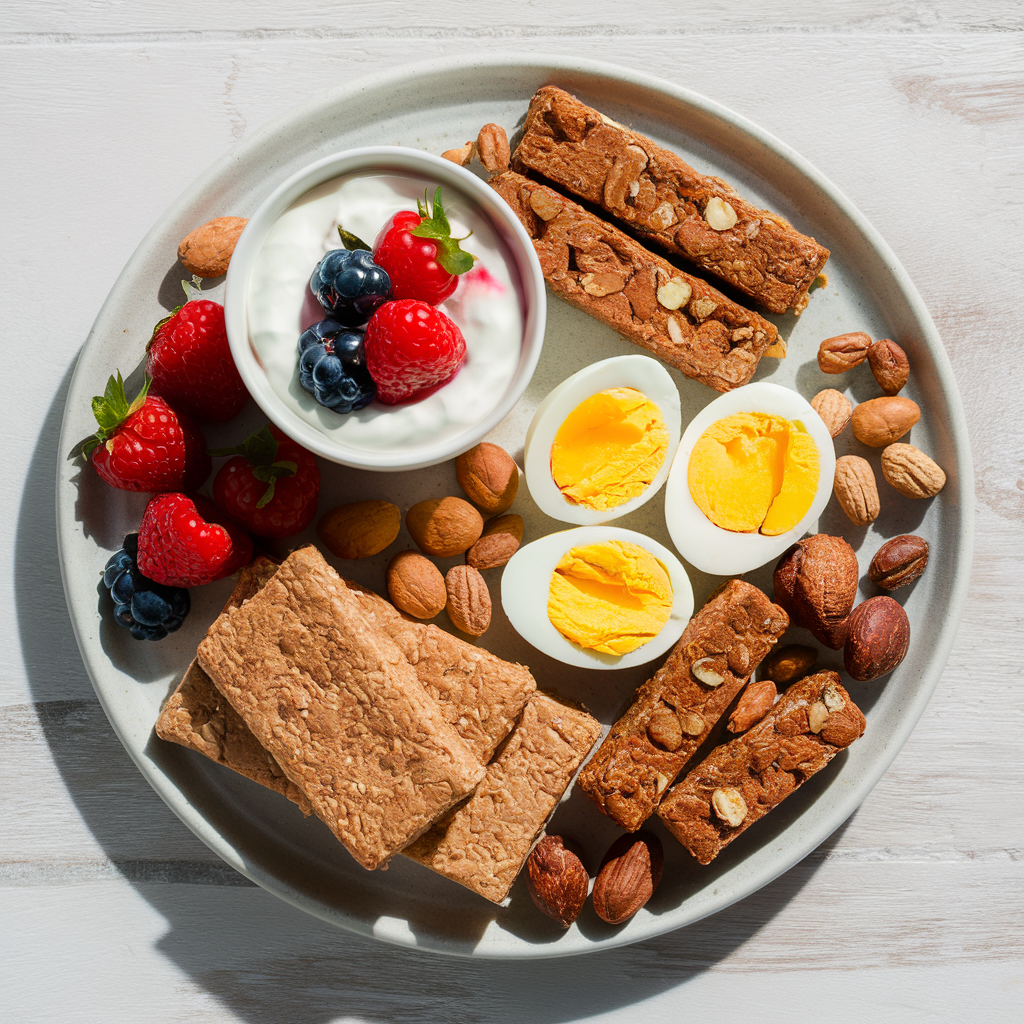
Key Criteria for Selecting High-Protein Snacks
When evaluating high-protein snacks, several factors determine their effectiveness for your specific goals:
- Protein density: Look for options providing at least 10g of protein per serving for a significant impact
- Macronutrient balance: Consider the ratio of protein to carbohydrates and fats based on your specific goals
- Calorie content: Weight loss requires options with controlled calories, while muscle gain may benefit from higher calorie choices
- Convenience: Practical options that align with your lifestyle increase consistency
- Processing level: Minimally processed choices typically offer superior nutrition
- Ingredient quality: Natural ingredients without excessive additives support overall health
The ideal high-protein snack combines adequate protein content with complementary nutrients while fitting conveniently into your daily routine.
Best High-Protein Snacks for On-the-Go
1. Greek Yogurt
Greek yogurt stands as a protein powerhouse, containing 15-20g per cup while providing beneficial probiotics for gut health. Opt for plain varieties with no added sugars, then customize with your own toppings.
Nutritional profile: A 6-ounce serving typically provides 15-18g protein, 100-130 calories, and minimal fat in non-fat versions.
Best brands: Fage, Chobani, and Siggi’s consistently rank high for protein content and minimal additives.
Serving suggestions: Enhance with berries for antioxidants, a tablespoon of nuts for healthy fats, or a sprinkle of cinnamon for flavor without calories.
2. Protein Bars
Protein bars offer ultimate convenience but vary dramatically in quality. The ideal protein bar should contain at least 15g of protein with limited sugar (under 10g) and minimal artificial ingredients.
What to look for: Short ingredient lists, protein from whey, casein, egg, or plant-based sources, and fiber content above 3g per serving.
Recommended brands: RX Bar, ONE Bar, and Quest Nutrition provide clean options with solid protein content.
Best timing: Protein bars work well as pre-workout fuel or post-workout recovery, especially when whole food options aren’t available.
3. Hard-Boiled Eggs
Hard-boiled eggs deliver a complete protein package in nature’s perfect portable container. Each egg provides about 6-7g of high-quality protein along with important nutrients like choline, which supports brain health.
Preparation tips: Batch cook a dozen eggs weekly by boiling for 9 minutes, then immediately cooling in ice water for easy peeling. Store unpeeled in the refrigerator for up to a week.
Protein quality: Eggs score 100 on the protein digestibility-corrected amino acid score (PDCAAS), indicating optimal amino acid composition and digestibility.
Flavor enhancements: Try everything bagel seasoning, smoked paprika, or a light sprinkle of sea salt to elevate flavor without significant calories.
4. Beef or Turkey Jerky
Lean meat jerky provides concentrated protein that requires no refrigeration. A 1-ounce serving typically delivers 10-15g of protein, making it an excellent option for sustained energy.
Selection criteria: Look for varieties with less than 5g of sugar per serving and sodium under 500mg when possible. Grass-fed beef or free-range turkey options provide superior fatty acid profiles.
Homemade advantage: Creating your own jerky allows complete control over marinades and sodium content, though commercial options like Country Archer, The New Primal, and Epic provide quality store-bought alternatives.
5. Protein Shakes and RTD Options
Ready-to-drink (RTD) protein shakes offer significant protein in a highly portable format. Most quality options provide 20-30g of protein per serving.
Best commercial choices: Fairlife Core Power, Premier Protein, and Orgain Clean Protein deliver solid nutrition without excessive additives or sugars.
Simple homemade recipe: Blend 1 scoop whey isolate protein powder, 1 cup unsweetened almond milk, 1/2 frozen banana, 1 tablespoon natural nut butter, and ice for a 25g protein shake that travels well in an insulated bottle.
Plant-Based High-Protein Snack Options
1. Edamame
Edamame (young soybeans) delivers an impressive nutritional profile with approximately 17g of protein per cup, making it one of the highest protein plant-based snacks available.
Preparation options: Purchase frozen pre-shelled edamame for quick microwave preparation, or enjoy in-pod varieties that slow down consumption for more mindful eating.
Nutritional breakdown: One cup provides 17g protein, 8g fiber, and only 189 calories, plus iron, calcium, and vitamin K.
Serving suggestions: Enhance with sea salt, red pepper flakes, or a squeeze of lemon for a flavorful snack that satisfies both protein needs and snacking pleasure.
2. Roasted Chickpeas
Roasted chickpeas transform a humble legume into a crunchy, portable snack with staying power. Each half-cup serving provides approximately 7-8g of protein along with 6g of fiber.
Easy preparation: Rinse and thoroughly dry canned chickpeas, toss with olive oil and seasonings, then roast at 400°F for 25-30 minutes until crunchy. Allow to cool completely for maximum crispness.
Flavor variations: Try combinations like garlic and herb, maple cinnamon, spicy curry, or chili lime for variety without compromising nutrition.

3. Nut and Seed Butters
Nut and seed butters combine protein with healthy fats for sustained energy. Protein content varies by type, with peanut butter offering approximately 8g per 2-tablespoon serving, while almond butter provides about 6-7g.
Portion control: While nutritious, nut butters are calorie-dense. Stick to 1-2 tablespoon portions, preferably measured rather than estimated.
Best combinations: Pair with apple slices, celery sticks, or whole-grain crackers to create a balanced snack with complementary nutrients and satisfying textures.
4. Plant-Based Protein Bars and Snacks
Plant-based protein products have evolved significantly, now offering comparable protein content to animal-based alternatives with complete amino acid profiles.
Top vegan options: No Cow bars, GoMacro, and Vega Sport provide 15-20g of plant protein from sources like pea, rice, and hemp protein.
Label reading strategy: Look for products combining multiple plant proteins to ensure a complete amino acid profile, while avoiding excessive sugar alcohols that may cause digestive discomfort.
High-Protein Dairy and Alternatives
1. Cottage Cheese
Cottage cheese may not win beauty contests, but its nutrition profile is stunning. A 1-cup serving provides approximately 24g of protein, with much of it coming from slow-digesting casein that provides sustained amino acid release.
Satiety benefits: The combination of casein protein and high water content makes cottage cheese exceptionally filling per calorie.
Sweet variations: Mix with fresh berries, cinnamon, and a drizzle of honey for a dessert-like experience.
Savory options: Try with cherry tomatoes, cucumber, everything bagel seasoning, or a light drizzle of olive oil and herbs.
2. String Cheese and Cheese Snacks
Individual cheese portions offer convenient protein with built-in portion control. A typical string cheese provides 7-8g of protein with about 80 calories.
Best varieties: Mozzarella string cheese offers the highest protein-to-fat ratio, while snack-sized portions of harder cheeses like cheddar or parmesan provide more intense flavor satisfaction.
Balanced pairings: Complement with a piece of fruit or a few whole-grain crackers for a more complete nutritional profile.
3. Protein-Fortified Yogurt Alternatives
Non-dairy yogurt alternatives have historically lacked protein, but newer fortified versions deliver comparable protein content to their dairy counterparts.
Top options: Kite Hill Protein (11-13g protein), Siggi’s Plant-Based (10g protein), and Chobani Non-Dairy (10g protein) lead the category.
Nutritional considerations: Check for added sugars and aim for versions with live active cultures to support gut health.
Quick High-Protein Snack Recipes
1. Protein Energy Balls
Protein energy balls combine convenience with customization, allowing you to create perfectly portable nutrition tailored to your preferences.
Basic recipe: Mix 1 cup oats, 1/2 cup nut butter, 1/3 cup honey or maple syrup, 1/4 cup protein powder, 1/4 cup mix-ins (mini chocolate chips, dried fruit, or chopped nuts), and a pinch of salt. Roll into 1-inch balls and refrigerate.
Nutritional profile: Each ball typically provides 5-8g of protein depending on ingredients used.
Storage: Refrigerate for up to a week or freeze for up to 3 months in an airtight container.
2. Protein Mug Cakes
Five-minute protein mug cakes satisfy sweet cravings while boosting protein intake. These single-serving treats cook quickly in the microwave.
Basic recipe: Mix 1 scoop (25g) protein powder, 1 tablespoon coconut flour, 1/4 teaspoon baking powder, a pinch of salt, 1/4 cup milk of choice, and 1 tablespoon nut butter. Microwave for 60-90 seconds.
Variations: Add cinnamon, cocoa powder, vanilla extract, or a few chocolate chips to customize the flavor profile. For savory versions, use unflavored protein with herbs and a sprinkle of cheese.
3. High-Protein Smoothies
Protein smoothies offer infinite customization while delivering significant nutrition in a convenient format.
Base recipe: Combine 1 scoop protein powder, 1 cup liquid (milk, almond milk, or water), 1/2 frozen banana, 1/2 cup frozen berries, 1 tablespoon healthy fat (nut butter, avocado, or chia seeds), and ice as needed.
Natural protein boosters: Incorporate Greek yogurt (17g protein per 3/4 cup), cottage cheese (14g protein per 1/2 cup), or silken tofu (10g protein per 1/2 cup) to enhance protein content beyond powder alone.

Strategic Snacking for Weight Loss
Protein snacks can significantly support weight loss goals when used strategically, creating satisfaction without excessive calories.
Optimal timing: Place protein snacks between meals when hunger typically strikes, often mid-morning (10-11am) and mid-afternoon (3-4pm) to prevent extreme hunger that leads to poor meal choices.
Calorie awareness: Aim for snacks between 150-250 calories that deliver at least 10g of protein for the highest satiety-to-calorie ratio.
Best evening options: Casein-rich snacks like cottage cheese or Greek yogurt provide slow-digesting protein that can reduce overnight hunger and support recovery during sleep.
Implementation strategy: Pre-portion snacks at the beginning of the week to ensure appropriate serving sizes and prevent mindless overconsumption.
Optimal Protein Snacking for Muscle Gain
Building muscle requires strategic protein timing in addition to overall adequate intake. Snacks can help maintain positive protein balance throughout the day.
Pre-workout considerations: Consume easily digestible protein with some carbohydrates 30-60 minutes before training. Options like a protein shake with banana or Greek yogurt with granola provide quick-acting amino acids.
Post-workout window: Within 30 minutes after training, prioritize faster-digesting proteins like whey protein shakes or lean protein with quick-digesting carbs to jumpstart recovery.
Higher-calorie options: Those seeking muscle gain may benefit from calorie-dense choices like protein shakes made with whole milk, trail mix with additional protein elements, or protein oatmeal with nut butter and fruit.
Common Mistakes to Avoid
Even with the best intentions, these common pitfalls can undermine your protein snacking strategy:
- Hidden sugars: Many commercial protein products contain as much sugar as candy bars. Always check labels for added sugars, particularly in flavored yogurts, protein bars, and ready-to-drink shakes.
- Overreliance on processed options: While convenient, heavily processed protein snacks often contain artificial ingredients and may not provide the same satiety as whole food options.
- Neglecting total protein distribution: Focus on evenly distributing protein intake throughout the day rather than consuming the majority at dinner, which is common in Western diets.
- Imbalanced macronutrients: Pure protein without supportive carbohydrates or fats may not provide optimal satisfaction or performance benefits.
- Ignoring calorie content: Even high-protein snacks contribute to total daily calories and can impede weight loss if consumed without awareness of portion sizes.
Special Dietary Considerations
Different nutritional approaches require specialized protein snacking strategies:
Low-Carb High-Protein Options
For those following ketogenic or low-carb approaches, these options provide protein without significant carbohydrates:
- Beef or turkey jerky (0-1g carbs per serving)
- Hard-boiled eggs (0.6g carbs per egg)
- Cheese crisps (minimal carbs with 7g protein per serving)
- Pork rinds with guacamole (nearly zero carbs with protein and healthy fats)
- Tuna packets with olive oil (0g carbs with 20g+ protein)
Gluten-Free Protein Snacks
Many naturally high-protein foods are gluten-free, but for specialized products, verify certification:
- Certified gluten-free protein bars (ONE Bar, KIND protein)
- Rice cakes with nut butter and protein powder sprinkled on top
- Gluten-free protein muffins using almond or coconut flour
- Greek yogurt parfaits with certified gluten-free granola
Allergen-Free Alternatives
For those with multiple food allergies, these options typically avoid major allergens:
- Seed butters (sunflower, pumpkin) for nut-free protein
- Collagen protein supplements (typically free from common allergens)
- Coconut yogurt with added protein powder
- OWYN protein drinks (designed to be free from top 8 allergens)
Budget-Friendly High-Protein Options
Protein snacking doesn’t have to break the bank:
- Tuna packets (approximately $1 per serving with 20g+ protein)
- Bulk-purchased hard-boiled eggs (as low as $0.15 per egg)
- DIY protein bars (1/3 the cost of commercial options)
- Cottage cheese (provides more protein per dollar than most Greek yogurts)
- Homemade roasted legumes like chickpeas or edamame
Conclusion
High-protein snacks serve as powerful tools for both weight management and muscle development when selected thoughtfully and incorporated strategically. The options outlined in this guide provide diverse alternatives to match various dietary preferences, lifestyle demands, and specific fitness objectives.
For sustainable results, focus on creating a consistent routine that incorporates a mix of convenient pre-packaged options and simple whole food preparations. This balanced approach ensures you maintain protein quality while accommodating real-world scenarios where convenience becomes necessary.
Remember that protein snacks work best as part of an overall nutritious diet – they supplement your protein intake rather than replacing quality meals. By distributing protein intake throughout the day via strategic snacking, you can optimize muscle protein synthesis, enhance recovery, and maintain the satiety needed to achieve your body composition goals.
Whether you’re managing weight, building muscle, or simply improving your overall nutrition, these high-protein snack options provide practical solutions to fuel your active lifestyle while supporting your long-term health and fitness journey.
FAQs About High-Protein Snacks
How much protein should my snacks contain?
Aim for at least 10g of protein per snack for meaningful impact. For muscle-building purposes, 15-25g per snack may be more beneficial, especially after workouts.
Can eating too much protein be harmful?
For healthy individuals without kidney issues, research indicates that protein intakes up to 2.5g per kg of body weight are safe. However, extremely high protein diets may displace other important nutrients if not carefully planned.
Are plant proteins as effective as animal proteins?
Plant proteins can be highly effective when consumed in slightly higher quantities or combined to ensure a complete amino acid profile. For example, combining legumes with grains creates complementary proteins that provide all essential amino acids.
How do I balance protein snacks with my daily meals?
Track your total daily protein target based on your weight and goals, then distribute it across meals and snacks. Typically, allocating 20-25% of your daily protein to strategic snacks works well for most fitness goals.
What are the best protein options for vegetarians?
Greek yogurt, cottage cheese, eggs, protein-fortified plant yogurts, edamame, and plant-based protein bars provide concentrated protein sources that work well within a vegetarian eating pattern.