

Are you tossing and turning at night, desperately seeking those elusive Z’s? The solution to your sleep troubles might be sitting right on your plate. The relationship between diet and sleep is profound, with certain foods containing natural compounds that can help you drift off to dreamland more easily and enjoy deeper, more restorative sleep.
Let’s explore the science-backed foods that can transform your nights from restless to refreshing, and learn how to incorporate them into your evening routine for optimal sleep quality.
Understanding the Food-Sleep Connection
Before diving into specific foods, it’s important to understand how what we eat affects our sleep patterns. Sleep is regulated by various neurotransmitters and hormones—particularly melatonin and serotonin—that can be influenced by our dietary choices.
Certain nutrients act as precursors or catalysts for these sleep-regulating compounds:
- Tryptophan: An amino acid that helps produce serotonin and melatonin
- Magnesium: A mineral that promotes relaxation and helps regulate melatonin
- Calcium: Works with melatonin to help the brain use tryptophan
- Complex carbohydrates: Help increase tryptophan availability in the brain
- Specific vitamins: B6, for example, helps convert tryptophan into serotonin
Top Sleep-Promoting Foods
1. Tart Cherries and Cherry Juice
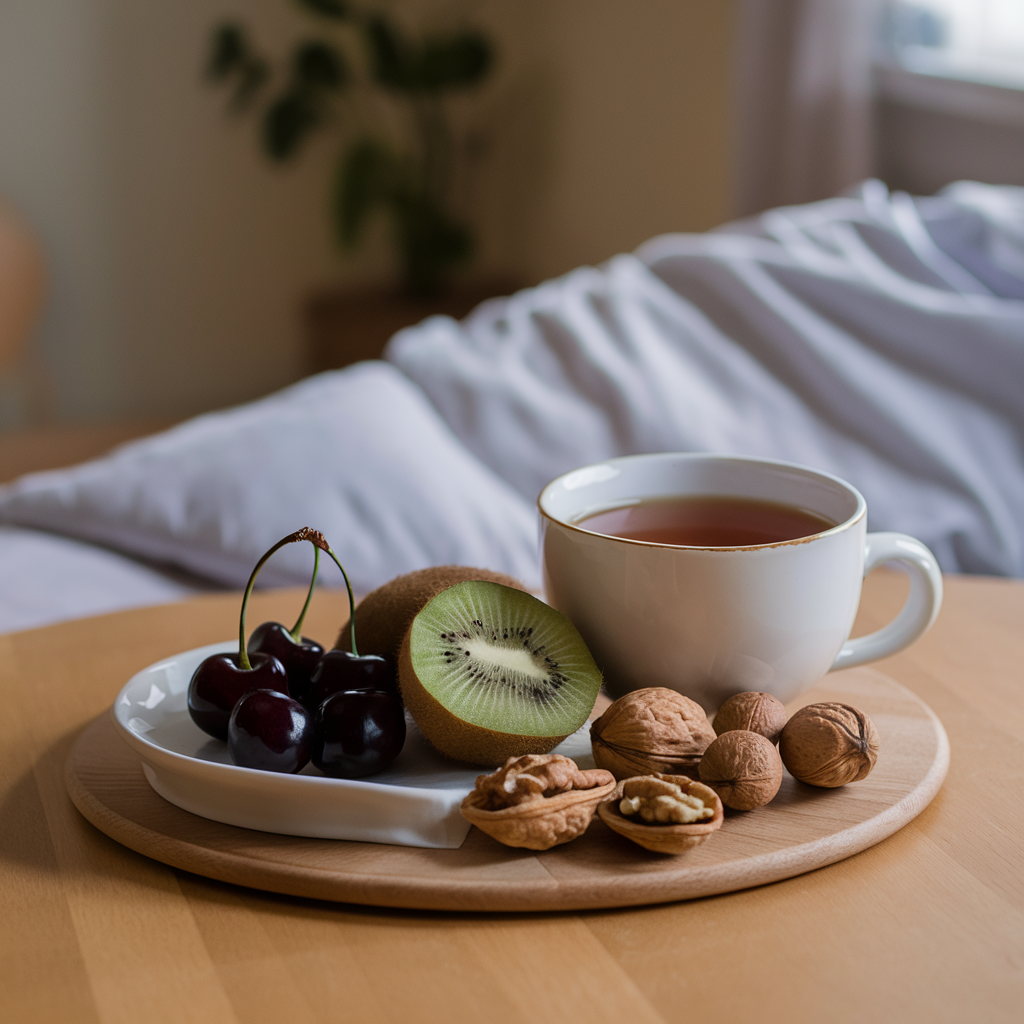
Tart cherries are one of nature’s few food sources of melatonin, the hormone responsible for regulating sleep cycles. Research published in the European Journal of Nutrition found that participants who drank tart cherry juice experienced significant improvements in sleep duration and quality.
How to enjoy: Drink a small glass (about 8 ounces) of tart cherry juice twice daily, including one serving about an hour before bedtime. Alternatively, snack on a handful of fresh or dried tart cherries as an evening treat.
2. Kiwi Fruit
This small, fuzzy fruit packs a powerful sleep-promoting punch. A study from Taipei Medical University found that people who ate two kiwis one hour before bedtime fell asleep 42% more quickly and slept 13% longer.
Kiwis are rich in serotonin and antioxidants, as well as folate, which may help address folate deficiency-related insomnia.
How to enjoy: Simply peel and slice two kiwis and enjoy them as a bedtime snack about an hour before you plan to sleep.
3. Fatty Fish
Salmon, tuna, trout, and mackerel are excellent sources of vitamin D and omega-3 fatty acids—nutrients that help regulate serotonin. The Journal of Clinical Sleep Medicine published research showing that participants who ate salmon three times per week fell asleep faster and functioned better during the day compared to those who didn’t.
How to enjoy: Include a 3-4 ounce serving of fatty fish in your dinner several times a week. Baked salmon with a side of sleep-promoting complex carbohydrates makes an ideal sleep-friendly meal.
4. Nuts and Seeds
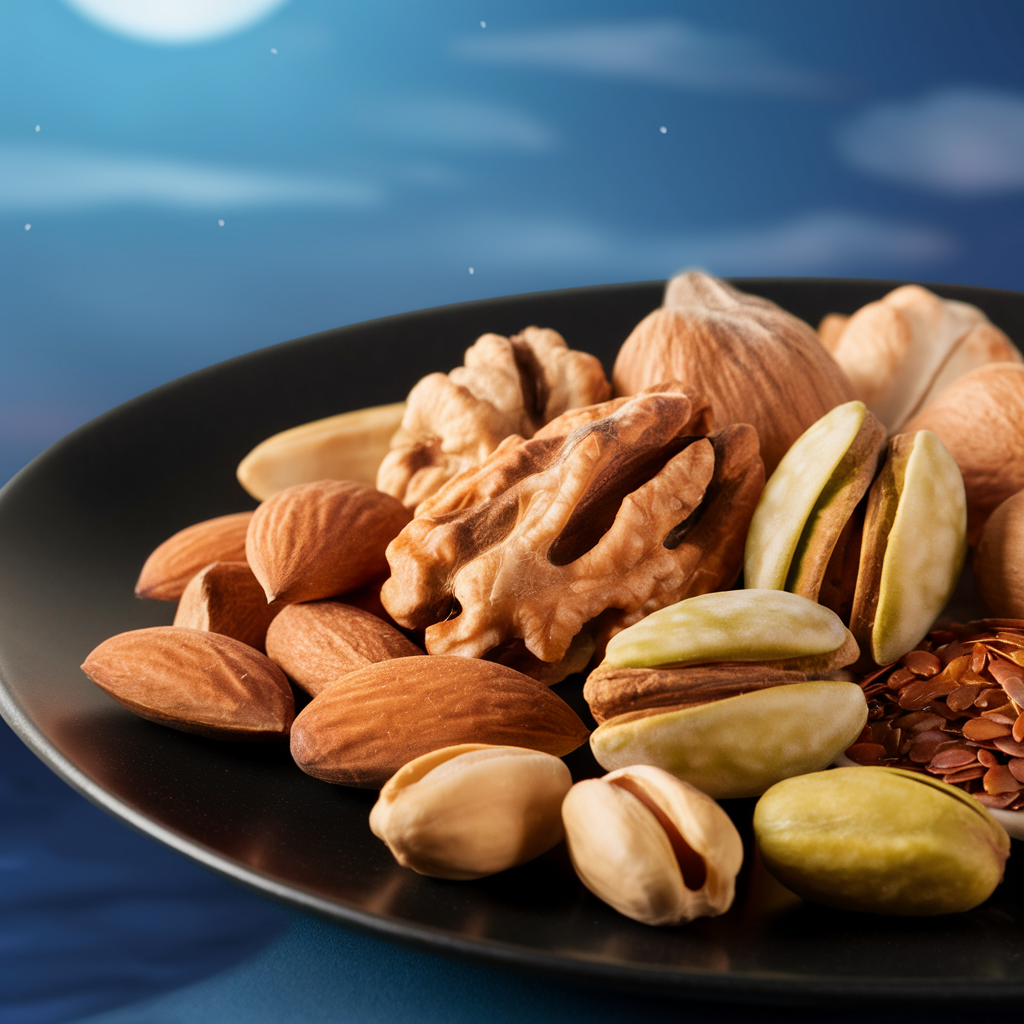
Almonds, walnuts, pistachios, and flaxseeds are nutritional powerhouses when it comes to improving sleep:
- Almonds: Rich in magnesium and protein
- Walnuts: Contain tryptophan, melatonin, and healthy omega-3 fats
- Pistachios: Packed with vitamin B6, magnesium, and protein
- Flaxseeds: High in omega-3s and magnesium
A small handful of nuts or a tablespoon of seeds provides the perfect balance of protein and good fats without being too heavy before bed.
How to enjoy: Have a small handful (about 1 ounce) of mixed nuts or a tablespoon of seeds as an evening snack, or sprinkle them on sleep-friendly yogurt.
5. Warm Milk and Dairy Products
The traditional remedy of warm milk before bed has scientific backing. Dairy products contain tryptophan, calcium, and vitamin D—a sleep-promoting trifecta. Calcium helps the brain use tryptophan to manufacture melatonin, while vitamin D helps regulate sleep cycles.
How to enjoy: Drink a small glass of warm milk with a sprinkle of nutmeg (another sleep promoter), or have a small serving of yogurt or cottage cheese with honey about 30 minutes before bedtime.
6. Complex Carbohydrates
While simple carbs can reduce serotonin and disrupt sleep, complex carbohydrates can enhance tryptophan availability. Options include:
- Whole grain bread or crackers: Pair with a thin spread of almond butter for a perfect bedtime snack
- Oatmeal: Rich in melatonin and sleep-promoting minerals
- Brown rice: Contains GABA (gamma-aminobutyric acid), which helps calm the nervous system
How to enjoy: A small serving of oatmeal with cinnamon, a slice of whole grain toast, or a few whole grain crackers can make an excellent evening snack.
7. Herbal Teas
Certain herbal teas have been used for centuries to promote relaxation and sleep:
- Chamomile: Contains apigenin, an antioxidant that binds to certain brain receptors to reduce insomnia and promote sleepiness
- Passionflower: May increase GABA levels in the brain
- Valerian root: One of the most studied herbs for sleep improvement
- Lavender: Reduces stress and improves sleep quality
How to enjoy: Steep your chosen tea for 5-10 minutes and drink it 30-60 minutes before bedtime, allowing time for bathroom visits before sleep.
8. Bananas
Bananas are a sleep superfood, containing:
- Magnesium and potassium (natural muscle relaxants)
- Vitamin B6 (needed for melatonin production)
- Tryptophan
- Carbohydrates that make tryptophan more available to the brain
How to enjoy: Eat a medium banana on its own, sliced on whole grain toast with almond butter, or blended into a sleep-promoting smoothie.
Creating a Sleep-Supporting Evening Meal Plan
The timing and composition of your evening meal can significantly impact your sleep quality. Here’s a blueprint for constructing the perfect pre-slumber nutrition:
- Dinner (3-4 hours before bed):
- Include a palm-sized portion of protein (fish is ideal)
- Add complex carbohydrates like sweet potatoes or brown rice
- Include dark leafy greens or other non-starchy vegetables
- Use healthy fats for cooking or as dressings
- Light evening snack (1 hour before bed):
- Focus on the sleep-promoting foods mentioned above
- Keep portions small to avoid digestive discomfort
- Combine carbohydrates with a small amount of protein or healthy fat for stable blood sugar

Foods and Beverages to Avoid Before Bed
Just as important as knowing what to eat is understanding what to avoid:
- Caffeine: Found in coffee, many teas, chocolate, and some medications, caffeine can remain in your system for 6+ hours
- Alcohol: Though it might help you fall asleep initially, alcohol disrupts REM sleep and causes fragmented sleep patterns
- High-fat, spicy, or acidic foods: These can cause indigestion and acid reflux when lying down
- High-sugar foods: Can cause blood sugar fluctuations that disrupt sleep
- Large meals: Eating too much too close to bedtime forces your digestive system to work when it should be resting
The Perfect Sleep-Inducing Bedtime Snacks
Looking for quick, easy combinations that maximize sleep benefits? Try these sleep-promoting pairings:
- The Classic Comfort: Warm milk with a drizzle of honey and a dash of nutmeg
- Banana Nut Butter: Half a banana sliced and topped with a teaspoon of almond butter
- Soothing Cereal: A small bowl of plain oatmeal with cherries and sliced almonds
- Calming Kiwi Combo: Two kiwis with a small handful of pistachios
- Tea and Toast: Chamomile tea with a slice of whole grain toast and a thin spread of nut butter
When to Eat for Optimal Sleep
Timing matters when it comes to sleep-supporting nutrition:
- Finish large meals 3-4 hours before bedtime
- If you need a bedtime snack, keep it small (under 200 calories) and eat it about 45-60 minutes before sleep
- Drink sleep-promoting teas 30-60 minutes before bed
- Be consistent with timing—your body appreciates routine
The Bottom Line
Improving your sleep quality may be as simple as making strategic adjustments to your diet. By incorporating these sleep-enhancing foods and beverages into your evening routine while avoiding sleep disruptors, you can naturally support your body’s ability to fall asleep faster, stay asleep longer, and wake feeling more refreshed.
Remember that individual responses to food vary, so pay attention to how your body reacts and adjust accordingly. With some experimentation and consistency, you’ll discover the perfect sleep-supporting diet for your unique needs.
Sweet dreams and bon appétit!