

The StairMaster has earned its reputation as one of the most effective cardio machines in gyms worldwide, and for good reason. This powerhouse equipment doesn’t just get your heart pumping – it engages multiple muscle groups simultaneously while delivering exceptional cardiovascular benefits. Whether you’re looking to tone your lower body, improve your endurance, or burn calories efficiently, understanding exactly what the StairMaster works can help you maximize your workout results. In this comprehensive guide, we’ll explore the specific muscles targeted, the body systems engaged, and the complete range of benefits this versatile machine offers to help you achieve your fitness goals.
Primary Muscle Groups Targeted by StairMaster
Lower Body Muscles (Primary Focus)
Quadriceps
The quadriceps, located at the front of your thighs, are the primary powerhouses during StairMaster workouts. These four muscles work intensively during the stepping motion, particularly during the knee extension phase as you push through each step. The continuous stepping motion creates sustained engagement of the quadriceps, making them stronger and more defined over time. This muscle group is responsible for generating the power needed to lift your body weight with each step, making the StairMaster an excellent tool for building lower body strength and endurance.
Glutes (Gluteus Maximus, Medius, Minimus)
Your glutes receive exceptional activation during StairMaster workouts, making this machine one of the most effective for building and toning your buttocks. The gluteus maximus, the largest muscle in your body, drives the hip extension movement essential for each step. Meanwhile, the gluteus medius and minimus work to stabilize your hips and maintain proper alignment throughout the stepping motion. This comprehensive glute engagement helps improve your posterior chain strength, enhances your posture, and contributes to better athletic performance in daily activities.

Hamstrings
While the hamstrings play a supporting role compared to the quadriceps, they’re actively engaged throughout the StairMaster workout. These muscles, located at the back of your thighs, help control the lowering phase of each step and work in conjunction with your glutes to maintain proper muscle balance. The hamstring engagement during StairMaster workouts helps prevent muscle imbalances that can occur when the quadriceps become disproportionately stronger than the posterior chain muscles.
Calves (Gastrocnemius and Soleus)
Your calf muscles work continuously during StairMaster sessions, particularly during the push-off phase of each step. The gastrocnemius and soleus muscles provide the power for plantar flexion (pointing your toes downward) and help stabilize your ankle joint throughout the movement. This constant engagement helps build calf strength, improves ankle stability, and enhances power transfer from your lower legs to the rest of your body during the stepping motion.
Hip Flexors
The hip flexors, located at the front of your hips, are responsible for lifting your legs during each step. These muscles work actively to bring your thigh toward your abdomen with each stepping motion. Regular StairMaster workouts can help improve hip flexor strength and flexibility, which is particularly beneficial for people who spend long hours sitting, as tight hip flexors are a common issue in sedentary lifestyles.
Core Muscles (Secondary Engagement)
Abdominals
Your abdominal muscles work as stabilizers throughout your StairMaster workout, helping maintain proper posture and core alignment. The rectus abdominis, transverse abdominis, and other core muscles contract isometrically to keep your torso stable as your legs move through the stepping motion. This continuous core engagement helps strengthen your midsection and improves overall stability and balance.
Obliques
The oblique muscles, located on the sides of your torso, help control rotational forces and provide side-to-side stability during StairMaster workouts. These muscles work to prevent excessive twisting or lateral movement of your torso, ensuring efficient energy transfer and proper form throughout your workout. Strong obliques contribute to better overall core stability and can help prevent lower back pain.
Lower Back (Erector Spinae)
The erector spinae muscles, running along your spine, work to maintain proper spinal alignment and posture during StairMaster workouts. These muscles help prevent excessive forward leaning or rounding of the back, which is crucial for maintaining good form and preventing injury. Regular engagement of these muscles through StairMaster workouts can help improve overall back strength and posture.
Cardiovascular System Benefits
Heart and Circulatory System
The StairMaster provides exceptional cardiovascular conditioning by elevating your heart rate and maintaining it within target zones for extended periods. This sustained cardiovascular challenge strengthens your heart muscle, improves its efficiency, and enhances blood circulation throughout your body. Regular StairMaster workouts can help lower resting heart rate, reduce blood pressure, and improve overall cardiovascular health. The improved circulation also means better oxygen and nutrient delivery to your muscles, supporting both performance and recovery.
Respiratory System
StairMaster workouts significantly challenge your respiratory system, leading to improved lung capacity and breathing efficiency. The sustained aerobic demand helps strengthen your diaphragm and other breathing muscles, while also improving your body’s ability to extract oxygen from the air you breathe. Over time, this leads to enhanced aerobic capacity, allowing you to perform daily activities with less fatigue and improved endurance.
Additional Body Systems and Benefits
Metabolic Benefits
The StairMaster is exceptionally effective for calorie burning and metabolic enhancement. The combination of large muscle group engagement and cardiovascular challenge creates a high-energy expenditure that can significantly contribute to weight management and fat loss goals. The intensity of StairMaster workouts also creates an “afterburn effect” (excess post-exercise oxygen consumption), meaning your body continues burning calories at an elevated rate even after your workout ends. This metabolic boost can last for hours post-exercise, making the StairMaster an excellent choice for those looking to maximize their caloric expenditure.
Bone and Joint Health
Despite its intensity, the StairMaster provides a relatively low-impact workout compared to running or jogging. The stepping motion reduces the jarring impact on your joints while still providing enough resistance to promote bone density maintenance and improvement. This makes the StairMaster an excellent option for people who want an intense cardio workout without the high impact stress on their knees, hips, and ankles that comes with running on hard surfaces.
Balance and Coordination
Regular StairMaster workouts improve your proprioception (body awareness) and enhance overall balance and coordination. The stepping motion requires constant adjustment and balance control, which helps train your nervous system to better coordinate muscle movements and maintain stability. This improved balance and coordination translates to better functional movement in daily activities and can help reduce the risk of falls, particularly important as we age.
How StairMaster Compares to Other Cardio Equipment
StairMaster vs. Treadmill
While both machines provide excellent cardiovascular benefits, the StairMaster offers superior lower body muscle engagement, particularly for the glutes and quadriceps. The vertical stepping motion of the StairMaster creates more targeted muscle activation compared to the horizontal movement of treadmill walking or running. Additionally, the StairMaster typically burns more calories per minute due to the increased muscle involvement and resistance. However, treadmills may be more familiar and comfortable for beginners, and they allow for more varied workout intensities through speed and incline adjustments.
StairMaster vs. Elliptical
The elliptical machine provides both upper and lower body engagement, while the StairMaster focuses primarily on the lower body with some core involvement. The StairMaster generally provides a more intense lower body workout and higher calorie burn, while the elliptical offers more balanced full-body engagement. The StairMaster also better simulates functional movements like climbing stairs, making it more applicable to real-world activities.
StairMaster vs. Stationary Bike
The standing position of the StairMaster engages more muscle groups compared to the seated position of most stationary bikes. The StairMaster provides better core engagement and functional movement patterns, while stationary bikes may be more comfortable for longer duration workouts. The StairMaster typically offers higher calorie burn and more comprehensive lower body muscle activation, making it more effective for overall conditioning and muscle development.
Maximizing StairMaster Benefits
Proper Form and Technique
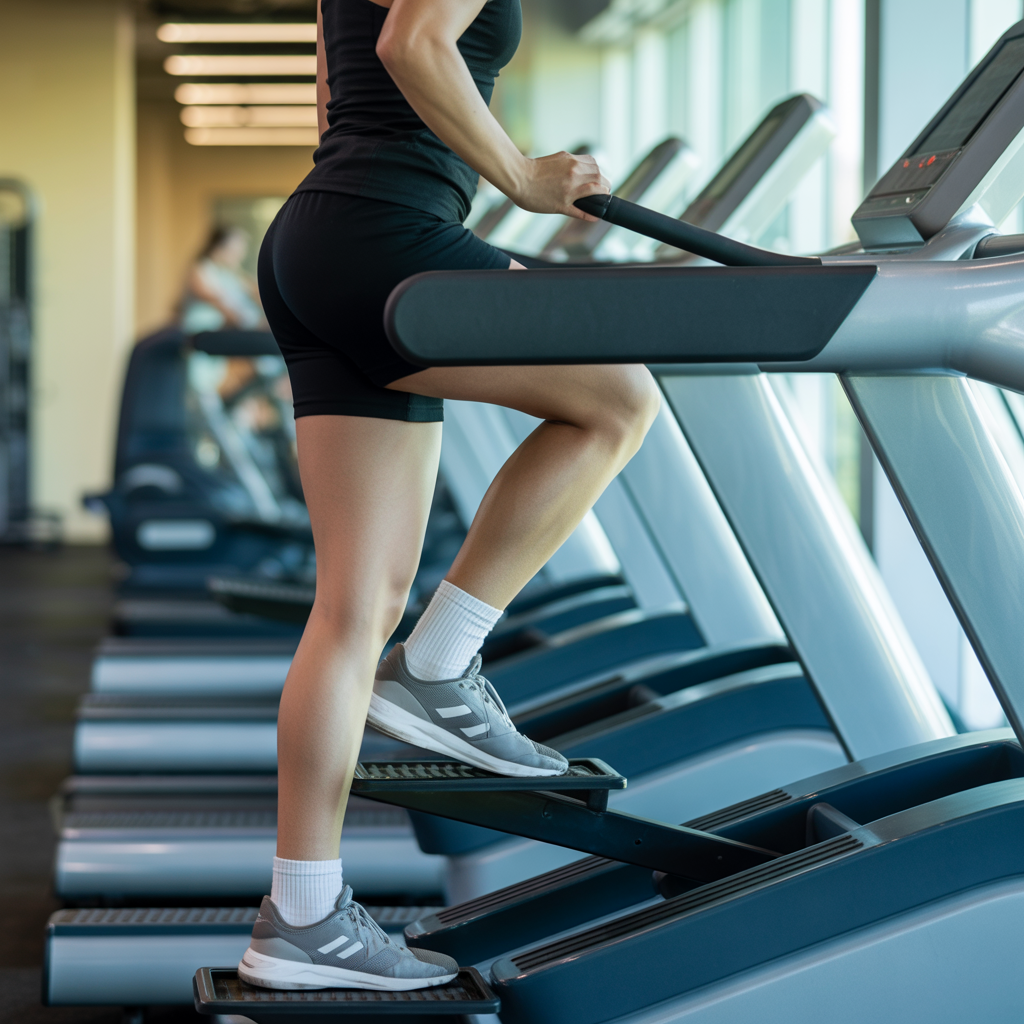
Maintaining proper form is crucial for maximizing benefits and preventing injury during StairMaster workouts. Keep your posture upright with your shoulders back and core engaged throughout the exercise. Place your entire foot on each step rather than just your toes, and avoid gripping the handrails too tightly – use them only for balance when necessary. Keep your stepping rhythm consistent and controlled, avoiding the temptation to use momentum or bounce through the movements. Common mistakes include leaning too heavily on the handrails, taking steps that are too shallow, or stepping too quickly without proper control.
Workout Variations
To prevent plateaus and maintain progress, incorporate various workout approaches into your StairMaster routine. Interval training alternates between high-intensity periods and recovery phases, maximizing both cardiovascular benefits and calorie burn. You can adjust resistance levels to increase or decrease the difficulty, and vary your session duration based on your fitness goals and available time. Consider incorporating lateral steps, single-leg steps, or tempo variations to challenge your muscles in different ways and prevent adaptation.
Progressive Training
Start with shorter sessions at moderate intensity and gradually increase duration and intensity as your fitness improves. Beginners should aim for 10-15 minute sessions at a comfortable pace, while advanced users can work up to 45-60 minute sessions with varying intensities. Track your progress by monitoring metrics like duration, resistance level, steps per minute, and perceived exertion. Set realistic, measurable goals that align with your overall fitness objectives, and be patient with the process – significant improvements typically become noticeable after 4-6 weeks of consistent training.
Who Benefits Most from StairMaster Workouts
Fitness Goals Alignment
The StairMaster is particularly effective for individuals with specific fitness goals. Those seeking weight loss will benefit from the high calorie burn and metabolic boost. People looking to build lower body strength and muscle tone will appreciate the targeted muscle engagement. Individuals wanting to improve cardiovascular health will find the sustained heart rate challenge highly beneficial. The machine is also excellent for those preparing for activities that involve climbing or ascending, such as hiking, mountaineering, or sports that require explosive leg power.
Specific Populations
Athletes from various sports can benefit from StairMaster training to improve leg power, cardiovascular endurance, and functional movement patterns. The machine is also valuable in rehabilitation settings for individuals recovering from certain injuries, as it provides controlled, low-impact exercise that can be easily modified for different fitness levels. However, people with knee problems, severe balance issues, or certain cardiovascular conditions should consult with healthcare professionals before beginning a StairMaster routine.
Potential Limitations and Considerations
Physical Limitations
While the StairMaster is an excellent exercise tool, it’s not suitable for everyone. Individuals with significant knee or ankle problems may find the repetitive stepping motion uncomfortable or potentially aggravating to their condition. People with balance disorders or severe coordination issues should use caution and may need to start with assisted versions or alternative equipment. Those with certain cardiovascular conditions should consult with their healthcare provider before beginning high-intensity StairMaster workouts.
Workout Limitations
The StairMaster primarily targets the lower body, providing limited upper body engagement compared to some other cardio equipment. This focus could potentially contribute to muscle imbalances if not balanced with complementary exercises. The repetitive nature of the movement may also lead to overuse injuries if proper form isn’t maintained or if training volume increases too rapidly. Additionally, some people may find the workout monotonous, which could affect long-term adherence to an exercise routine.

Creating an Effective StairMaster Routine
Frequency and Duration Guidelines
For optimal results, aim for 3-5 StairMaster sessions per week, allowing for adequate recovery between intense workouts. Session length should be based on your fitness level and goals, ranging from 15-20 minutes for beginners to 45-60 minutes for advanced users. Include at least one rest day between intense sessions to allow for muscle recovery and adaptation. Remember that consistency is more important than duration – regular shorter sessions are more beneficial than sporadic longer ones.
Integration with Other Exercises
To create a well-rounded fitness program, combine StairMaster workouts with complementary exercises. Include upper body strength training to balance the lower body focus of the StairMaster. Add flexibility and mobility work to maintain joint health and prevent muscle tightness. Consider incorporating activities like swimming, yoga, or resistance training to create a comprehensive fitness routine that addresses all aspects of health and wellness.
Conclusion
The StairMaster is a remarkably effective piece of cardio equipment that works multiple muscle groups while providing exceptional cardiovascular benefits. Primarily targeting your quadriceps, glutes, hamstrings, and calves, while engaging your core for stability, this machine offers a comprehensive lower body workout that few other cardio machines can match. Beyond muscle engagement, the StairMaster strengthens your cardiovascular system, improves your respiratory capacity, enhances your balance and coordination, and provides significant metabolic benefits for weight management.
When compared to other cardio equipment, the StairMaster stands out for its targeted muscle activation, functional movement patterns, and efficient calorie burn. While it may not provide the upper body engagement of some machines, its focused lower body work makes it an excellent choice for building strength, endurance, and power in your legs and glutes.
To maximize your StairMaster benefits, focus on proper form, incorporate workout variations, and progress gradually while listening to your body. Whether you’re a beginner looking to improve your fitness or an advanced athlete seeking to enhance your performance, the StairMaster can be an valuable addition to your exercise routine when used correctly and consistently.
Remember that while the StairMaster offers numerous benefits, it’s important to consult with a qualified fitness professional or healthcare provider before beginning any new exercise program, especially if you have existing health conditions or injuries. With proper technique, realistic expectations, and consistent effort, the StairMaster can help you achieve your fitness goals while building a stronger, healthier body.