

In today’s digital age, approximately 84% of adults experience upper back pain at some point in their lives, with prolonged desk work and poor posture being the leading culprits. If you’re dealing with tight, achy muscles between your shoulder blades, you’re not alone. Upper back tension has become increasingly common as our lifestyles become more sedentary and stress levels rise. This comprehensive guide will walk you through the most effective upper back stretches to relieve tension, improve mobility, and restore comfort to your daily life. Whether you’re looking for quick office-friendly stretches or a complete routine to address chronic tightness, you’ll discover evidence-based techniques that can make a real difference in how you feel.
Understanding Your Upper Back: Anatomy and Common Sources of Tension
Before diving into specific stretches, it’s essential to understand the complex network of muscles that make up your upper back. This knowledge will help you target your stretching routine more effectively and understand why certain areas feel particularly tight.
Key Muscle Groups in Your Upper Back
Your upper back consists of several interconnected muscle groups that work together to support your posture and facilitate arm and shoulder movement:
- Trapezius muscles: These large, diamond-shaped muscles extend from your neck to your mid-back and are responsible for moving your shoulder blades and supporting your head position.
- Rhomboids: Located between your shoulder blades, these muscles pull your shoulder blades together and help maintain proper posture.
- Latissimus dorsi: The broad muscles of your back that help with arm movement and contribute to overall back stability.
- Posterior deltoids: The rear portion of your shoulder muscles that assist in arm movement and shoulder stability.
- Levator scapulae: These muscles connect your neck to your shoulder blades and can become particularly tight with stress and poor posture.
Why Does Your Upper Back Get So Tight?
Understanding the root causes of upper back tension can help you address the problem more effectively:
- Poor posture and desk work: Prolonged sitting with rounded shoulders and forward head posture puts excessive strain on upper back muscles.
- Stress and emotional tension: We naturally hold stress in our shoulders and upper back, creating chronic muscle tightness.
- Lack of movement: Sedentary lifestyles lead to muscle stiffness and reduced flexibility.
- Sleep positions: Sleeping on your stomach or with inadequate pillow support can strain upper back muscles.
- Repetitive motions: Activities like heavy lifting, carrying bags on one shoulder, or repetitive arm movements can create imbalances.
Signs You Need Upper Back Stretches
Recognizing the early signs of upper back tension can help you address issues before they become chronic:
- Muscle stiffness and knots, especially between your shoulder blades
- Reduced range of motion when reaching overhead or behind your back
- Aching or burning sensations in your shoulder blade area
- Neck and shoulder tension that extends into your upper back
- Tension headaches that seem to originate from your neck and shoulders
- Difficulty finding comfortable sleeping positions
Essential Pre-Stretching Preparation
Proper preparation is crucial for safe and effective stretching. Taking a few minutes to prepare your body can prevent injury and maximize the benefits of your stretching routine.
Safety Guidelines
Before beginning any stretching routine, it’s important to understand when stretching is appropriate and when to avoid it:
Avoid stretching if you have:
- Acute injuries or severe pain
- Recent surgery in the area
- Numbness or tingling in your arms or hands
- Sharp, shooting pains
Stop immediately if you experience:
- Sharp or sudden pain
- Dizziness or lightheadedness
- Increased numbness or tingling
- Any sensation that feels wrong or concerning
Effective Warm-Up Techniques
Warming up your muscles before stretching increases blood flow and reduces the risk of injury:
- Gentle arm circles: Stand with your arms at your sides and slowly circle them forward for 10 repetitions, then backward for 10 repetitions.
- Shoulder shrugs: Lift your shoulders toward your ears, hold for 2 seconds, then release. Repeat 10 times.
- Neck rolls: Gently roll your head in a circular motion, 5 times in each direction.
- Light movement: March in place or do gentle arm swings for 2-3 minutes to increase overall circulation.
Essential Stretching Tips
Keep these fundamental principles in mind throughout your stretching routine:
- Breathe deeply: Never hold your breath while stretching. Deep, slow breathing helps muscles relax and improves stretch effectiveness.
- Start slowly: Begin with gentle stretches and gradually increase intensity over time.
- Hold appropriately: Most stretches should be held for 15-30 seconds, repeated 2-3 times.
- Listen to your body: Stretching should feel good – you should feel tension release, not pain.
- Be consistent: Regular stretching is more beneficial than intense, infrequent sessions.
Best Upper Back Stretches: Step-by-Step Instructions
Now let’s dive into the most effective upper back stretches, organized by difficulty level to help you progress safely and effectively.
Beginner-Friendly Stretches
These stretches are perfect for beginners or anyone dealing with significant tension. They’re gentle yet effective for releasing tight upper back muscles.
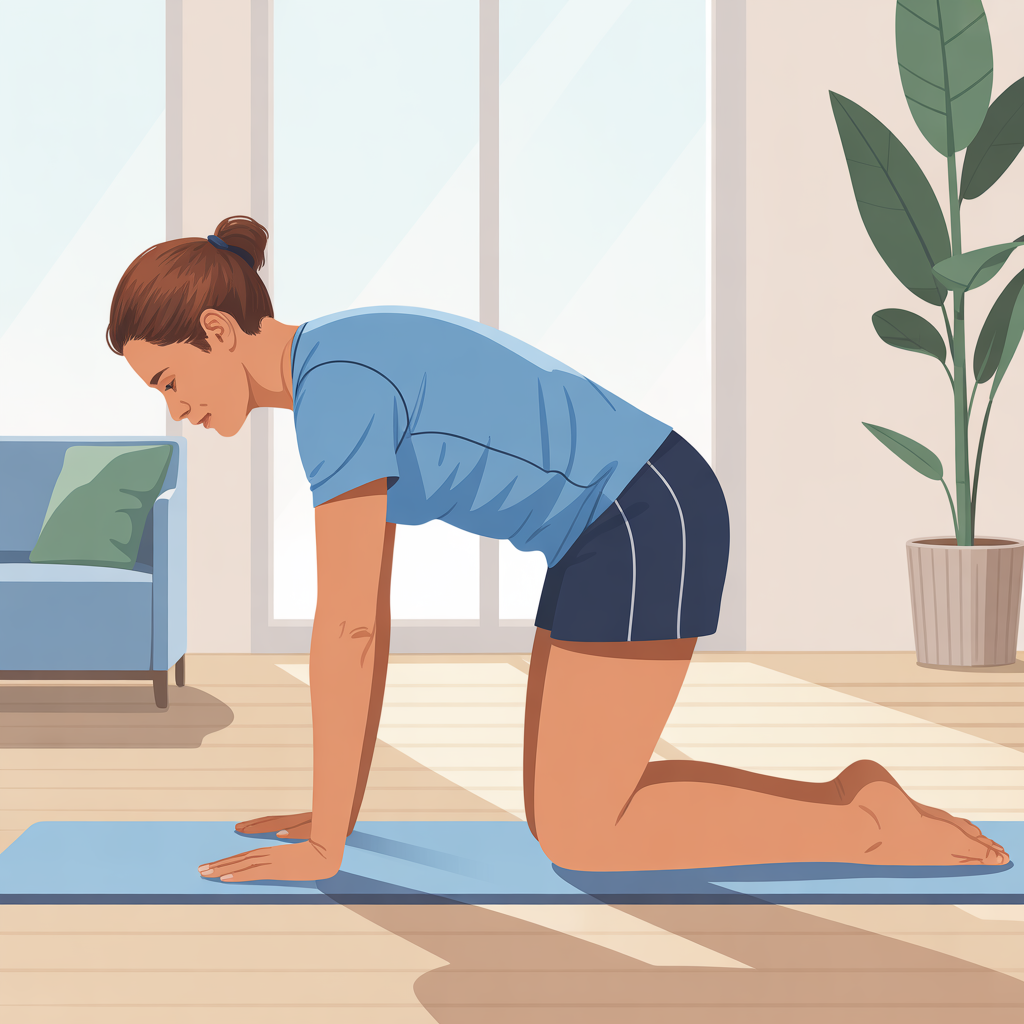
1. Cat-Cow Stretch
This dynamic stretch mobilizes your entire spine while specifically targeting upper back tension.
Instructions:
- Start on your hands and knees with your wrists directly under your shoulders and knees under your hips.
- Begin in a neutral spine position with your head in line with your spine.
- For the “cow” position: arch your back gently, lifting your chest and tailbone toward the ceiling while letting your belly drop slightly.
- For the “cat” position: round your spine toward the ceiling, tucking your chin to your chest and tilting your pelvis under.
- Move slowly between these positions, focusing on the movement in your upper back.
- Repeat 8-10 times, spending 2-3 seconds in each position.
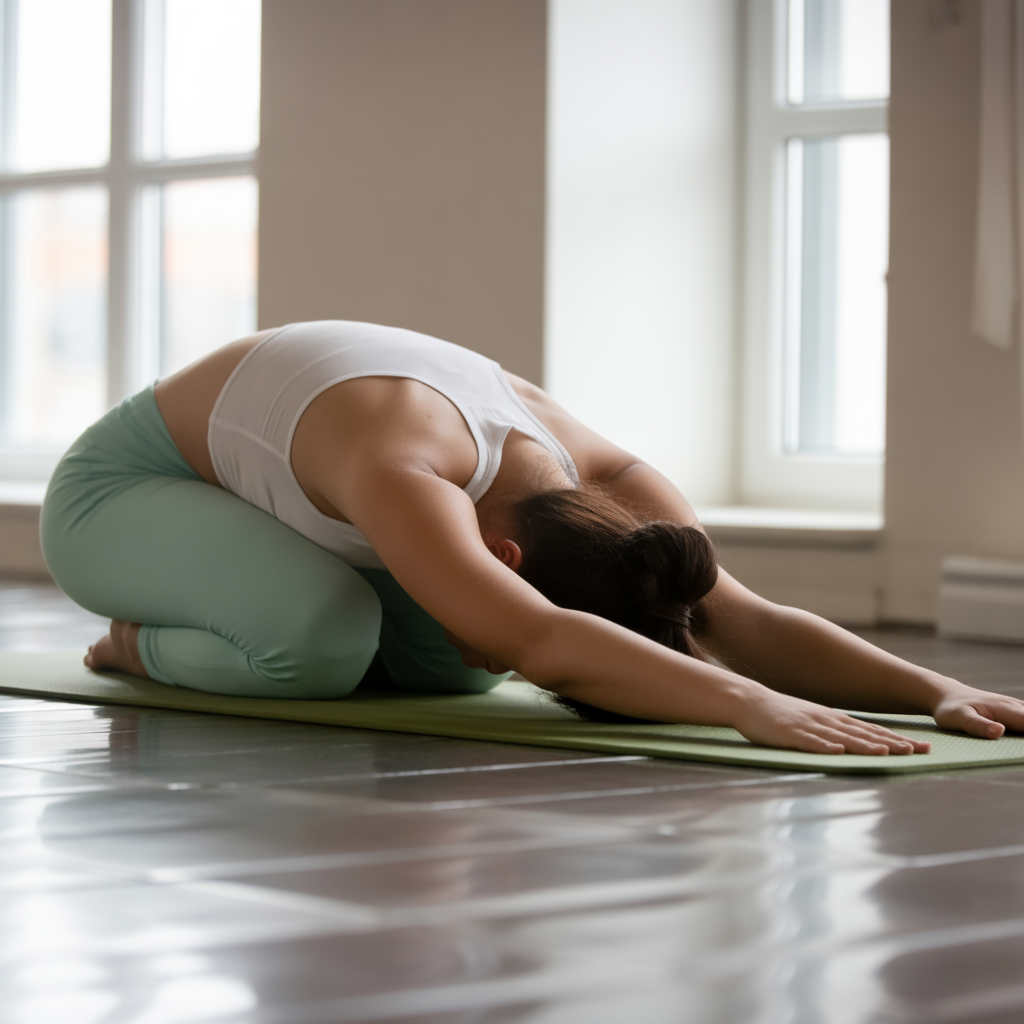
2. Child’s Pose with Arms Extended
This restorative stretch gently elongates your upper back muscles while promoting relaxation.
Instructions:
- Kneel on the floor with your big toes touching and knees spread comfortably apart.
- Sit back on your heels and extend your arms forward on the ground.
- Lower your chest toward the ground, keeping your arms active and reaching forward.
- Rest your forehead on the ground if comfortable, or on a pillow or block.
- Hold for 30-60 seconds, breathing deeply.
- To target different areas, walk your hands to the right for 15 seconds, then to the left for 15 seconds.
3. Cross-Body Shoulder Stretch
This stretch targets the posterior deltoids and upper trapezius muscles.
Instructions:
- Stand or sit with good posture.
- Bring your right arm across your body at chest height.
- Use your left hand to gently pull your right arm closer to your chest.
- Keep your shoulders relaxed and avoid rotating your torso.
- Hold for 15-20 seconds, then repeat on the other side.
- Focus on feeling the stretch in the back of your shoulder and upper back.
4. Upper Trap Stretch
This stretch specifically targets the upper trapezius muscles that often hold stress and tension.
Instructions:
- Sit or stand with good posture.
- Gently tilt your head to the right, bringing your right ear toward your right shoulder.
- Place your right hand on the left side of your head for gentle assistance.
- Keep your left shoulder relaxed and down.
- Hold for 15-20 seconds, then repeat on the other side.
- You should feel a gentle stretch along the side of your neck and upper shoulder.
Intermediate Stretches
Once you’re comfortable with the beginner stretches, these intermediate options will help you progress further in your flexibility and tension relief.
1. Doorway Chest Stretch
This stretch counteracts the forward posture that contributes to upper back tension by opening your chest and shoulders.
Instructions:
- Stand in a doorway with your forearm against the door frame.
- Position your elbow at 90 degrees and at shoulder height.
- Step forward with the leg on the same side as your stretched arm.
- Lean forward gently until you feel a stretch across your chest and front of your shoulder.
- Hold for 20-30 seconds, then repeat on the other side.
- Try different arm heights (high, middle, low) to stretch different muscle fibers.

2. Seated Spinal Twist
This stretch improves spinal mobility and targets the deep muscles of your upper back.
Instructions:
- Sit in a chair with your feet flat on the floor and your back straight.
- Place your right hand on the back of your chair.
- Slowly rotate your torso to the right, using your hand for gentle assistance.
- Keep your hips facing forward and your spine tall.
- Hold for 15-20 seconds, then repeat on the other side.
- Breathe deeply and try to deepen the twist slightly with each exhale.
3. Eagle Arms Stretch
This stretch targets the space between your shoulder blades and the rear deltoids.
Instructions:
- Extend both arms in front of you at shoulder height.
- Cross your right arm over your left arm.
- Bend your elbows and try to wrap your forearms around each other.
- If possible, press your palms together.
- Lift your elbows slightly and feel the stretch between your shoulder blades.
- Hold for 15-20 seconds, then switch which arm is on top.
4. Thread the Needle
This dynamic stretch improves thoracic spine mobility and stretches multiple upper back muscles.
Instructions:
- Start on your hands and knees in a tabletop position.
- Lift your right hand and “thread” it under your left arm and across your body.
- Lower your right shoulder and the side of your head toward the ground.
- Hold for 15-20 seconds, feeling the stretch in your upper back and shoulder.
- Return to the starting position and repeat on the other side.
- Move slowly and control the movement throughout.
Advanced Stretches
These advanced stretches require good baseline flexibility and body awareness. Only attempt these once you’re comfortable with the beginner and intermediate stretches.
1. Wall Angels
This exercise combines stretching with strengthening to improve posture and upper back mobility.
Instructions:
- Stand with your back against a wall, feet about 6 inches away from the wall.
- Place your arms against the wall in a “goal post” position with your elbows at 90 degrees.
- Slowly slide your arms up the wall, keeping contact with the wall throughout.
- Slide back down to the starting position.
- Repeat 8-10 times, focusing on maintaining wall contact.
- This stretch challenges your mobility while strengthening postural muscles.
2. Lying Thoracic Extension
This stretch specifically targets the thoracic spine, which often becomes stiff from prolonged sitting.
Instructions:
- Lie on your back with a foam roller positioned horizontally under your upper back.
- Support your head with your hands, keeping your elbows wide.
- Slowly extend backward over the foam roller, allowing your upper back to arch gently.
- Hold for 10-15 seconds, then move the foam roller to a different spot.
- Work your way up and down your upper back, spending extra time on tight areas.
- If you don’t have a foam roller, you can use a rolled towel or pool noodle.
3. Hanging Stretch
This stretch uses gravity to decompress your spine and stretch your upper back muscles.
Instructions:
- Find a sturdy pull-up bar or similar apparatus.
- Hang with both hands, using an overhand grip slightly wider than shoulder-width.
- Allow your body weight to stretch your arms, shoulders, and upper back.
- Keep your shoulders engaged (not completely relaxed) to protect your joints.
- Hold for 10-30 seconds, depending on your grip strength.
- If you can’t support your full body weight, use a box or step to take some weight off your arms.
Targeted Stretch Routines for Different Needs
Having individual stretches is great, but combining them into targeted routines can maximize their effectiveness for your specific situation and schedule.
Quick 5-Minute Office Routine
Perfect for busy workdays when you need quick relief without leaving your desk:
- Shoulder shrugs (30 seconds)
- Cross-body shoulder stretch (30 seconds each side)
- Upper trap stretch (30 seconds each side)
- Seated spinal twist (30 seconds each side)
- Eagle arms stretch (30 seconds each arm position)
Perform this routine every 2-3 hours during your workday for best results.
15-Minute Morning Routine
Start your day with better posture and reduced tension:
- Gentle warm-up movements (2 minutes)
- Cat-cow stretch (2 minutes)
- Child’s pose with arms extended (2 minutes)
- Cross-body shoulder stretch (2 minutes total)
- Upper trap stretch (2 minutes total)
- Doorway chest stretch (3 minutes total)
- Thread the needle (2 minutes total)
20-Minute Evening Wind-Down
Release the day’s tension and prepare for restful sleep:
- Gentle warm-up (3 minutes)
- Cat-cow stretch (3 minutes)
- Child’s pose with arms extended (4 minutes)
- Seated spinal twist (3 minutes total)
- Eagle arms stretch (2 minutes total)
- Upper trap stretch (3 minutes total)
- Lying thoracic extension (2 minutes)
Follow this routine with deep breathing or meditation for optimal relaxation.
Weekend Intensive (30+ minutes)
Use this comprehensive routine when you have more time for thorough tension relief:
- Extended warm-up with light movement (5 minutes)
- All beginner stretches (10 minutes)
- All intermediate stretches (10 minutes)
- Selected advanced stretches based on your ability (5-10 minutes)
- Cool-down with gentle movements and deep breathing (5 minutes)
Enhancing Your Stretching Practice
To maximize the benefits of your upper back stretches, consider incorporating additional tools and techniques into your routine.
Helpful Tools and Equipment
While many effective stretches require no equipment, certain tools can enhance your practice:
- Foam rollers: Excellent for self-massage and myofascial release before or after stretching.
- Resistance bands: Can assist with stretches or provide gentle resistance for strengthening.
- Yoga blocks: Help modify stretches to your current flexibility level.
- Massage balls: Target specific trigger points and knots in your upper back muscles.
- Doorway anchor: Allows for more chest and shoulder stretching variations.
Complementary Techniques
Combine these techniques with your stretching routine for enhanced results:
- Self-massage: Use your hands, a tennis ball, or massage tools to work on tight spots before stretching.
- Heat therapy: Apply a warm compress or take a warm shower before stretching to relax muscles.
- Breathing exercises: Deep diaphragmatic breathing can help muscles relax and improve stretch effectiveness.
- Mindfulness: Focus on the sensations in your body during stretching to improve body awareness and relaxation.
Common Mistakes and How to Avoid Them
Even with the best intentions, it’s easy to make mistakes that can limit the effectiveness of your stretching routine or even cause injury.
- Overstretching and forcing movements: Stretching should never be painful. If you feel sharp pain or excessive discomfort, back off immediately.
- Holding your breath: Many people unconsciously hold their breath while stretching. Remember to breathe deeply and continuously.
- Ignoring pain signals: There’s a difference between the discomfort of a good stretch and pain that signals potential injury.
- Inconsistent practice: Stretching once a week won’t provide lasting benefits. Aim for daily practice, even if it’s just a few minutes.
- Poor form and alignment: Pay attention to your posture and form during stretches to ensure you’re targeting the right muscles safely.
- Skipping warm-up: Cold muscles are more prone to injury. Always warm up before intense stretching.
When to Seek Professional Help
While upper back stretches can be incredibly effective for managing tension and improving mobility, there are times when professional intervention is necessary.
Red Flag Symptoms
Consult with a healthcare professional if you experience:
- Severe or worsening pain despite consistent stretching
- Numbness or tingling in your arms, hands, or fingers
- Limited range of motion that doesn’t improve after several weeks of stretching
- Radiating pain that travels down your arms
- Weakness in your arms or hands
- Pain that interferes with sleep or daily activities
Professional Treatment Options
Various healthcare professionals can help address persistent upper back issues:
- Physical therapy: Can provide personalized exercise programs and manual therapy techniques.
- Massage therapy: Professional massage can address deep tissue restrictions and trigger points.
- Chiropractic care: May help with spinal alignment and joint mobility issues.
- Medical evaluation: A physician can rule out underlying conditions and provide appropriate treatment recommendations.
Remember, seeking professional help doesn’t mean you’ve failed – it means you’re taking a proactive approach to your health and well-being.
Lifestyle Tips for Long-Term Upper Back Health
While stretching is crucial for managing upper back tension, addressing the root causes through lifestyle modifications will provide the most lasting relief.
Workspace Ergonomics
Since many upper back problems stem from poor workplace posture, optimizing your workspace is essential:
- Monitor positioning: Your screen should be at eye level to prevent forward head posture.
- Chair adjustments: Ensure your chair supports the natural curve of your spine and allows your feet to rest flat on the floor.
- Keyboard and mouse placement: Keep them at elbow height to prevent shoulder elevation.
- Regular movement breaks: Stand and move for 2-3 minutes every 30-45 minutes of sitting.
Daily Habits for Upper Back Health
Incorporate these practices into your daily routine:
- Posture awareness: Check in with your posture throughout the day and make adjustments as needed.
- Sleep position optimization: Use supportive pillows and avoid sleeping on your stomach.
- Exercise integration: Include upper back strengthening exercises in your fitness routine.
- Stress management: Practice stress-reduction techniques like meditation or deep breathing to prevent tension buildup.
Prevention Strategies
The best approach to upper back pain is preventing it in the first place:
- Regular strengthening: Strong muscles are less prone to injury and tension.
- Consistent stretching schedule: Make stretching a non-negotiable part of your daily routine.
- Activity modifications: Adjust how you perform daily activities to reduce strain on your upper back.
- Early intervention: Address tension and discomfort early before it becomes a chronic problem.
Your Path to Better Upper Back Health
Upper back tension doesn’t have to be a permanent part of your life. By incorporating the stretches and strategies outlined in this guide, you can take control of your upper back health and enjoy greater comfort and mobility. Remember that consistency is key – even just 5-10 minutes of daily stretching can make a significant difference over time.
Start with the beginner-friendly stretches and gradually progress to more advanced techniques as your flexibility improves. Pay attention to your body’s signals, maintain proper form, and don’t hesitate to seek professional help if you experience persistent pain or concerning symptoms.
The journey to better upper back health is a marathon, not a sprint. Be patient with yourself, celebrate small improvements, and remember that every stretch brings you one step closer to the comfort and mobility you deserve. Your future self will thank you for the investment you make in your upper back health today.
Begin with just 2-3 basic stretches from this guide and perform them consistently for one week. As they become part of your routine, gradually add more stretches and longer sessions. With dedication and consistency, you’ll soon experience the relief and improved quality of life that comes with a healthy, flexible upper back.