

The labia are a fundamental part of female genital anatomy, yet they remain one of the least discussed aspects of women’s bodies. Despite their importance in sexual function, protection, and reproduction, many women feel uncertain or insecure about their labial appearance due to limited education and representation of natural diversity. This comprehensive guide explores the wide range of normal variations in labia size, shape, and color, providing evidence-based information to help dispel myths and promote body positivity. Understanding that every woman’s body is uniquely her own can help foster self-acceptance and healthier attitudes toward intimate anatomy.
Basic Labia Anatomy
The labia, Latin for “lips,” consist of two distinct pairs of folds that surround and protect the vaginal opening and other external genital structures. This dual-layer design serves important protective, sensory, and sexual functions.
The labia majora (outer lips) are the larger, outer folds that typically contain sweat and oil-secreting glands, as well as hair follicles after puberty. Composed primarily of adipose (fatty) tissue and skin, they provide cushioning and protection for the more sensitive inner structures. The labia majora extend from the mons pubis (pubic mound) down and back toward the perineum.
The labia minora (inner lips) are the smaller, inner folds of skin that lie just inside the labia majora. Unlike the outer lips, they contain no fat cells or hair follicles but are rich in blood vessels, making them more sensitive to touch and potentially more responsive during sexual arousal. These inner lips connect at the top to form the clitoral hood (prepuce) and help protect the clitoris, urethral opening, and vaginal entrance.
Both structures play important roles in sexual pleasure, as they contain numerous nerve endings. They also help maintain moisture and appropriate temperature for the vaginal area and provide a barrier against infection and irritation. During sexual arousal, these tissues often become engorged with blood, potentially changing in size, shape, and color temporarily.
Natural Diversity in Labia Appearance
Variations in Size
Labial dimensions vary significantly among women with no single “normal” size existing. Research studies examining labial measurements have found considerable natural variation:
- Labia minora width typically ranges from 7mm to 50mm, with the average being around 10-40mm
- Labia majora length generally ranges from 7-12cm
- Asymmetry between left and right sides is extremely common, with one study finding that 56% of women have uneven labia minora
These variations occur naturally and don’t indicate any medical issues or abnormalities. Much like how ears or breasts are rarely perfectly symmetrical, labia typically develop with some degree of asymmetry.
Different Shapes
Labial shapes are as diverse as their sizes. The labia minora may be:
- Completely concealed within the labia majora
- Partially visible, extending just beyond the outer lips
- Prominently visible beyond the labia majora
- Ruffled or folded along the edges
- Smooth-edged
- Thin or thick in texture
The labia majora can also vary from full and plump to thin and close-fitting against the body. Some women have very defined outer lips with a clear separation, while others have a more seamless transition between the mons pubis and labia.
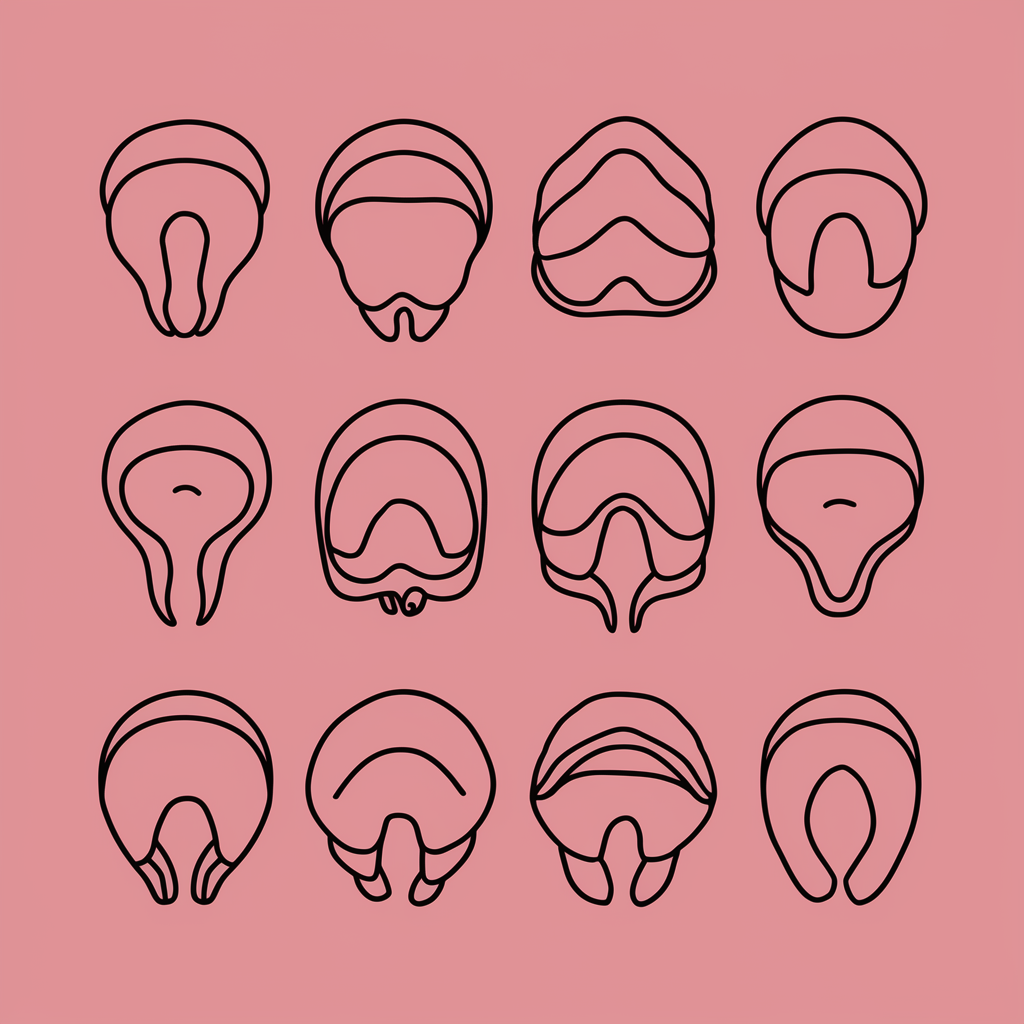
A 2018 study published in the International Journal of Obstetrics and Gynaecology found that even among the same individual, labial appearance can change throughout the menstrual cycle, during sexual arousal, and with age, highlighting the dynamic nature of these structures.
Color Variations
Labial coloration spans a wide spectrum, with tones ranging from pale pink to deep brown, purple, or reddish hues. This pigmentation is determined by several factors:
- Genetic factors and ethnic background
- Hormonal influences
- Blood flow to the tissues
It’s entirely normal for labia to be a different color than the surrounding skin, and many women have multicolored labia with variations in pigmentation throughout the tissue. During sexual arousal, increased blood flow may temporarily darken the color of the labia.
Additionally, color changes often occur during major hormonal events like puberty and pregnancy, when increased hormone production can lead to deepening pigmentation of genital tissues.
Factors Influencing Labial Anatomy
Genetic Factors
As with most physical characteristics, genetics plays a significant role in determining labial appearance. Just as you inherit traits like eye color or height from your parents, aspects of your genital anatomy are similarly influenced by your genetic makeup.
Ethnicity can also influence certain aspects of labial appearance, though it’s important to note that significant variation exists within all ethnic groups. Some studies suggest that women of different ancestry may have tendencies toward certain labial characteristics, but these are generalizations rather than rules.
Hormonal Influences
Hormones profoundly influence labial development and appearance throughout a woman’s life:
- Puberty: The surge of estrogen triggers the development of both labia majora and minora, often causing them to darken and grow
- Menstrual cycle: Fluctuating hormone levels can cause subtle changes in tissue fullness and sensitivity
- Pregnancy: Increased blood volume and hormonal changes often lead to enlargement and darkening of the labia
- Menopause: Declining estrogen levels typically result in thinning of labial tissue and reduced fullness of the labia majora as fat deposits diminish
Birth control pills and other hormonal medications may also influence labial appearance in some women by altering natural hormone levels.
Environmental and Lifestyle Factors
Several external factors can influence how the labia look and feel:
- Physical activities like cycling, horseback riding, or high-impact exercises may temporarily affect labial appearance or cause minor swelling
- Childbirth can stretch and sometimes tear labial tissues, potentially resulting in permanent changes
- Friction from tight clothing or certain fabric types may cause temporary irritation or swelling
- Weight fluctuations can affect the fat deposits in the labia majora, changing their fullness and appearance
Changes Throughout Life
The appearance of the labia naturally evolves throughout a woman’s lifetime in response to hormonal shifts, physical experiences, and the natural aging process.
During puberty, rising estrogen levels cause the labia to develop from their childlike state. The labia majora add fatty tissue and begin growing pubic hair, while the labia minora develop and potentially extend beyond the outer lips. This development typically occurs between ages 8-13, though timing varies widely.
Throughout the reproductive years, the labia remain relatively stable in appearance, though they may undergo temporary changes during the menstrual cycle due to hormonal fluctuations. Many women notice their labia feel slightly swollen or more sensitive at certain points in their cycle.
Pregnancy and childbirth represent significant events that can impact labial anatomy. Increased blood flow and hormonal changes during pregnancy often cause the labia to darken and potentially swell. Vaginal delivery may stretch or tear the labia, sometimes resulting in permanent changes to their appearance.
During perimenopause and menopause, declining estrogen levels lead to characteristic changes in the genital tissues. The labia majora typically lose volume as fat deposits diminish, while the labia minora may become thinner and less elastic. The tissues generally become paler as blood flow decreases.
Medical Considerations
Normal vs. Abnormal Changes
While labial appearance varies widely, certain changes may warrant medical attention. Generally, gradual changes related to aging, hormones, or childbirth are normal, but sudden or dramatic changes might indicate a medical issue.
Signs that may warrant consultation with a healthcare provider include:
- Sudden, unexplained swelling or pain
- Persistent itching or burning sensation
- Unusual growths, lumps, or lesions
- Changes in skin texture like thickening or whitening of tissue
- Unexplained bleeding not associated with menstruation
Regular genital self-examinations can help women become familiar with their normal appearance and more readily identify concerning changes.
Common Concerns and Conditions
Several benign conditions may affect labial comfort or appearance:
- Contact dermatitis: Irritation caused by soaps, detergents, or feminine hygiene products
- Bartholin’s cysts: Fluid-filled growths that develop when the Bartholin’s glands become blocked
- Vulvar varicosities: Swollen veins in the vulva that may develop during pregnancy
- Lichen sclerosus: A skin condition causing white, thinning patches that may affect the vulva
- Vulvodynia: Chronic pain or discomfort of the vulva without identifiable cause
Most labial discomfort can be addressed with proper diagnosis and treatment. Many women hesitate to discuss genital concerns with healthcare providers due to embarrassment, but these conversations are essential for maintaining vulvovaginal health.
Body Image and Psychological Aspects
Our perception of what constitutes “normal” labial appearance is heavily influenced by cultural messaging, media representation, and pornography, which often present a limited and sometimes surgically altered view of female genitalia. This narrow representation can lead many women to question whether their own anatomy is normal or attractive.
Studies have found that exposure to idealized images of female genitalia is associated with increased genital dissatisfaction and consideration of cosmetic procedures. A 2018 survey published in the journal Body Image found that 56% of women reported some concern about the appearance of their vulva, with particular focus on the labia minora.
Body positivity movements have begun to address this issue by promoting education about normal anatomical diversity and encouraging self-acceptance. Resources like The Great Wall of Vagina art installation and The Vulva Gallery have worked to document and normalize the wide range of natural labial appearances.
For women experiencing significant distress about their genital appearance (a condition sometimes called genital appearance anxiety), speaking with a mental health professional experienced in body image issues can be beneficial. These professionals can help address unrealistic expectations and develop healthier perspectives on natural bodily variation.
Cosmetic and Medical Interventions
In recent years, cosmetic procedures focused on the labia have gained popularity. Labiaplasty, the surgical reduction of the labia minora, is the most common female genital cosmetic procedure, with rates increasing by 217% between 2012 and 2017 according to the American Society for Aesthetic Plastic Surgery.
These procedures are sought for various reasons:
- Functional concerns like discomfort during physical activities or intercourse
- Aesthetic preferences influenced by cultural or personal expectations
- Psychological distress related to genital appearance
While labiaplasty can address genuine functional issues for some women, many medical organizations caution against pursuing surgery purely for cosmetic reasons without understanding the wide range of normal anatomical variation. Potential risks include scarring, reduced sensitivity, pain with intercourse, and dissatisfaction with results.
Less invasive alternatives to surgery include:
- Wearing different clothing styles that reduce friction on the labia
- Using supportive undergarments during high-impact activities
- Exploring therapy to address body image concerns
- Educating oneself about normal anatomical variation
Medical organizations including the American College of Obstetricians and Gynecologists recommend that physicians screen for body dysmorphic disorder before proceeding with cosmetic genital procedures and provide thorough education about normal variation.
Self-Care and Hygiene
Proper care of the labial area is straightforward and requires minimal intervention. The vulva has natural cleaning mechanisms, and excessive washing or use of products can disrupt the delicate balance of the area.
For optimal labial health:
- Wash the external genital area with warm water only or with a mild, fragrance-free soap
- Avoid douches, feminine sprays, heavily scented soaps, and bubble baths which can irritate sensitive tissues
- Wear breathable, cotton underwear and avoid prolonged exposure to wet swimwear
- Pat dry rather than rubbing after bathing or swimming
- Consider using a pH-balanced moisturizer designed for the vulva if dryness is an issue, particularly after menopause
For women who experience labial discomfort during physical activities:
- Apply a thin layer of petroleum jelly or a similar product to reduce friction
- Consider specialized padding for activities like cycling
- Wear properly fitted supportive underwear during high-impact exercises
When experiencing irritation, a cool compress can provide relief, along with wearing loose-fitting clothing until symptoms resolve. Persistent discomfort should be evaluated by a healthcare provider.
Talking About Labial Health
Open conversation about labial anatomy and health remains challenging in many contexts due to persistent taboos surrounding female genitalia. However, clear communication is essential for proper healthcare, intimate relationships, and personal well-being.
When speaking with healthcare providers about labial concerns:
- Use proper anatomical terms when possible
- Be specific about symptoms or changes you’ve noticed
- Ask direct questions about what constitutes normal variation
- Don’t hesitate to seek a second opinion if you feel your concerns are dismissed
For conversations with partners, educational approaches can help normalize discussions about genital appearance and preferences. Remember that many people have limited exposure to accurate information about labial diversity.
Valuable resources for continued education include:
- Books like “Come As You Are” by Emily Nagoski
- Websites from medical organizations like ACOG (American College of Obstetricians and Gynecologists)
- Community forums focused on women’s health
- Educational art projects showcasing genital diversity
Breaking taboos through informed conversation helps not only individual women but contributes to broader social understanding and acceptance of natural bodily variation.
Conclusion
The remarkable diversity in labial anatomy represents a normal and natural aspect of female bodies. From variations in size, shape, and color to the changes that occur throughout a woman’s lifetime, this diversity should be recognized and celebrated rather than standardized or judged.
Understanding that there is no single “normal” appearance can help women develop healthier relationships with their bodies and make informed decisions about their genital health. When concerns arise, they can be addressed from a place of knowledge rather than fear or embarrassment.
As society continues to evolve in its approach to discussions about female anatomy, increased education and normalization of these conversations will benefit women of all ages. Embracing the natural diversity of labial anatomy is ultimately about respecting the uniqueness of each woman’s body and supporting her comfort, confidence, and health throughout her life.
Frequently Asked Questions
Is it normal for my labia minora to extend beyond my labia majora?
Yes, this is completely normal. Many women have labia minora that protrude beyond the outer lips, while others have inner lips that remain mostly concealed. Both variations and everything in between are normal aspects of female anatomy.
Why are my labia darker than the rest of my skin?
The genital area typically has more melanin (pigment) than other body areas. Hormone fluctuations, genetics, and friction can all contribute to darker coloration. This is a natural characteristic and varies widely among women.
Do the labia change after childbirth?
Pregnancy and childbirth can cause temporary or permanent changes to the labia due to hormonal influences and the physical process of delivery. Some women notice stretching, slight elongation, or changes in fullness, while others observe minimal difference after recovery.
When should I be concerned about changes to my labia?
Consult a healthcare provider if you experience sudden pain, unusual swelling, persistent itching, unusual growths or lesions, or changes that cause significant discomfort. Gradual changes related to aging, hormones, or childbirth are typically normal.
Can tight clothing damage or change my labia?
While tight clothing won’t permanently alter your labial structure, it can cause temporary discomfort, irritation, or swelling from friction and reduced airflow. Regularly wearing breathable fabrics and appropriate sizing can help minimize these issues.