

Holy basil, scientifically known as Ocimum tenuiflorum, stands as one of the most revered herbs in traditional medicine systems worldwide. Often called “Tulsi” in Sanskrit, meaning “the incomparable one,” this sacred plant has earned its reputation as “The Queen of Herbs” through thousands of years of therapeutic use. Unlike the sweet basil commonly found in kitchens, holy basil possesses powerful adaptogenic properties that help the body manage stress, support immune function, and promote overall wellness. This comprehensive guide explores everything you need to know about holy basil, from its impressive health benefits and proper usage to potential side effects and dosage recommendations, empowering you to harness this remarkable herb’s healing potential safely and effectively.
What is Holy Basil?
Botanical Profile
Holy basil (Ocimum tenuiflorum) belongs to the Lamiaceae family and is native to the Indian subcontinent and Southeast Asia. This aromatic perennial herb typically grows 12-18 inches tall, featuring small, serrated leaves that range from green to purple depending on the variety. The plant produces tiny white or purple flowers arranged in spikes, creating an attractive and fragrant addition to any garden.
There are three primary varieties of holy basil, each with distinct characteristics:
- Krishna Tulsi: Features dark purple leaves and stems with a clove-like aroma
- Rama Tulsi: Displays bright green leaves with a milder, sweeter fragrance
- Vana Tulsi: Wild variety with light green leaves and a lemony scent

While holy basil shares the same family as sweet basil (Ocimum basilicum), they differ significantly in their chemical composition and therapeutic properties. Holy basil contains higher concentrations of bioactive compounds that contribute to its medicinal effects, making it unsuitable for culinary use but exceptional for health applications.
Active Compounds
The therapeutic power of holy basil lies in its rich array of bioactive compounds. The primary active constituents include:
- Eugenol: A phenolic compound providing antimicrobial and anti-inflammatory properties
- Rosmarinic acid: A powerful antioxidant that supports immune function
- Ocimumosides A and B: Unique compounds that contribute to stress-reducing effects
- Ursolic acid: Supports liver health and provides anti-inflammatory benefits
- Essential oils: Including methyl chavicol, linalool, and β-caryophyllene
Holy Basil Health Benefits
Stress Relief and Mental Health
Holy basil’s most celebrated benefit lies in its adaptogenic properties, helping the body manage various forms of stress more effectively. Research demonstrates that regular holy basil consumption can significantly reduce cortisol levels, the primary stress hormone that, when chronically elevated, contributes to numerous health problems.
Clinical studies have shown that holy basil supplementation can reduce symptoms of generalized anxiety disorder, with participants experiencing improved mood, reduced anxiety levels, and better stress tolerance. The herb’s ability to modulate neurotransmitter activity, particularly GABA and serotonin, contributes to its calming effects without causing drowsiness or dependence.
Additionally, holy basil supports cognitive function by improving memory, concentration, and mental clarity. Its neuroprotective properties may help prevent age-related cognitive decline and support overall brain health.
Immune System Support
Holy basil acts as a powerful immune system modulator, enhancing the body’s natural defense mechanisms while reducing excessive inflammatory responses. Its antimicrobial properties provide protection against various pathogens, including bacteria, viruses, and fungi.
The herb’s immune-supporting effects include:
- Increasing production of immune cells such as T-helper cells and natural killer cells
- Enhancing antibody production for better pathogen recognition
- Reducing inflammatory markers that can suppress immune function
- Supporting respiratory health and reducing the severity of cold and flu symptoms
Blood Sugar Control
Research indicates that holy basil can significantly impact glucose metabolism, making it valuable for individuals managing diabetes or prediabetes. The herb works through multiple mechanisms to support healthy blood sugar levels:
- Improving insulin sensitivity in muscle and fat tissues
- Reducing glucose absorption in the intestines
- Supporting pancreatic beta cell function
- Decreasing hepatic glucose production
Clinical trials have demonstrated that participants taking holy basil extract experienced significant reductions in fasting blood glucose levels, post-meal glucose spikes, and HbA1c levels over 12-week periods.
Cardiovascular Health
Holy basil provides comprehensive cardiovascular support through multiple pathways. Its ability to reduce blood pressure stems from its vasodilating properties and stress-reducing effects, as chronic stress significantly contributes to hypertension.
The herb also supports healthy cholesterol levels by:
- Reducing LDL (bad) cholesterol oxidation
- Increasing HDL (good) cholesterol levels
- Improving overall lipid profiles
- Reducing arterial inflammation and plaque formation
Additional Benefits
Holy basil’s therapeutic effects extend to numerous other areas of health:
Liver Detoxification: The herb supports liver function by enhancing the production of detoxifying enzymes and protecting hepatocytes from oxidative damage.
Skin Health: Topical and internal use of holy basil can improve various skin conditions, including acne, eczema, and premature aging, due to its antimicrobial and antioxidant properties.
Digestive Support: Holy basil can help reduce digestive inflammation, improve nutrient absorption, and support healthy gut bacteria balance.
Pain Relief: The herb’s anti-inflammatory compounds provide natural pain relief for various conditions, including arthritis and muscle soreness.
How to Use Holy Basil
Different Forms Available
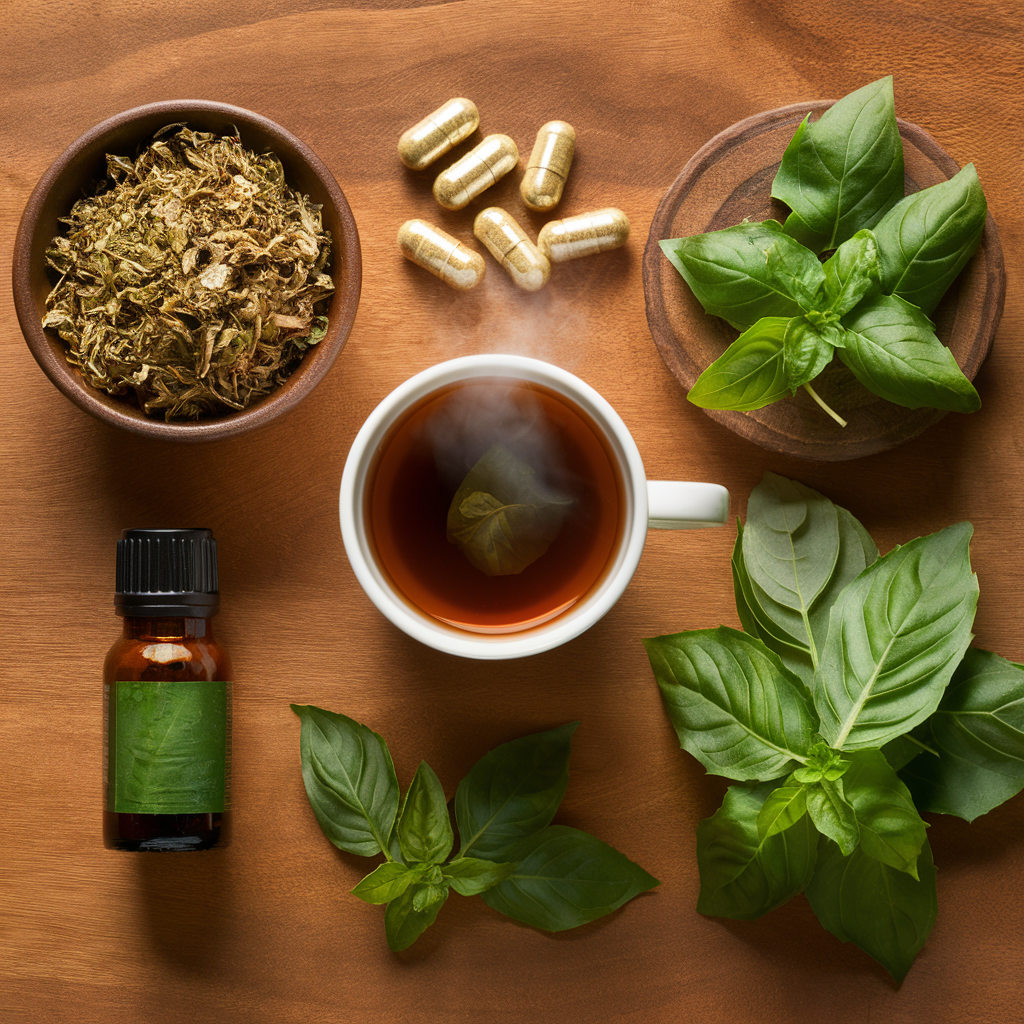
Holy basil is available in various forms to suit different preferences and therapeutic needs:
- Fresh Leaves: Can be chewed directly, added to smoothies, or used in cooking
- Dried Powder: Convenient for mixing into beverages or food
- Capsules and Tablets: Standardized extracts providing consistent dosing
- Essential Oil: Used for aromatherapy and topical applications
- Tea/Tisane: Dried leaves steeped in hot water
- Liquid Extracts: Concentrated tinctures for precise dosing
Preparation Methods
Making Holy Basil Tea: Steep 1-2 teaspoons of dried holy basil leaves in 8 ounces of hot water for 5-10 minutes. Strain and enjoy up to three times daily. Fresh leaves can also be used, requiring about double the amount.
Incorporating Fresh Leaves: Fresh holy basil leaves can be chewed directly (2-3 leaves daily), added to smoothies, or incorporated into herbal preparations. Always wash fresh leaves thoroughly before consumption.
Topical Applications: Holy basil essential oil should be diluted with carrier oils before topical use. A 2-3% dilution is generally safe for most individuals.
Dosage Guidelines
General Dosage Recommendations
Proper dosing of holy basil depends on the form used and individual health goals:
- Fresh Leaves: 2-3 leaves daily, chewed on an empty stomach
- Dried Powder: 300-600 mg twice daily with meals
- Standardized Extract: 300-600 mg daily, standardized to 2.5% ursolic acid
- Tea: 1-3 cups daily, using 1-2 teaspoons of dried leaves per cup
- Liquid Extract: 30-60 drops (1-2 ml) twice daily
Dosage for Specific Conditions
Stress Management: 300-400 mg of standardized extract twice daily, or 2-3 cups of holy basil tea throughout the day.
Blood Sugar Control: 250-500 mg of extract taken 30 minutes before meals, twice daily.
Immune Support: 300 mg daily during wellness maintenance, increasing to 600 mg daily during periods of increased immune challenge.
Sleep Improvement: 300-400 mg taken 1-2 hours before bedtime, or 1 cup of holy basil tea in the evening.
Timing and Duration
Holy basil can be taken with or without food, though taking it with meals may reduce potential digestive sensitivity. For stress management, consistent daily use provides the best results, as adaptogenic effects build over time.
Most people begin experiencing benefits within 2-4 weeks of regular use. Holy basil is generally safe for long-term use, though periodic breaks (1-2 weeks every 3-6 months) may help maintain effectiveness.
Side Effects and Precautions
Common Side Effects
Holy basil is generally well-tolerated by most individuals, but some may experience mild side effects, particularly when first starting supplementation:
- Digestive Upset: Mild nausea, stomach irritation, or changes in bowel movements
- Blood Sugar Effects: May cause hypoglycemia in sensitive individuals
- Skin Sensitivity: Topical use may cause irritation in some people
- Drowsiness: Some individuals may experience mild sedation
Serious Considerations
While rare, some serious considerations warrant attention:
Blood Clotting Effects: Holy basil may slow blood clotting, potentially increasing bleeding risk in susceptible individuals or those taking anticoagulant medications.
Fertility Concerns: Animal studies suggest high doses may affect fertility, though human data is limited. Couples trying to conceive should consult healthcare providers.
Hypoglycemia Risk: Individuals with diabetes should monitor blood sugar closely when starting holy basil, as it may enhance the effects of diabetes medications.
Who Should Avoid Holy Basil
Pregnancy and Breastfeeding: Insufficient safety data exists for pregnant and breastfeeding women. It’s best to avoid use during these periods unless specifically recommended by a healthcare provider.
Pre-Surgery Considerations: Discontinue holy basil at least two weeks before scheduled surgery due to potential effects on blood clotting and blood sugar levels.
Specific Medical Conditions: Individuals with bleeding disorders, severe hypotension, or those taking multiple medications should consult healthcare providers before use.
Drug Interactions and Contraindications
Holy basil may interact with several types of medications:
- Blood Thinning Medications: May enhance anticoagulant effects of warfarin, heparin, and aspirin
- Diabetes Medications: May potentiate hypoglycemic effects of insulin and oral diabetes drugs
- Blood Pressure Medications: May enhance hypotensive effects of ACE inhibitors and beta-blockers
- Immunosuppressive Drugs: May counteract immunosuppressive effects of medications like cyclosporine
- Sedatives: May enhance the effects of sleep medications and anxiolytics
Always consult with healthcare providers before combining holy basil with prescription medications.
Scientific Research and Studies
Holy basil’s therapeutic benefits are supported by extensive scientific research. Over 200 peer-reviewed studies have investigated various aspects of holy basil’s effects on human health.
Notable clinical trials include:
- A 2017 randomized controlled trial showing significant stress reduction in 158 participants over 6 weeks
- Multiple studies demonstrating blood sugar improvements in diabetic patients
- Research confirming immune system enhancement in healthy adults
- Cardiovascular studies showing improvements in blood pressure and cholesterol levels
While research is promising, more large-scale, long-term human studies are needed to fully establish optimal dosing protocols and long-term safety profiles.
How to Choose Quality Holy Basil Products
What to Look For
When selecting holy basil products, prioritize quality indicators:
- Organic Certification: Ensures freedom from pesticides and chemicals
- Third-Party Testing: Verification of potency and purity
- Standardized Extracts: Consistent levels of active compounds
- Proper Packaging: Dark glass bottles or opaque containers protecting from light
- Clear Labeling: Detailed ingredient lists and extraction methods
Reputable Brands and Sources
Look for manufacturers who provide certificates of analysis, follow Good Manufacturing Practices (GMP), and have established reputations in the supplement industry. Avoid products with unnecessary fillers, artificial colors, or preservatives.
Growing and Harvesting Holy Basil
Growing holy basil at home ensures a fresh, chemical-free supply of this valuable herb. The plant thrives in warm, humid conditions and well-draining soil with a pH between 6.0-7.5.
Ideal Growing Conditions:
- Temperature: 70-85°F (21-29°C)
- Sunlight: 6-8 hours of direct sunlight daily
- Soil: Well-draining, fertile soil rich in organic matter
- Watering: Regular watering, keeping soil moist but not waterlogged
Harvesting and Storage: Harvest leaves in the morning after dew has dried. Fresh leaves can be used immediately or dried for long-term storage. Proper drying involves hanging bundles in a well-ventilated, dark area until crispy, then storing in airtight containers.
Frequently Asked Questions
Is holy basil safe for daily use?
Yes, holy basil is generally safe for daily use in recommended doses. Most people can use it long-term without adverse effects.
How long before seeing benefits?
Most people notice initial benefits within 2-4 weeks of consistent use, though some effects like stress relief may be felt sooner.
Can children use holy basil?
Children should only use holy basil under healthcare provider guidance, with appropriately reduced doses based on body weight.
Does holy basil interact with caffeine?
No significant interactions between holy basil and caffeine have been reported, though individual sensitivity may vary.
How does holy basil compare to other adaptogens?
Holy basil offers unique benefits compared to other adaptogens like ashwagandha or rhodiola, particularly in areas of immune support and blood sugar regulation.
Conclusion
Holy basil stands as a remarkable example of nature’s pharmacy, offering comprehensive health benefits backed by both traditional wisdom and modern scientific research. From its powerful stress-reducing properties to its immune-supporting effects and blood sugar regulation capabilities, this sacred herb provides a natural approach to enhancing overall wellness.
The key to harnessing holy basil’s benefits lies in understanding proper dosage, recognizing potential interactions, and choosing high-quality products from reputable sources. While generally safe for most individuals, consulting with healthcare providers before beginning supplementation ensures the safest and most effective use, particularly for those with existing health conditions or taking medications.
As research continues to unveil new applications for this versatile herb, holy basil’s reputation as “The Queen of Herbs” remains well-deserved. Whether used as a daily adaptogen for stress management, immune support, or blood sugar control, holy basil offers a time-tested, natural path to better health when used responsibly and consistently.