

The global shift toward home-based fitness has revolutionized how we think about exercise. Whether due to busy schedules, gym closures, or personal preference, at-home workouts have become an essential part of modern fitness culture. The beauty of bodyweight training lies in its accessibility—no expensive equipment, no commute, and no membership fees. This comprehensive guide will walk you through everything you need to know about creating effective at-home workouts, regardless of your fitness level. From setting up your space to advanced programming strategies, you’ll discover how to achieve remarkable results with nothing more than your body weight and determination.
Getting Started: Setting Up for Success
Before jumping into exercises, creating the right environment will significantly impact your workout quality and consistency.
Creating an Effective Workout Space
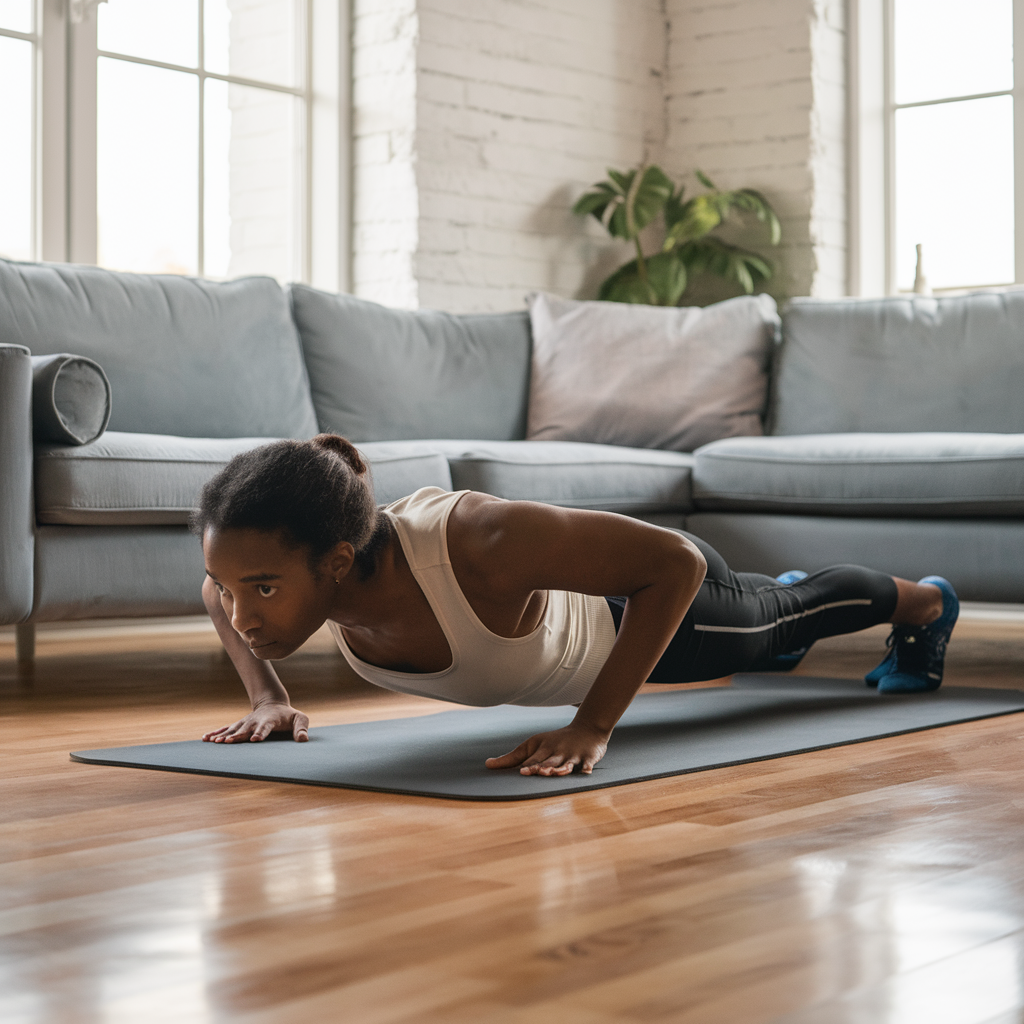
An ideal workout area doesn’t require much space, but thoughtful setup makes all the difference. Clear at least a 6×6 foot area—enough room to extend your arms and legs in all directions without obstruction. Hardwood, tile, or firm carpet provides adequate stability for most exercises, though a yoga mat offers additional comfort and grip. Ensure your space has proper ventilation and a comfortable temperature (65-72°F is ideal) to prevent overheating during intense sessions.
Essential Pre-Workout Considerations
Proper preparation enhances performance and reduces injury risk. Hydrate well before your workout, aiming for 16-20 ounces of water 2-3 hours prior, and another 8 ounces 30 minutes before starting. For nutrition, consume a light meal containing carbohydrates and protein 1-2 hours beforehand (like a banana with peanut butter or Greek yogurt with berries) to fuel your session without causing discomfort. Wear comfortable, moisture-wicking clothing that allows full range of motion and supportive athletic shoes for high-impact exercises.
Understanding Workout Intensity Levels
Learning to gauge exercise intensity helps optimize results while preventing burnout. The Rating of Perceived Exertion (RPE) scale from 1-10 provides a subjective measure of how hard you’re working (1 being minimal effort, 10 being maximum exertion). For beginners, aim for 4-6 RPE; intermediates 5-8; advanced 6-9. Heart rate monitoring offers objective feedback—beginners should target 50-65% of maximum heart rate (MHR = 220 minus your age), intermediates 65-75%, and advanced 75-85%. Remember that proper intensity means challenging yourself while maintaining good form—pushing harder isn’t always better.
Fundamental Bodyweight Exercises – Form and Technique
Mastering these foundational movements ensures safety and maximizes effectiveness, regardless of your fitness level.
Upper Body Fundamentals
Push-up Variations: Begin with hands slightly wider than shoulders, body forming a straight line from head to heels. Lower chest toward the floor by bending elbows at a 45-degree angle from your body. Modifications include wall push-ups, incline push-ups (hands on elevated surface), or knee push-ups for beginners. Progress to standard, decline (feet elevated), diamond (hands together), or staggered hand positions as strength improves.
Dips Using Household Furniture: Position yourself between two sturdy chairs or use a single couch/bench. Place hands beside hips, extend legs, and lower body by bending elbows until upper arms are parallel to the floor. Bend knees to decrease difficulty or extend legs for greater challenge.
Plank Variations for Shoulder Strength: Standard forearm plank builds overall stability—maintain a straight line from head to heels with shoulders directly above elbows. Advanced variations include shoulder taps (alternately lift one hand to touch opposite shoulder) and plank up-downs (transition between forearm and hand positions while maintaining a rigid body position).
Lower Body Basics
Squat Techniques: Stand with feet hip-width apart, toes slightly turned outward. Initiate movement by hinging hips back, then bend knees to lower as if sitting into a chair. Maintain weight in heels, knees tracking over toes (not collapsing inward). Descend until thighs approach parallel with floor, or as deep as possible while maintaining a neutral spine. Progress from supported squats (holding furniture) to bodyweight squats, pulse squats, and eventually jump squats.
Lunge Variations: From standing, step one foot forward and lower body until both knees form 90-degree angles, front knee aligned over ankle. Keep torso upright and core engaged throughout the movement. Beginners can perform stationary lunges, while intermediates can try walking lunges, reverse lunges, or lateral lunges. Advanced practitioners can incorporate pulse or jump elements.
Calf Raises and Ankle Strengthening: Stand with feet hip-width apart, rise onto balls of feet, lifting heels as high as possible, then lower with control. Perform single-leg variations for greater challenge. For ankle stability, practice alphabet tracing (using foot to “draw” letters in the air) and single-leg balance exercises.
Core Strength Foundations
Proper Plank Technique: Beyond shoulder strength, planks are fundamental core exercises. Maintain alignment from head to heels, engage abdominals by drawing navel toward spine, and avoid sagging hips or pike positions. Hold for time, starting with 20-30 seconds and gradually increasing duration.
Sit-up and Crunch Variations: For crunches, lie on back with knees bent, feet flat. Place hands behind head (without pulling on neck), engage core, and lift shoulder blades off floor. For full sit-ups, continue the movement until torso is upright. Variations include bicycle crunches (alternating elbow to opposite knee), reverse crunches (lifting hips), and V-ups (simultaneously raising legs and torso).
Leg Raises and Flutter Kicks: Lie on back with legs extended and lower back pressed into floor. For leg raises, lift legs together toward ceiling, then lower with control without touching floor. Flutter kicks involve small, rapid, alternating up-and-down leg movements while maintaining core engagement and lower back contact with the floor.
Full-Body Movement Patterns
Burpee Technique: Begin standing, squat down placing hands on floor, jump feet back to plank position, perform a push-up (optional), jump feet forward to squat position, then explosively jump upward with arms overhead. Modify by stepping instead of jumping, removing the push-up, or eliminating the vertical jump for lower impact.
Mountain Climbers: Start in high plank position with shoulders over wrists. Rapidly alternate bringing knees toward chest while maintaining rigid torso and hip positioning. Control speed based on fitness level—slower for beginners, faster for advanced.
Bear Crawls and Inchworms: For bear crawls, start on hands and knees, lift knees slightly off floor, then move forward/backward/laterally while keeping hips low and back flat. For inchworms, stand tall, bend forward to place hands on floor, walk hands out to plank position, then walk feet toward hands while keeping legs as straight as possible.
Beginner’s At-Home Workout Program
If you’re new to fitness or returning after a break, this structured approach will build foundational strength and confidence.
Getting Started: First Two Weeks Plan
Day-by-Day Workout Schedule:
- Monday: Full-body basics (15 minutes)
- Tuesday: Light walking or stretching (active recovery)
- Wednesday: Upper-body focus (15 minutes)
- Thursday: Rest or light mobility work
- Friday: Lower-body focus (15 minutes)
- Saturday/Sunday: One active recovery day, one complete rest day
Rest and Recovery Guidelines: As a beginner, prioritize recovery to allow adaption and prevent soreness. Aim for 7-8 hours of quality sleep, stay hydrated throughout the day, and incorporate gentle stretching on rest days. Muscle soreness is normal but should diminish within 48-72 hours; persistent pain requires additional rest.
Progression Metrics: Track repetitions completed, workout duration, perceived exertion, and recovery quality. Aim to increase repetitions by 1-2 per exercise each week before advancing to more challenging variations.
Full-Body Beginner Routine (15-20 Minutes)
Warm-up Sequence (3-5 minutes):
- Marching in place: 1 minute
- Arm circles (forward and backward): 30 seconds each direction
- Bodyweight squats: 10 repetitions
- Hip circles: 10 each direction
- Shoulder rolls: 10 each direction
Exercise Circuit Breakdown: Perform each exercise for 30 seconds, rest 30 seconds between exercises. Complete the circuit 2-3 times with 1-minute rest between rounds.
- Modified push-ups (wall or knee position)
- Bodyweight squats
- Forearm plank
- Glute bridges
- Seated rows using towel resistance
- Standing calf raises
Cool-down Routine (3-5 minutes):
- Slow walking in place: 1 minute
- Gentle overhead stretch: 30 seconds
- Standing quadriceps stretch: 30 seconds each leg
- Standing hamstring stretch: 30 seconds each leg
- Deep breathing: 1 minute

Upper/Lower Body Split for Beginners
Upper Body Focus Day: After warm-up, perform 2 rounds of the following, with 45 seconds work and 45 seconds rest:
- Wall push-ups or knee push-ups: 8-12 repetitions
- Seated dumbbell shoulder press (using water bottles): 10-12 repetitions
- Supine doorway rows: 10-12 repetitions
- Plank hold: 20-30 seconds
- Seated lateral arm raises: 10-12 repetitions
Lower Body Focus Day: After warm-up, perform 2 rounds of the following, with 45 seconds work and 45 seconds rest:
- Chair-assisted squats: 10-15 repetitions
- Stationary lunges: 8-10 repetitions each leg
- Glute bridges: 12-15 repetitions
- Seated leg extensions: 12-15 repetitions
- Standing calf raises: 15-20 repetitions
Active Recovery Day Activities:
- Gentle walking: 15-20 minutes
- Full-body stretching routine: 10-15 minutes
- Mobility exercises: hip circles, shoulder rolls, ankle rotations
- Light yoga focusing on flexibility rather than strength
Beginner HIIT Introduction
Modified Intervals for Beginners: Start with longer work-to-rest ratios (1:2 or 1:3) to allow proper recovery. Example: 20 seconds of work followed by 40-60 seconds of rest.
Work-to-Rest Ratios: Begin with 1:2 or 1:3 ratios (20 seconds work, 40-60 seconds rest), progressing to 1:1 (30 seconds work, 30 seconds rest) as fitness improves.
Sample Beginner HIIT Workout: After proper warm-up, perform each exercise for 20 seconds followed by 40 seconds rest. Complete 2-3 rounds with 1-2 minutes between rounds:
- Modified jumping jacks (step-out jacks)
- Bodyweight squats
- Modified push-ups
- Standing alternating knee raises
- Marching glute bridges
Intermediate At-Home Workout Program
Once you’ve built baseline fitness with beginner workouts, these intermediate strategies will accelerate your progress.
Progressive Overload Strategies Without Equipment
Time Under Tension Techniques: Slow down movement tempo, particularly during the eccentric (lowering) phase. For example, take 4 seconds to lower into a squat, pause for 1 second at the bottom, then rise in 2 seconds. This increases muscular stress without adding weight.
Rest Period Manipulation: Gradually decrease rest periods between sets (from 60 seconds to 45, then 30) while maintaining exercise quality. This increases cardiovascular demand and workout density.
Volume Progression: Systematically increase repetitions (2-3 more per exercise weekly) and sets (from 2 to 3 to 4) before advancing to more challenging exercise variations.
Intermediate Full-Body Routines (30-45 Minutes)
Circuit Training Format: Perform each exercise for 40-45 seconds with 20-30 seconds rest between movements. Complete 3-4 rounds with 1-minute rest between rounds:
- Standard push-ups
- Bodyweight squats
- Alternating reverse lunges
- Mountain climbers
- Glute bridge hold with leg extension
- Bicycle crunches
- Side plank rotations (both sides)
- Burpees (modified as needed)
Supersets and Compound Movements: Pair complementary exercises without rest between them, resting only after completing both movements:
- Superset 1: Push-ups (12-15 reps) + Bodyweight rows using furniture (12-15 reps)
- Rest 45 seconds
- Superset 2: Squat jumps (12-15 reps) + Alternating reverse lunges (10 each leg)
- Rest 45 seconds
- Superset 3: Plank shoulder taps (30 seconds) + Mountain climbers (30 seconds)
- Rest 45 seconds
- Complete 3-4 rounds
Weekly Progression Model:
- Week 1: 3 rounds, 40 seconds work/20 seconds rest
- Week 2: 3 rounds, 45 seconds work/15 seconds rest
- Week 3: 4 rounds, 40 seconds work/20 seconds rest
- Week 4: 4 rounds, 45 seconds work/15 seconds rest
- Week 5: Deload with 3 rounds, 35 seconds work/25 seconds rest
Intermediate Split Routines
Push/Pull/Legs Framework:
Push Day (Chest, Shoulders, Triceps):
- Standard push-ups: 3 sets of 15-20
- Decline push-ups: 3 sets of 12-15
- Pike push-ups: 3 sets of 10-12
- Diamond push-ups: 3 sets of 12-15
- Tricep dips: 3 sets of 12-15
Pull Day (Back, Biceps, Rear Shoulders):
- Inverted rows using table: 3 sets of 12-15
- Superman holds: 3 sets of 30-45 seconds
- Doorway rows: 3 sets of 15-20
- Reverse snow angels: 3 sets of 12-15
- Isometric doorway bicep hold: 3 sets of 30 seconds
Legs Day (Quadriceps, Hamstrings, Glutes, Calves):
- Bodyweight squats: 3 sets of 20-25
- Walking lunges: 3 sets of 12-15 each leg
- Single-leg glute bridges: 3 sets of 12-15 each side
- Wall sit: 3 sets of 45-60 seconds
- Jump squats: 3 sets of 15-20
- Single-leg calf raises: 3 sets of 15-20 each side
Upper/Lower Intensity Variations:
Upper Body High Intensity:
- Push-up to shoulder tap: 30 seconds work, 30 seconds rest
- Plank up-downs: 30 seconds work, 30 seconds rest
- Tricep dips: 30 seconds work, 30 seconds rest
- Dynamic plank reaches: 30 seconds work, 30 seconds rest
- Complete 4 rounds
Lower Body High Intensity:
- Jump squat: 30 seconds work, 30 seconds rest
- Speed skater lunges: 30 seconds work, 30 seconds rest
- Alternating split jumps: 30 seconds work, 30 seconds rest
- Lateral skater jumps: 30 seconds work, 30 seconds rest
- Complete 4 rounds
Core-Focused Day Design:
- Warm-up: Cat-cow stretches, hip circles, bird-dog (1 minute each)
- Circuit (perform each exercise for 45 seconds, rest 15 seconds between):
- Plank hold
- Bicycle crunches
- Russian twists
- Flutter kicks
- Side plank (right)
- Side plank (left)
- Hollow body hold
- Superman hold
- Complete 3-4 rounds
HIIT and Tabata for Intermediate Fitness Levels
Structured Interval Protocols: Traditional HIIT uses 1:1 or 2:1 work-to-rest ratios. For intermediate fitness levels, 40 seconds work with 20 seconds rest (2:1 ratio) provides adequate intensity while allowing partial recovery.
Combined Strength and Cardio Circuits: Alternate between strength-focused and cardio-focused exercises:
- Push-ups (strength): 40 seconds
- Rest: 20 seconds
- High knees (cardio): 40 seconds
- Rest: 20 seconds
- Bodyweight squats (strength): 40 seconds
- Rest: 20 seconds
- Jumping jacks (cardio): 40 seconds
- Rest: 20 seconds
- Complete 3-4 rounds
Weekly HIIT Programming:
- Monday: Full-body strength HIIT (40/20 seconds, 5 exercises, 4 rounds)
- Wednesday: Tabata intervals (20/10 seconds, 8 rounds of 2 exercises)
- Friday: EMOM (Every Minute On the Minute) – perform set number of reps within first 40 seconds of each minute, rest for remaining time
Advanced At-Home Workout Strategies
For experienced exercisers seeking continued progress, these advanced techniques maximize bodyweight training effectiveness.
Advanced Bodyweight Exercise Progressions
Single-Limb Variations: Progress standard exercises to unilateral versions to increase intensity without added weight:
- Standard push-up → One-arm push-up progression
- Bodyweight squat → Pistol squat progression
- Glute bridge → Single-leg glute bridge → Single-leg hip thrust
- Standard plank → Single-arm plank → Single-arm/single-leg plank
Plyometric Adaptations: Add explosive elements to standard movements:
- Push-up → Clapping push-up → Superman push-up
- Squat → Jump squat → 180° jump squat
- Lunge → Jumping lunge → Switch lunge
- Mountain climber → Power mountain climber
Complex Movement Patterns: Combine multiple movements into flowing sequences:
- Burpee + pull-up (using doorway)
- Push-up + rotate to side plank + row
- Reverse lunge + knee drive + hop
- Bear crawl + push-up + rotation
Advanced Program Design (45-60 Minutes)
Periodization for Bodyweight Training: Structure training in 4-6 week blocks with shifting emphasis:
- Weeks 1-2: Endurance focus (higher reps, shorter rest)
- Weeks 3-4: Strength focus (harder variations, longer rest)
- Weeks 5-6: Power focus (plyometric emphasis)
- Week 7: Recovery/deload week
Density Training Techniques: Complete set amount of work in decreasing time or increase work volume within fixed time:
- Fixed volume: Complete 100 push-ups, 100 squats, and 100 sit-ups as quickly as possible
- Fixed time: Complete as many rounds as possible of 10 push-ups, 15 squats, 20 mountain climbers in 20 minutes
Deload Strategies: Every 4-6 weeks, reduce volume by 40-50% while maintaining movement patterns and intensity to facilitate recovery:
- Reduce sets from 5 to 2-3
- Reduce workout frequency from 5-6 days to 3 days
- Substitute high-intensity work with technique-focused practice
High-Intensity Advanced Circuits
EMOM (Every Minute On the Minute) Workouts: Start each minute with prescribed exercises, rest for remainder of minute:
- Minute 1: 15 push-ups
- Minute 2: 20 jump squats
- Minute 3: 12 burpees
- Minute 4: 30 mountain climbers
- Minute 5: 20 V-ups
- Complete 4-5 rounds (20-25 minutes total)
AMRAP (As Many Rounds As Possible) Sessions: Complete as many rounds as possible in allotted time:
20-Minute AMRAP:
- 10 pushups
- 15 air squats
- 20 mountain climbers
- 10 burpees
- Record total rounds completed
Descending Rep Schemes: Start with higher repetitions and decrease each round:
Complete 5 rounds with minimal rest:
- Push-ups: 20-15-10-5-3
- Jump squats: 20-15-10-5-3
- Burpees: 15-12-9-6-3
- V-ups: 20-15-10-5-3
Sport-Specific Conditioning
Agility Drills for Small Spaces:
- Ladder drills using tape on floor (high knees, lateral shuffles, in-out steps)
- Cone touch alternatives using household items
- T-drill in modified space (3-5 feet between points)
- Lateral bound and stick (focusing on controlled landing)
Power Development Without Equipment:
- Tuck jumps with emphasis on height
- Split jumps focusing on explosion
- Quick-step push-up with hand movement
- Skater bounds maximizing distance
- Single-leg explosive hip extension
Endurance-Focused Protocols:
- Pyramid intervals (30-45-60-90-60-45-30 seconds work with half-time rest)
- Extended Tabata sets (8 rounds of 20/10 seconds for 4 different exercises)
- Zone 2 bodyweight circuits (maintaining 60-70% of max heart rate for 30-45 minutes)

Specialized Workout Routines
Specialized routines address specific needs, constraints, and goals within the at-home workout framework.
Time-Efficient Workouts
10-Minute Full-Body Blasts:
Complete 2 rounds of the following circuit (45 seconds work, 15 seconds rest):
- Burpees
- Push-ups
- Jump squats
- Mountain climbers
- Plank hold
20-Minute Optimal Routines:
EMOM for 20 minutes (alternate between exercises):
- Odd minutes: 10 burpees
- Even minutes: 15 push-ups
Or:
- 5 rounds of 5 exercises, 40 seconds work, 20 seconds rest
Lunch Break Workout Solutions:
- 3-exercise circuit repeated for available time (e.g., 10 push-ups, 15 air squats, 10 jumping jacks)
- Tabata format: Single movement (burpees or squat jumps) for 4 minutes (8 rounds of 20/10)
- AMRAP in limited timeframe (as many rounds as possible in 15 minutes)
Target-Specific Routines
Core-Intensive Workouts:
Complete 3 rounds, 45 seconds work, 15 seconds rest:
- Plank hold
- Russian twists
- Bicycle crunches
- Mountain climbers
- Flutter kicks
- Side plank (right side)
- Side plank (left side)
- Hollow body hold
Lower Body Emphasis:
Complete 4 rounds, 40 seconds work, 20 seconds rest:
- Bodyweight squats
- Alternating reverse lunges
- Jump squats
- Lateral lunges
- Glute bridges
- Single-leg Romanian deadlifts
- Wall sit
- Calf raises
Upper Body Focus:
Complete 4 rounds, 40 seconds work, 20 seconds rest:
- Push-ups
- Pike push-ups
- Doorway rows
- Diamond push-ups
- Tricep dips
- Plank shoulder taps
- Forearm plank
- Superman holds
Goal-Oriented Programs
Fat Loss Optimization:
- High-intensity intervals (30/30 or 40/20 work/rest)
- Compound movements emphasizing large muscle groups
- Circuit-style training with minimal rest between exercises
- Example: 5 rounds of 5 exercises with 10 seconds transition between movements
Muscle Toning and Definition:
- Time under tension focus (slower eccentric phase)
- Higher volume (12-20 repetitions per set)
- Shorter rest periods (30-45 seconds)
- Advanced bodyweight variations targeting specific muscle groups
Endurance Building:
- Longer work intervals (60-90 seconds per exercise)
- Higher volume, moderate intensity (60-70% effort)
- Shorter rest periods (15-30 seconds)
- Extended workout duration (45-60 minutes)
Low-Impact Options
Joint-Friendly Variations:
- Replace jumping jacks with step-out jacks
- Substitute jump squats with pulsing squats
- Use incline push-ups instead of standard push-ups
- Replace running in place with marching
- Substitute burpees with modified step-back burpees (no jump)
Noise-Reducing Adaptations:
- Perform exercises on yoga mat or carpet
- Replace jumping movements with static holds or pulses
- Use controlled tempo for all movements (especially landings)
- Schedule workouts during appropriate hours
Apartment-Friendly Routines:
- Focus on isometric holds (planks, wall sits, glute bridges)
- Incorporate slow, controlled movements without impact
- Use bodyweight tension techniques rather than plyometrics
- Create circuits that stay within limited floor space
Maximizing Results and Staying Motivated
Consistency and motivation determine long-term success with any fitness program. These strategies ensure sustainable results.
Tracking Progress Effectively
Measurement Methods Beyond the Scale:
- Performance metrics: Track max repetitions, time under tension, or workout completion time
- Body measurements: Monitor waist, hip, chest, and limb circumferences monthly
- Subjective assessments: Rate energy levels, sleep quality, and recovery capacity
- Workout capacity: Note when exercises become easier or when you progress to advanced variations
Workout Journals and Apps:
- Record exercises, sets, repetitions, and perceived exertion
- Track workout consistency and duration
- Note energy levels, motivation, and recovery quality
- Document exercise progressions and milestones achieved
Photo Documentation Techniques:
- Take photos in same lighting, time of day, and clothing monthly
- Capture front, side, and back angles
- Consider video recording exercise form for self-assessment
- Use consistent poses to enable accurate comparisons
Nutrition Fundamentals for Home Workouts
Pre and Post-Workout Nutrition:
- Pre-workout (30-60 minutes before): Easily digestible carbohydrates and some protein (banana with peanut butter, yogurt with berries)
- Post-workout (within 30-60 minutes): Protein and carbohydrates to support recovery (protein shake, chicken with rice, egg with toast)
- Adjust portions based on workout intensity and duration
Hydration Strategies:
- Pre-hydrate with 16-20 oz water 2-3 hours before workout
- Drink 8 oz 20-30 minutes before starting
- For sessions over 30 minutes, sip water throughout
- Rehydrate with 16-24 oz water for every pound lost during exercise
Meal Timing for Different Workout Schedules:
- Morning workouts: Light pre-workout snack or train fasted (if tolerated), substantial breakfast afterward
- Midday workouts: Moderate meal 2-3 hours before, recovery meal within 1 hour after
- Evening workouts: Substantial snack 1-2 hours before, moderate dinner afterward
Recovery Optimization
Sleep Quality Improvements:
- Aim for 7-9 hours of quality sleep nightly
- Maintain consistent sleep/wake schedule
- Create dark, cool sleeping environment (65-68°F)
- Limit screen time 60-90 minutes before bed
- Avoid caffeine 8+ hours before sleep
Self-Myofascial Release Techniques:
- Use foam roller or tennis/lacrosse ball for major muscle groups
- Roll slowly over tight areas, pausing on tender spots for 30-60 seconds
- Focus on quads, hamstrings, calves, upper back, and hips
- Perform daily for 5-10 minutes, especially after workouts
Active Recovery Protocols:
- Light walking: 20-30 minutes at conversational pace
- Mobility flows: Cat-cow, world’s greatest stretch, hip circles
- Gentle yoga: Focus on movement rather than holding poses
- Light circuit: 5-10 minutes of movement at 40-50% normal intensity
Maintaining Motivation
Goal-Setting Frameworks:
- Set SMART goals (Specific, Measurable, Achievable, Relevant, Time-bound)
- Establish process goals (workout frequency) and outcome goals (strength increases)
- Create layered goals: daily, weekly, monthly, quarterly
- Regularly reassess and adjust goals based on progress
Habit Stacking Techniques:
- Attach workout to existing habit (e.g., exercise right after morning coffee)
- Prepare workout clothes/space evening before
- Use visual cues in environment (workout schedule visible, equipment ready)
- Create pre-workout routine to trigger exercise behavior
Virtual Accountability Options:
- Schedule virtual workout sessions with friends
- Join online fitness communities or challenges
- Share progress on social media or dedicated fitness apps
- Use habit tracking apps with reminders and streaks
Common Mistakes and How to Avoid Them
Awareness of common pitfalls helps prevent setbacks and ensures continued progress with at-home training.
Form and Technique Errors
Video Self-Assessment Tips:
- Record exercises from multiple angles (side, front, back)
- Compare your form to professional demonstrations
- Check for specific alignment points (e.g., knees tracking over toes in squats)
- Review recordings at regular intervals to track form improvements
Common Exercise Mistakes:
- Push-ups: Sagging hips, elbows flaring too wide, incomplete range of motion
- Squats: Knees caving inward, rising onto toes, insufficient depth
- Lunges: Front knee extending past toes, torso leaning too far forward
- Planks: Sagging hips, elevated shoulders, improper neck alignment
- Burpees: Rounded back during push-up phase, incomplete hip extension during jump
Correction Strategies:
- Regress to simpler exercise variations to master form
- Perform movements slowly and deliberately before adding speed
- Use mirrors or video feedback to check positioning
- Practice isometric holds at challenging positions of exercises
- Focus on quality over quantity during all workouts
Programming Pitfalls
Overtraining Signals:
- Persistent muscle soreness lasting more than 72 hours
- Declining performance across multiple workouts
- Elevated resting heart rate (5+ beats above normal)
- Increased irritability, disrupted sleep, or decreased motivation
- Frequent illness or injuries
Under-Recovery Patterns:
- Insufficient sleep (less than 7 hours nightly)
- Inadequate nutrition (especially protein and carbohydrates)
- Back-to-back high-intensity sessions targeting same muscle groups
- Lack of dedicated rest days (at least 1-2 weekly)
- Insufficient hydration
Plateau Prevention:
- Systematically rotate exercise variations every 3-4 weeks
- Periodically change workout variables (volume, intensity, rest periods)
- Incorporate progressive overload techniques consistently
- Schedule deload weeks every 4-6 weeks of intense training
- Track workouts to ensure progressive challenge
Progress-Hindering Habits
Inconsistent Scheduling:
- Schedule workouts like important appointments
- Establish consistent time blocks for exercise
- Prepare for common schedule disruptions with backup plans
- Use calendar reminders or alarms
- Plan minimum effective workouts for busy days
Inadequate Intensity Management:
- Use RPE scale (1-10) to gauge appropriate intensity
- Avoid consecutive days of high-intensity (8+ RPE) training
- Balance high-intensity sessions with moderate-intensity work
- Recognize signs indicating need for reduced intensity
- Understand difference between productive discomfort and pain
Improper Progression Timing:
- Master basics before attempting advanced variations
- Increase challenge when exercises become noticeably easier
- Follow progressive step-by-step variations rather than attempting dramatic jumps
- Allow appropriate adaptation periods (2-3 weeks) between progressions
- Balance progress desire with injury prevention
Frequently Asked Questions
Addressing common concerns helps clarify expectations and optimize at-home workout experiences.
Effectiveness Questions
“Can I really build muscle without equipment?”
Yes, bodyweight training can effectively build muscle through progressive overload principles. While traditional weight training offers easier load progression, bodyweight exercises can create significant muscle development by:
- Progressing to harder exercise variations
- Increasing time under tension
- Manipulating leverage to increase difficulty
- Adding explosive elements to movements
- Increasing volume through additional sets and repetitions
“How long until I see results?”
Initial results typically appear within 2-4 weeks, with more significant changes occurring within 8-12 weeks of consistent training. Timeline varies based on:
- Starting fitness level (beginners often see faster initial progress)
- Workout consistency (3+ sessions weekly recommended)
- Nutrition quality and caloric balance
- Sleep quality and stress management
- Genetic factors (which influence response rate)
“Are bodyweight exercises effective for weight loss?”
Yes, bodyweight workouts can be highly effective for weight loss when structured appropriately. They contribute to weight loss through:
- Caloric expenditure during workouts
- Increased metabolic rate post-exercise (EPOC effect)
- Muscle preservation or development (supporting higher resting metabolism)
- Circuit and HIIT formats that maximize calorie burning
- Creating exercise consistency due to convenience and accessibility
Programming Questions
“How many days per week should I work out?”
Optimal frequency depends on fitness level and goals:
- Beginners: 2-3 non-consecutive days per week
- Intermediates: 3-4 days per week
- Advanced: 4-6 days per week
Include at least one full rest day weekly, and consider active recovery days. Quality and recovery always trump quantity—better to have three effective workouts than six suboptimal sessions.
“When should I increase difficulty?”
Progress to more challenging variations when:
- You can complete all prescribed repetitions with proper form
- RPE for current exercise drops below 7/10
- You can perform 3+ additional repetitions beyond prescribed amount
- Recovery between sets becomes notably faster
- You’ve consistently performed current variation for 2-3 weeks
“How do I know if I’m pushing hard enough?”
Effective intensity can be gauged through:
- RPE scale (aim for 7-8/10 for most working sets)
- The “reps in reserve” concept (1-2 reps short of failure for most sets)
- Heart rate (65-85% of max for conditioning work)
- Quality of movement (form begins to deteriorate as you approach appropriate intensity)
- Recovery needs (properly intense workouts require noticeable recovery)
Specific Situation Adaptations
“How can I work out in a very small space?”
Even in extremely limited areas, effective workouts are possible by:
- Using primarily stationary exercises (planks, push-ups, squats)
- Creating vertical rather than horizontal movement (squat jumps vs. broad jumps)
- Segmenting workouts into smaller circuits that fit available space
- Using time-based rather than repetition-based sets to control work output
- Focusing on isometric holds and small-range pulses
“What if I have downstairs neighbors?”
Minimize noise and impact with these adaptations:
- Exercise on padded surfaces (yoga mat on carpet, multiple folded blankets)
- Replace jumping with controlled step variations
- Schedule workouts during reasonable daytime hours
- Focus on slow-tempo movements and isometric holds
- Communicate with neighbors about your routine if appropriate
“How do I adjust for injuries or limitations?”
Safely adapt workouts by:
- Consulting healthcare providers for specific movement restrictions
- Modifying range of motion to stay within pain-free zones
- Substituting alternative movements that target similar muscle groups
- Using isometric holds when dynamic movements cause discomfort
- Focusing on unaffected body regions while injured areas heal
- Prioritizing proper form and control over intensity
Conclusion
The effectiveness of at-home workouts isn’t determined by equipment but by consistency, progression, and proper technique. This guide has provided a comprehensive framework for creating sustainable fitness routines adaptable to any space, schedule, or fitness level. Remember that the most important factors for success are regularity, appropriate intensity, and recovery—not complexity or equipment.
For long-term sustainability, focus on finding movements you enjoy, creating realistic schedules, celebrating small victories, and periodically refreshing your routine to prevent boredom. Consider joining online fitness communities or partnering with friends for virtual workouts to maintain accountability and motivation.
As you progress, continually reassess your goals and adjust your approach accordingly. The beauty of bodyweight training lies in its infinite adaptability—there’s always a new challenge or variation to master. By applying the principles and programs outlined in this guide, you’ll develop not just physical strength, but the self-discipline and knowledge to maintain lifelong fitness, regardless of circumstances.
Begin today with whatever time and space you have available. The most effective workout is the one you’ll actually do consistently. Your body is the only equipment you truly need.