

Hip flexors are among the most important yet often neglected muscle groups in our body. These powerful muscles play a crucial role in virtually every movement we make, from walking and running to simply getting up from a chair. In today’s sedentary world, hip flexor tightness and weakness have become increasingly common problems, leading to poor posture, lower back pain, and reduced athletic performance. Whether you’re an athlete looking to enhance your performance or someone dealing with tight hips from prolonged sitting, incorporating targeted hip flexor exercises into your routine can dramatically improve your mobility, strength, and overall quality of life.
Understanding Hip Flexor Anatomy and Function
Before diving into specific exercises, it’s essential to understand what hip flexors are and how they function. The hip flexors are a group of muscles located at the front of your hips and upper thighs, responsible for lifting your knees toward your chest and bending at the waist.
Primary Hip Flexor Muscles
The main hip flexor muscles include:
- Iliopsoas: This is actually two muscles (psoas major and iliacus) that work together as the primary hip flexor. The psoas major originates from the lower spine, while the iliacus attaches to the inside of the pelvis.
- Rectus Femoris: Part of the quadriceps muscle group, this muscle crosses both the hip and knee joints, contributing to hip flexion and knee extension.
- Sartorius: The longest muscle in the body, it helps with hip flexion and external rotation.
These muscles work together to enable hip flexion, which is the movement that brings your thigh toward your abdomen. They’re also crucial for core stability and maintaining proper posture throughout daily activities.
Signs of Hip Flexor Issues
Common symptoms of hip flexor problems include:
- Tightness or discomfort in the front of the hips
- Lower back pain, especially when standing
- Difficulty standing up straight after sitting
- Reduced range of motion in hip extension
- Pain during activities like running or climbing stairs
Best Hip Flexor Stretching Exercises
Stretching is crucial for maintaining hip flexor flexibility and reducing tightness. Here are the most effective stretching exercises for your hip flexors:
Static Stretches
Low Lunge Stretch (Couch Stretch)
This is one of the most effective hip flexor stretches available:
- Start in a lunge position with your right foot forward and left knee on the ground
- Place your left foot against a wall or couch behind you
- Keep your torso upright and gently push your hips forward
- Hold for 30-60 seconds, then switch sides
- Focus on keeping your core engaged and avoiding arching your lower back

Standing Hip Flexor Stretch
Perfect for office workers or when you need a quick stretch:
- Stand with feet hip-width apart
- Step your right foot back about 2-3 feet
- Keep your left leg straight and gently push your hips forward
- Place your hands on your front thigh for support
- Hold for 30 seconds, then switch sides
Supine Hip Flexor Stretch
This stretch can be performed on a table or bed edge:
- Lie on your back at the edge of a table or bed
- Pull one knee to your chest while letting the other leg hang off the edge
- Allow gravity to gently stretch the hanging leg’s hip flexor
- Hold for 30-60 seconds per side
Dynamic Stretches
Leg Swings (Front to Back)
Dynamic stretches help prepare your hip flexors for activity:
- Stand next to a wall or sturdy object for support
- Swing one leg forward and backward in a controlled motion
- Start with small swings and gradually increase the range of motion
- Perform 10-15 swings per leg
- Keep your core engaged and maintain good posture
Walking High Knees
This dynamic stretch also serves as a warm-up:
- Walk forward while lifting your knees as high as comfortable
- Aim to bring your thighs parallel to the ground
- Maintain an upright posture and engage your core
- Perform for 20-30 steps
Hip Flexor Strengthening Exercises
While stretching addresses tightness, strengthening exercises are equally important for building resilient, functional hip flexors.
Bodyweight Strengthening
High Knees in Place
This exercise builds strength while improving coordination:
- Stand with feet hip-width apart
- Rapidly alternate lifting your knees toward your chest
- Aim for thighs parallel to the ground
- Pump your arms naturally as you would while running
- Perform for 30-60 seconds
Mountain Climbers
This exercise combines hip flexor strength with core stability:
- Start in a plank position with hands under shoulders
- Rapidly alternate bringing knees toward your chest
- Keep your hips level and core tight
- Maintain a straight line from head to toe
- Perform for 30-45 seconds
Hanging Knee Raises
This advanced exercise targets the hip flexors intensely:
- Hang from a pull-up bar with arms fully extended
- Engage your core and lift your knees toward your chest
- Control the lowering phase slowly
- Start with bent knees, progress to straight legs
- Perform 8-15 repetitions

Resistance Training
Resistance Band Hip Flexion
Resistance bands provide variable resistance throughout the movement:
- Anchor a resistance band at floor level
- Attach the other end to your ankle
- Stand facing away from the anchor point
- Lift your knee toward your chest against the band’s resistance
- Perform 12-20 repetitions per leg
Cable Machine Hip Flexion
Cable machines provide consistent resistance:
- Set the cable at the lowest position
- Attach an ankle cuff to your foot
- Stand facing away from the machine
- Lift your knee toward your chest in a controlled motion
- Focus on the controlled lowering phase
- Perform 10-15 repetitions per leg
Advanced Hip Flexor Exercises
Once you’ve mastered basic exercises, these advanced movements will challenge your hip flexors in functional patterns:
Single-Leg Glute Bridges
This exercise strengthens hip flexors isometrically while targeting glutes:
- Lie on your back with one foot flat on the ground
- Extend the other leg straight up toward the ceiling
- Bridge up by squeezing your glutes
- Hold the extended leg position throughout the movement
- Perform 8-12 repetitions per leg
Psoas March
This exercise combines core stability with hip flexor strength:
- Lie on your back with knees bent at 90 degrees
- Keep your core tight and slowly lower one foot to tap the ground
- Return to starting position and repeat with the other leg
- Maintain the 90-degree angle in the stationary leg
- Perform 10-16 repetitions (5-8 per leg)
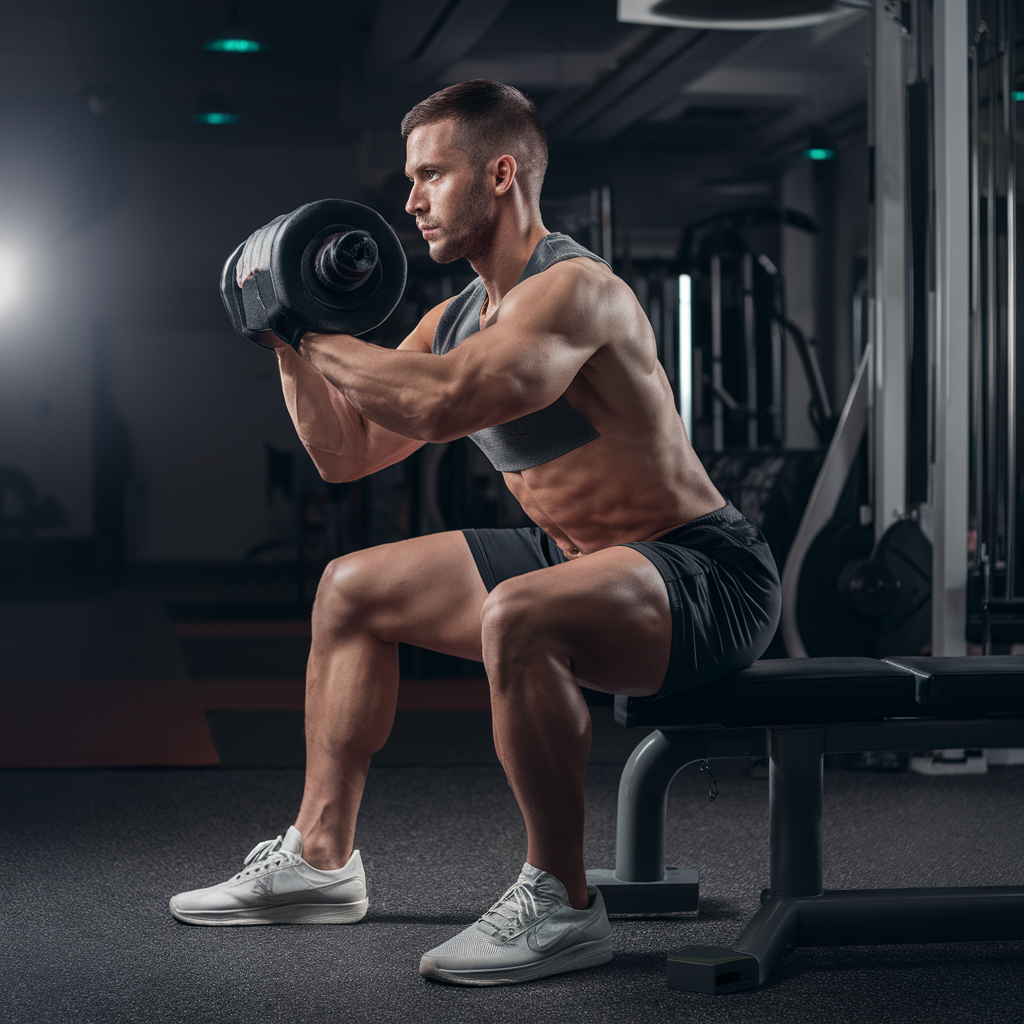
Bulgarian Split Squats
This compound exercise challenges hip flexors in a functional movement pattern:
- Stand 2-3 feet in front of a bench or step
- Place the top of your rear foot on the bench
- Lower into a lunge position, focusing on the front leg
- Push through your front heel to return to starting position
- Perform 8-15 repetitions per leg
Exercise Programming and Routine Design
Proper programming ensures you get the most benefit from your hip flexor exercises while avoiding overuse or injury.
Beginner Routine
Daily Stretching Sequence (10-15 minutes):
- Low lunge stretch: 2 sets of 30 seconds per side
- Standing hip flexor stretch: 2 sets of 30 seconds per side
- Leg swings: 10 swings per leg, front to back
- Walking high knees: 20 steps
Strengthening (2-3 times per week):
- High knees in place: 3 sets of 30 seconds
- Mountain climbers: 3 sets of 30 seconds
- Resistance band hip flexion: 2 sets of 12 per leg
- Rest 30-60 seconds between sets
Intermediate/Advanced Routines
Comprehensive Weekly Program:
- Monday/Thursday: Strength focus with hanging knee raises, Bulgarian split squats, and cable hip flexion
- Tuesday/Friday: Dynamic flexibility with leg swings, walking lunges, and psoas marches
- Wednesday/Saturday: Static stretching routine focusing on deep hip flexor releases
- Sunday: Active recovery with gentle yoga poses
Proper Form and Safety Guidelines
Safety should always be your top priority when performing hip flexor exercises:
General Safety Principles
- Always warm up: Spend 5-10 minutes doing light cardio before stretching or strengthening
- Progress gradually: Increase intensity, duration, or resistance slowly over time
- Listen to your body: Distinguish between muscle tension and pain
- Maintain proper form: Quality of movement is more important than quantity
- Breathe consistently: Don’t hold your breath during exercises
Common Mistakes and Corrections
- Overstretching: Avoid forcing stretches beyond your comfortable range of motion
- Arching the back: Keep your core engaged to protect your lower spine
- Rushing movements: Control both the lifting and lowering phases of strengthening exercises
- Ignoring opposing muscles: Balance hip flexor work with glute and hamstring strengthening
Additional Tips for Hip Health
Beyond specific exercises, several lifestyle modifications can support healthy hip flexors:
Lifestyle Modifications
- Improve sitting posture: Use ergonomic chairs and take regular standing breaks
- Set movement reminders: Stand and move for 2-3 minutes every hour
- Sleep position: Avoid sleeping in a fetal position for extended periods
- Workplace ergonomics: Adjust your desk height and monitor position
Complementary Activities
- Yoga poses: Incorporate poses like warrior I, pigeon pose, and low lunge
- Foam rolling: Use a foam roller on your quadriceps and IT band
- Heat therapy: Apply heat before stretching to improve muscle pliability
- Regular massage: Professional massage can help release deep muscle tension
Troubleshooting Common Issues
Even with consistent effort, you might encounter challenges in your hip flexor training:
Lack of Progress Solutions
- Assess your technique: Video yourself or work with a trainer to check form
- Increase frequency: Some people need daily attention to see improvements
- Add variety: Rotate between different exercises to challenge muscles differently
- Address other factors: Consider stress, sleep, and nutrition impacts
Dealing with Discomfort
- Modify intensity: Reduce range of motion or resistance if experiencing discomfort
- Focus on consistency: Regular, gentle work often produces better results than intense sessions
- Consider professional help: Physical therapists can provide personalized assessments
Conclusion
Hip flexor health is fundamental to overall movement quality, posture, and athletic performance. By incorporating both stretching and strengthening exercises into your routine, you can address the common problems associated with modern sedentary lifestyles. Remember that consistency is more important than intensity – regular, mindful practice of these exercises will yield better long-term results than sporadic intense sessions.
Start with the beginner routine and gradually progress to more advanced exercises as your strength and flexibility improve. Pay attention to proper form, listen to your body, and don’t hesitate to seek professional guidance if you experience persistent pain or lack of progress. With patience and dedication, you’ll develop strong, flexible hip flexors that support all your daily activities and athletic pursuits.
Whether you’re an office worker looking to counteract the effects of prolonged sitting, an athlete seeking performance enhancement, or someone dealing with hip tightness and discomfort, these hip flexor exercises provide a comprehensive solution. Make them a regular part of your fitness routine, and experience the benefits of improved mobility, reduced pain, and enhanced quality of life.