

Anterior pelvic tilt (APT) is one of the most common postural imbalances affecting millions of people worldwide, particularly those who spend long hours sitting at desks or living sedentary lifestyles. This condition occurs when the pelvis tilts forward excessively, creating a pronounced arch in the lower back and often leading to a protruding belly appearance. While some degree of pelvic tilt is natural and necessary for proper spinal alignment, excessive anterior tilt can cause significant discomfort, pain, and movement dysfunction. In this comprehensive guide, you’ll discover everything you need to know about anterior pelvic tilt, including its underlying causes, how to identify if you have it, and most importantly, proven exercises and strategies to correct this postural problem and restore proper alignment to your body.
Understanding Anterior Pelvic Tilt
What is Anterior Pelvic Tilt?
Anterior pelvic tilt refers to a postural condition where the pelvis rotates forward, causing the front of the pelvis to drop down while the back of the pelvis rises up. To visualize this, imagine your pelvis as a bowl filled with water – in anterior pelvic tilt, the water would spill out the front. This forward rotation creates an exaggerated curve in the lower back (lumbar lordosis) and often makes the stomach appear to protrude forward, even in individuals with low body fat.
In normal, healthy posture, the pelvis maintains a neutral position with a slight forward tilt of approximately 10-15 degrees. However, when this tilt becomes excessive (typically greater than 20-25 degrees), it’s considered anterior pelvic tilt. This misalignment affects the entire kinetic chain, from the feet up to the head, creating compensatory patterns throughout the body.
How Common is APT?
Research suggests that anterior pelvic tilt affects a significant portion of the population, with studies indicating that up to 85% of men and 75% of women may have some degree of APT. The condition is particularly prevalent among:
- Office workers and individuals with desk jobs (affecting 90% of this population)
- Young adults aged 20-40 who spend extensive time sitting
- Individuals who wear high heels regularly
- Athletes in certain sports that emphasize hip flexor development
- Pregnant women, especially in the second and third trimesters
Causes of Anterior Pelvic Tilt
Muscle Imbalances
The primary driver of anterior pelvic tilt is muscle imbalance, specifically involving four key muscle groups:
Tight Hip Flexors: The hip flexor muscles, including the psoas major, iliacus, rectus femoris, and tensor fasciae latae (TFL), become shortened and tight from prolonged sitting. These muscles attach to the front of the pelvis and spine, and when tight, they pull the pelvis into anterior tilt.
Weak Glutes: The gluteus maximus and gluteus medius muscles are responsible for posterior pelvic tilt and hip extension. When these muscles become weak and inhibited (often called “dead butt syndrome”), they cannot effectively counteract the pull of tight hip flexors.
Weak Deep Abdominal Muscles: The deep core muscles, particularly the transverse abdominis and internal obliques, help maintain pelvic stability. When these muscles are weak, they cannot provide adequate support to maintain neutral pelvic alignment.
Tight Lower Back Muscles: The erector spinae muscles in the lower back often become overactive and tight as they compensate for weak glutes and core muscles, further contributing to the excessive lumbar curve.

Lifestyle Factors
Modern lifestyle habits significantly contribute to the development of anterior pelvic tilt:
Prolonged Sitting: Spending 8+ hours daily sitting at a desk, in cars, or on couches keeps the hip flexors in a shortened position while simultaneously weakening the glutes and core muscles.
Poor Sleeping Positions: Sleeping in the fetal position or on the stomach can maintain hip flexor tightness throughout the night, preventing these muscles from lengthening and recovering.
Lack of Physical Activity: Sedentary lifestyles lead to overall muscle weakness and poor movement patterns, making it difficult to maintain proper posture.
Footwear Choices: High heels force the pelvis into anterior tilt by shifting the body’s center of gravity forward and shortening the hip flexors.
Other Contributing Factors
Several additional factors can predispose individuals to anterior pelvic tilt:
Pregnancy: As the baby grows, the center of gravity shifts forward, and hormonal changes increase ligament laxity, often leading to anterior pelvic tilt that may persist postpartum.
Obesity: Excess weight in the abdominal area shifts the center of gravity forward, forcing the pelvis into anterior tilt to maintain balance.
Previous Injuries: Hip, back, or abdominal injuries can create compensatory movement patterns that lead to muscle imbalances and postural dysfunction.
Genetic Factors: Some individuals may have genetic predispositions to certain postural patterns or muscle fiber compositions that make them more susceptible to APT.
Signs and Symptoms
Visual Signs
Identifying anterior pelvic tilt often begins with visual assessment. Key visual indicators include:
Protruding Belly: Even individuals with low body fat may appear to have a “pooch” or protruding stomach due to the forward positioning of the pelvis.
Prominent Lower Back Arch: An exaggerated curve in the lower back is clearly visible when viewed from the side, creating a pronounced “S” shape in the spine.
Forward Head Posture: As a compensatory mechanism, the head often shifts forward to maintain balance, creating additional strain on the neck and upper back.
Hip and Pelvis Positioning: The hip bones may appear to tilt forward, and there’s often a noticeable gap between the lower back and a wall when standing against it.
Physical Symptoms
Anterior pelvic tilt creates various physical symptoms that can significantly impact quality of life:
Lower Back Pain: The most common symptom is chronic lower back pain and stiffness, particularly after sitting for extended periods or upon waking in the morning.
Hip Flexor Tightness: Individuals often experience tightness and discomfort in the front of the hips, especially when trying to stand up straight after sitting.
Glute Weakness: Many people with APT struggle to “feel” their glutes working during exercise and daily activities, indicating muscle inhibition.
Knee Pain: Compensation patterns can lead to increased stress on the knees, particularly during activities like squatting or climbing stairs.
Movement Dysfunctions
APT significantly affects movement quality and athletic performance:
Difficulty Activating Glutes: The glutes remain “turned off” due to reciprocal inhibition from tight hip flexors, making it challenging to perform exercises like squats and deadlifts correctly.
Poor Squatting Mechanics: Individuals often compensate by leaning forward excessively or experiencing knee cave during squatting movements.
Limited Hip Extension: The ability to fully extend the hips during activities like running or climbing is compromised, leading to shortened stride length and reduced power output.
Compensatory Movement Patterns: The body develops alternative movement strategies that place increased stress on other joints and muscles.
How to Self-Assess for Anterior Pelvic Tilt
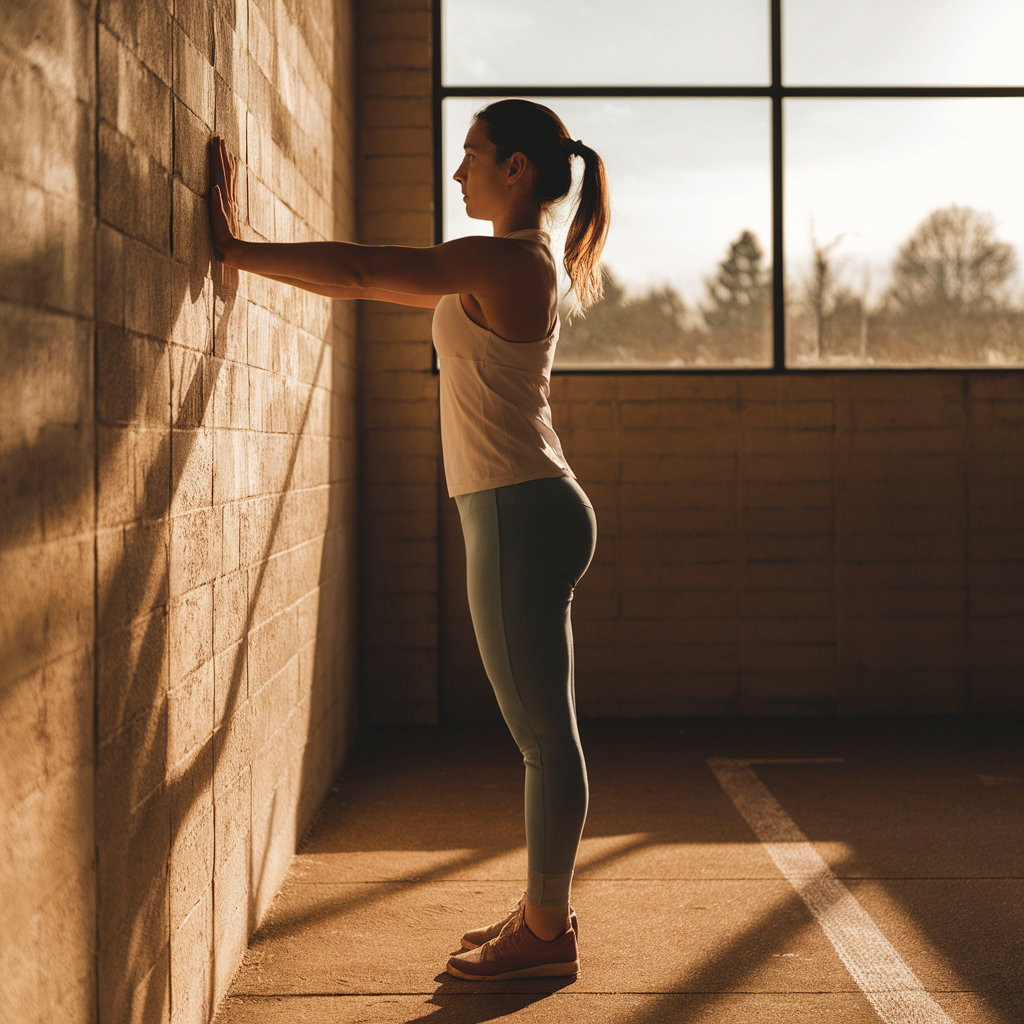
Wall Test Method
The wall test is the most reliable method for self-assessing anterior pelvic tilt:
- Stand with your back against a wall, with your heels approximately 6 inches away from the wall
- Place your head, upper back, and buttocks against the wall
- Try to slide your hand (palm flat) between your lower back and the wall
- Interpretation: If more than one hand fits easily, you likely have anterior pelvic tilt
- Normal spacing should allow one hand to slide through with slight pressure
Mirror Assessment
Using a full-length mirror, perform a side profile evaluation:
Stand sideways to the mirror in your natural posture and observe:
- The curve of your lower back – excessive arching indicates APT
- The position of your pelvis – it should be relatively neutral, not tilted forward
- Your overall spinal alignment from the side view
- The position of your head – it should be over your shoulders, not forward
Functional Movement Tests
Thomas Test for Hip Flexor Tightness:
- Lie on your back at the edge of a bed or table
- Pull one knee to your chest while letting the other leg hang off the edge
- If the hanging leg doesn’t drop to parallel or below, your hip flexors are tight
Glute Activation Test:
- Lie face down and try to lift one leg while keeping the knee straight
- Note which muscles fire first – it should be the glutes, not the hamstrings or lower back
- If you can’t feel your glutes working or other muscles compensate, this indicates glute weakness
Health Consequences of Untreated APT
Short-term Effects
If left unaddressed, anterior pelvic tilt can lead to immediate discomfort and dysfunction:
Acute Lower Back Pain: The excessive lumbar curve places abnormal stress on the spinal joints, leading to pain and stiffness that worsens throughout the day.
Muscle Fatigue: Compensatory muscles work overtime to maintain stability, leading to premature fatigue during daily activities.
Poor Movement Quality: Athletic performance suffers as movement patterns become less efficient and more energy-demanding.
Long-term Complications
Chronic anterior pelvic tilt can lead to serious long-term health issues:
Chronic Pain Syndromes: Persistent lower back pain can develop into chronic pain conditions that are more difficult to treat and may require medical intervention.
Disc Degeneration: The abnormal spinal curvature places uneven pressure on intervertebral discs, potentially leading to disc degeneration, herniation, or other spinal pathologies.
Hip Impingement: The altered hip position can lead to femoroacetabular impingement (FAI), causing hip pain and potentially requiring surgical intervention.
Increased Injury Risk: Poor movement patterns and muscle imbalances significantly increase the risk of injuries during sports, exercise, and daily activities.
Effective Correction Strategies
Mobility and Stretching Exercises
Hip Flexor Stretches:
Couch Stretch:
- Place one foot on a couch or elevated surface behind you
- Step the other foot forward into a lunge position
- Keep your torso upright and push your hips forward
- Hold for 2-3 minutes per side, focusing on breathing deeply
Standing Hip Flexor Stretch:
- Step into a lunge position with hands on your front thigh
- Keep your back leg straight and push your hips forward
- Contract your glutes to enhance the stretch
- Hold for 30-60 seconds per side
90/90 Hip Stretch:
- Sit on the floor with both legs bent at 90 degrees
- Lean forward over your front leg to stretch the hip flexors
- Rotate to the back leg to stretch the hip external rotators
- Hold each position for 30-45 seconds
Lower Back Releases:
Cat-Cow Stretches:
- Start on hands and knees in a neutral spine position
- Arch your back and look up (cow position)
- Round your spine and tuck your chin (cat position)
- Perform 10-15 slow, controlled repetitions
Child’s Pose Variations:
- Kneel on the floor and sit back on your heels
- Reach your arms forward and lower your forehead to the ground
- Focus on lengthening your spine and breathing deeply
- Hold for 1-2 minutes
Strengthening Exercises
Glute Activation and Strengthening:
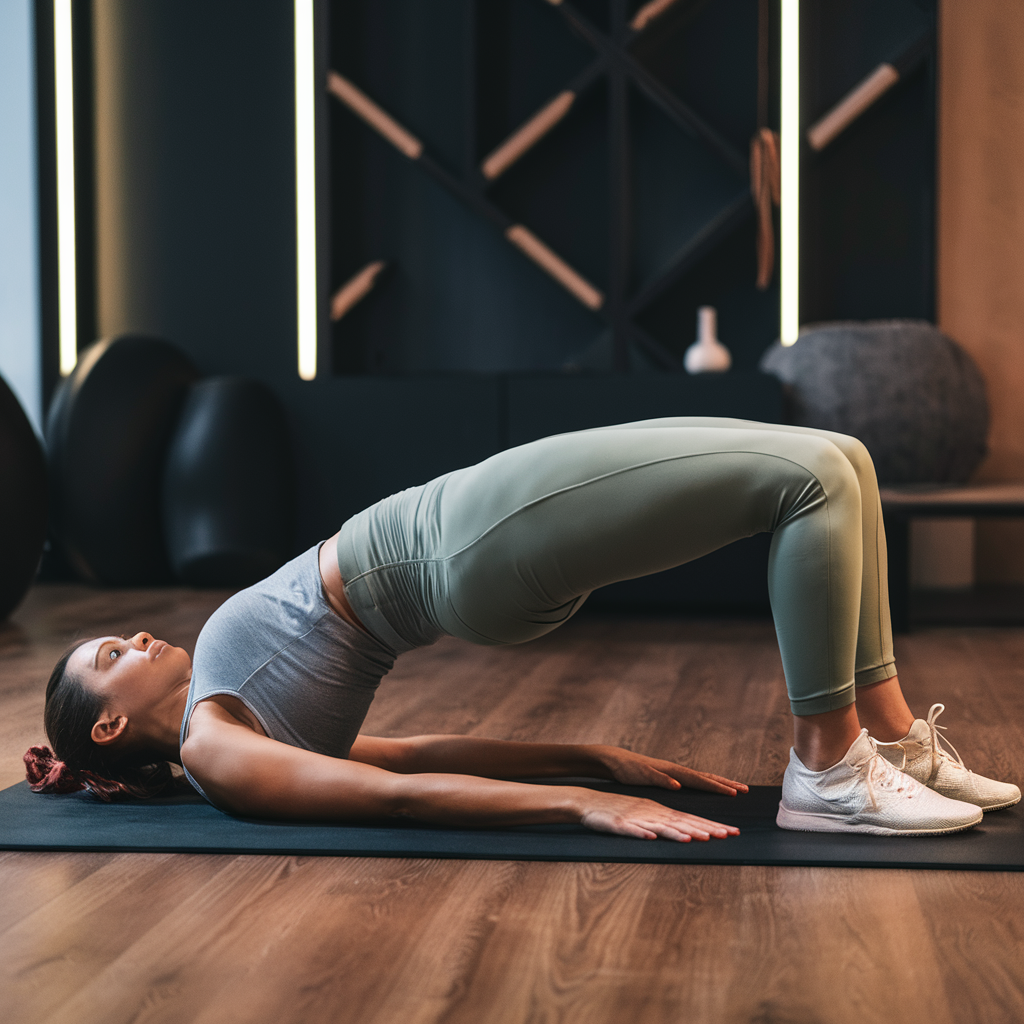
Glute Bridges (Progressions):
- Lie on your back with knees bent and feet flat on the floor
- Squeeze your glutes and lift your hips up
- Hold for 2-3 seconds at the top
- Perform 15-20 repetitions for 2-3 sets
- Progress to single-leg bridges as strength improves
Clamshells:
- Lie on your side with knees bent at 45 degrees
- Keep feet together and lift the top knee
- Focus on feeling the glutes work, not the hip flexors
- Perform 15-20 repetitions per side
Bulgarian Split Squats:
- Place one foot on an elevated surface behind you
- Lower into a single-leg squat position
- Focus on pushing through your front heel
- Perform 10-12 repetitions per leg
Core Strengthening:
Dead Bug Exercise:
- Lie on your back with arms extended toward the ceiling
- Bring knees to 90 degrees
- Slowly lower opposite arm and leg while maintaining core tension
- Return to start position and repeat on the other side
- Perform 8-10 repetitions per side
Bird Dog:
- Start on hands and knees in neutral spine
- Extend opposite arm and leg simultaneously
- Hold for 5-10 seconds while maintaining balance
- Return to start and repeat on the other side
- Perform 8-10 repetitions per side
Plank Variations:
- Start in a push-up position or on forearms
- Maintain a straight line from head to heels
- Engage your core and avoid sagging or piking
- Hold for 30-60 seconds
- Progress to side planks and dynamic variations
Creating an Effective Exercise Program
Program Structure
An effective anterior pelvic tilt correction program should include:
Frequency: 4-6 days per week for mobility work, 3-4 days per week for strengthening
Duration: 30-45 minutes per session
Progression: Gradually increase difficulty every 2-3 weeks
Consistency: Minimum 8-12 weeks to see significant changes
Beginner Routine (Weeks 1-4)
Daily Mobility (10-15 minutes):
- Hip flexor stretches: 2 minutes per stretch
- Cat-cow stretches: 10 repetitions
- Child’s pose: 1-2 minutes
Strengthening (3x per week):
- Glute bridges: 2 sets of 15 repetitions
- Clamshells: 2 sets of 15 per side
- Dead bug: 2 sets of 8 per side
- Plank: 2 sets of 30 seconds
Advanced Protocol (Weeks 8+)
Once basic strength and mobility are established, progress to:
- Single-leg hip thrusts: 3 sets of 12 per leg
- Bulgarian split squats: 3 sets of 10 per leg
- Romanian deadlifts: 3 sets of 12
- Turkish get-ups: 2 sets of 5 per side
- Single-leg deadlifts: 3 sets of 8 per leg
Lifestyle Modifications
Workplace Ergonomics
Optimizing your work environment is crucial for managing anterior pelvic tilt:
Desk Setup:
- Monitor should be at eye level to prevent forward head posture
- Feet should be flat on the floor with knees at 90 degrees
- Lower back should be supported by the chair
- Keyboard and mouse should be at elbow height
Movement Strategies:
- Set reminders to stand and move every 30-45 minutes
- Perform hip flexor stretches during breaks
- Use a standing desk for part of the day
- Take walking meetings when possible
Daily Habits
Sleeping Position Recommendations:
- Sleep on your back with a pillow under your knees
- If side sleeping, place a pillow between your knees
- Avoid sleeping on your stomach
- Use a supportive mattress that maintains spinal alignment
Footwear Choices:
- Limit high heel use to special occasions
- Choose shoes with minimal heel elevation
- Use supportive insoles if needed
- Go barefoot when possible to strengthen foot muscles
When to Seek Professional Help
Red Flag Symptoms
Seek immediate medical attention if you experience:
- Severe pain that doesn’t improve with rest
- Numbness or tingling in the legs
- Loss of bladder or bowel control
- Progressive weakness in the legs
- Pain that worsens at night
Professional Treatment Options
Physical Therapy: A licensed physical therapist can provide personalized assessment, manual therapy, and exercise prescription tailored to your specific needs.
Chiropractic Care: Chiropractors can help address spinal alignment issues and provide joint mobilization techniques.
Massage Therapy: Therapeutic massage can help release tight muscles and improve tissue quality.
Personal Training: A qualified personal trainer with corrective exercise experience can guide proper exercise form and progression.
Prevention Strategies
Maintaining Gains
Once you’ve corrected anterior pelvic tilt, maintaining proper alignment requires ongoing effort:
Long-term Exercise Adherence: Continue performing maintenance exercises 2-3 times per week to preserve strength and mobility gains.
Periodic Reassessment: Regularly check your posture using the wall test and mirror assessment to catch any regression early.
Habit Formation: Integrate postural awareness and movement breaks into your daily routine until they become automatic.
Injury Prevention
Proper Warm-up Protocols: Always warm up before exercise with dynamic movements that activate the glutes and mobilize the hips.
Movement Quality Focus: Prioritize proper form over heavy weights or high intensity to maintain good movement patterns.
Load Management: Gradually progress exercise intensity and volume to avoid overloading healing tissues.
Frequently Asked Questions
How long does it take to correct anterior pelvic tilt? Most people see initial improvements in 4-6 weeks with consistent effort, but significant postural changes typically take 3-6 months of dedicated work.
Can anterior pelvic tilt be completely fixed? Yes, with proper exercise and lifestyle modifications, most cases of APT can be significantly improved or completely corrected.
What exercises should I avoid with anterior pelvic tilt? Avoid exercises that further tighten hip flexors, such as hanging leg raises, bicycle crunches, or excessive hip flexor stretching without corresponding strengthening.
Is it normal to feel worse before feeling better? Some initial discomfort is normal as your body adapts to new movement patterns, but severe pain is not normal and should be evaluated by a healthcare professional.
Can anterior pelvic tilt cause other postural problems? Yes, APT often leads to compensatory issues such as forward head posture, rounded shoulders, and knee valgus.
Conclusion
Anterior pelvic tilt is a common but correctable postural problem that affects millions of people worldwide. While modern lifestyle factors like prolonged sitting and sedentary behavior contribute significantly to its development, the good news is that with proper understanding, assessment, and targeted intervention, APT can be effectively addressed.
The key to successfully correcting anterior pelvic tilt lies in addressing the underlying muscle imbalances through a comprehensive approach that includes mobility work for tight hip flexors and lower back muscles, strengthening exercises for weak glutes and core muscles, and lifestyle modifications to support long-term postural health.
Remember that correcting postural dysfunction is a marathon, not a sprint. Consistency in performing the recommended exercises, making necessary lifestyle adjustments, and maintaining awareness of your posture throughout the day will yield the best results. Most importantly, don’t get discouraged if progress seems slow – every small improvement in your posture and movement quality contributes to better long-term health and reduced pain.
Start your journey toward better posture today by implementing the assessment techniques and beginner exercises outlined in this guide. Your future self will thank you for taking action to address this common but impactful postural problem. With dedication and the right approach, you can achieve proper pelvic alignment, reduce lower back pain, and improve your overall quality of life.